


The government plans to upgrade Kaohsiung’s Zuoying (左營) naval base to enable the servicing of large warships and to augment its operational capabilities, a Ministry of National Defense official said yesterday.
The strategically important base needs to enhance its capability to service more and bigger ships, including 10,000-tonne warships that are to be built as part of the nation’s shipbuilding program, and those of allied navies, the official said.
The expansion, named the Weihai Project (威海), has a budget of NT$34.5 billion (US$1.13 billion) under the defense allowance of the government’s Forward-looking Infrastructure Development Program, the official said.
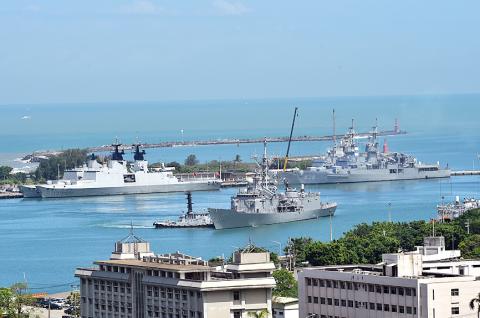
Photo: Chang Chung-i, Taipei Times
The expanded base is to have a second pier and a second harbor entrance-exit point on its north side, with requisite berths and shore-side facilities, the official said.
Due to its reliance on a single entrance-exit point, the Zuoying naval base is considered vulnerable to blockade and attack.
In a war, the navy would have to dock its warships for supply and maintenance one at a time to avoid having too many vessels remaining stationary and vulnerable, the official said.
Adding another exit-entrance point and expanding base facilities would enhance fleet survivability and operational efficiency by shortening the time required to assemble naval forces for combat, the official said.
The estimated completion date for the second pier and harbor entrance-exit point is 2025, the official said.
Plans for maintenance and administration facilities and barracks are being drawn up by private consultants, with plans expected to be complete by the end of the year, the official said.
The navy has submitted the expansion’s basic layout to the Executive Yuan’s Public Construction Commission, and environmental impact studies have been filed to the Environmental Protection Administration, the official said.
As development projects for coastal areas must be authorized by the Ministry of the Interior, the permit request would be sent to its Construction and Planning Agency for evaluation, the official said.
The US Congress is expected to authorize the US Navy to make port of call stops in Taiwan, following the US Senate Armed Services Committee’s resolution earlier last month backing US naval visits to the nation.
The news triggered speculation in Taiwan as to which port would be selected by the navy to receive US warships, with Port of Kaohsiung officials last week saying that it is technically suited for the task.
However, the Ministry of National Defense statement suggests that officials favor the Zuoying naval base and not the civilian harbor to its south.
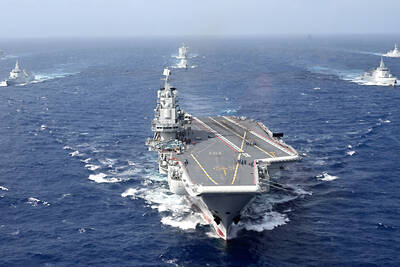
PROVOCATIVE: Chinese Deputy Ambassador to the UN Sun Lei accused Japan of sending military vessels to deliberately provoke tensions in the Taiwan Strait China denounced remarks by Japan and the EU about the South China Sea at a UN Security Council meeting on Monday, and accused Tokyo of provocative behavior in the Taiwan Strait and planning military expansion. Ayano Kunimitsu, a Japanese vice foreign minister, told the Council meeting on maritime security that Tokyo was seriously concerned about the situation in the East China and South China seas, and reiterated Japan’s opposition to any attempt to change the “status quo” by force, and obstruction of freedom of navigation and overflight. Stavros Lambrinidis, head of the EU delegation to the UN, also highlighted South China Sea

SILENCING CRITICS: In addition to blocking Taiwan, China aimed to prevent rights activists from speaking out against authoritarian states, a Cabinet department said The Ministry of Foreign Affairs (MOFA) yesterday condemned transnational repression by Beijing after RightsCon, a major digital human rights conference scheduled to be held in Zambia this week, was abruptly canceled due to Chinese pressure over Taiwanese participation. This year’s RightsCon, the world’s largest conference discussing issues “at the intersection of human rights and technology,” was scheduled to take place from tomorrow to Friday in Lusaka, and expected to draw 2,600 in-person attendees from 150 countries, along with 1,100 online participants. However, organizers were forced to cancel the event due to behind-the-scenes pressure from China, the ministry said, expressing its “strongest condemnation”
Taiwan Semiconductor Manufacturing Co (TSMC, 台積電), the world’s largest contract chipmaker, said it expects its 2-nanometer (2nm) chip capacity to grow at a compound annual rate of 70 percent from this year to 2028. The projection comes as five fabs begin volume production of 2-nanometer chips this year — two in Hsinchu and three in Kaohsiung — TSMC senior vice president and deputy cochief operating officer Cliff Hou (侯永清) said at the company’s annual technology symposium in Silicon Valley, California, last week. Output in the first year of 2-nanometer production, which began in the fourth quarter of last year, is expected to
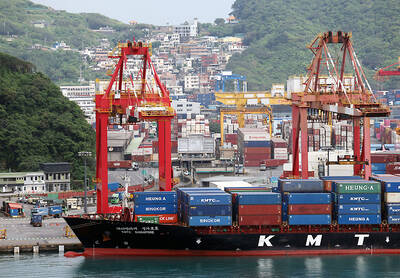
Taiwan’s economy grew far faster than expected in the first quarter, as booming demand for artificial intelligence (AI) applications drove a surge in exports, spilling over into investment and consumption, the Directorate-General of Budget, Accounting and Statistics (DGBAS) said yesterday. GDP growth was 13.69 percent year-on-year during the January-to-March period, beating the DGBAS’ February forecast by 2.23 percentage points and marking the most robust growth in nearly four decades, DGBAS senior official Chiang Hsin-yi (江心怡) told a news conference in Taipei. The result was powered by exports, which remain the backbone of Taiwan’s economy, Chiang said. Outbound shipments jumped 51.12 percent year-on-year to


 RSS
RSS