


Chinese Nationalist Party (KMT) Chairwoman Hung Hsiu-chu (洪秀柱) visited the mausoleum of Republic of China (ROC) founder Sun Yat-sen (孫逸仙) in Nanjing yesterday.
After an oration was read, Hung presented a wreath at the mausoleum. She and her delegation then bowed before a statue of Sun and observed a moment of silence.
Hung later told reporters that Sun established the ROC after toppling the Qing Dynasty and would always be the KMT’s leader.
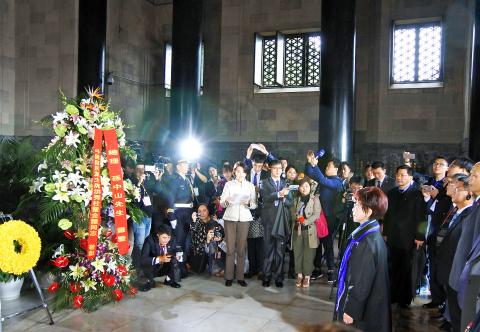
Photo: CNA
Throughout his life, Sun was deeply patriotic, committed to revitalizing the Chinese nation and establishing a democratic republic of the people, for the people and by the people, she said.
Sun’s magnificent spirit is still extolled in Taiwan and China, Hung said, adding that the two sides can work to achieve national revitalization and economic prosperity by following his example.
Dozens of demonstrators gathered outside the mausoleum ahead of Hung’s arrival, demanding that the KMT’s contribution to the War of Resistance Against Japan be accorded more importance in China.
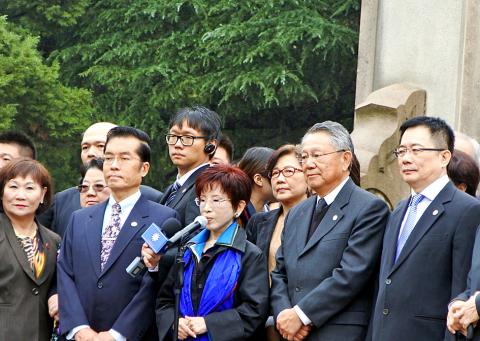
Photo: CNA
One demonstrator waved an ROC flag and shouted: “Long live the Republic of China” and “the Three Principles of the People unify China.”
Security guards at the site prevented onlookers from filming the demonstrators.
Hung later boarded a flight to Beijing, where she was scheduled to have dinner with China’s Taiwan Affairs Office (TAO) Minister Zhang Zhijun (張志軍).
Hung is today to meet with Chinese President Xi Jinping (習近平), who is also general secretary of the Chinese Communist Party (CCP), before attending tomorrow’s Cross-strait Peace Development Forum, an annual meeting held between the KMT and the CCP since 2006.
The Chinese-language Liberty Times (sister paper of the Taipei Times), Taiwanese online media outlet Up Media and the Mirror Weekly, earlier yesterday were informed by the TAO that Beijing has revoked the press passes of reporters from the three media outlets to the Hung-Xi meeting today.
No explanation was given.
Meanwhile, KMT Mainland Affairs Department Director Huang Ching-hsien (黃清賢) told reporters that the Hung-Xi meeting would “follow precedent,” meaning a closed-door event with media access limited to recording opening statements by the leaders and photographing a handshake.
The KMT and CCP are to give statements to the press separately after the meeting, sources said.
Presidential Office spokesman Alex Huang (黃重諺) said the government sees all unofficial exchanges with China in a positive light.
Taiwan and China should enhance mutual understanding and promote the peaceful development of bilateral relations through meaningful dialogue and exchanges without political preconditions, Huang said.
He also reiterated that all political parties in Taiwan should stand by the public and support government policy on cross-strait ties.
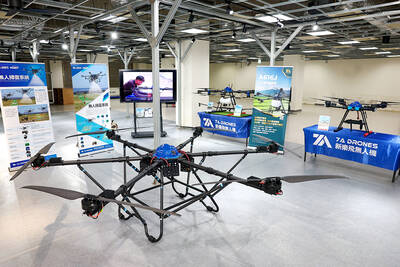
DRONE CENTRAL: Taiwan aims to become Asia’s democratic hub for drones, with most exports focused on high-quality military-grade models, an official said Taiwan’s drone industry is expected to expand significantly by 2030, producing 100,000 units per month and exporting half of them, the Ministry of Economic Affairs said yesterday. Current drone production capacity is about 15,000 units per month, but the industry can quickly scale up as demand increases, Industrial Development Administration Director-General Chiou Chyou-huey (邱求慧) told a news conference in Taipei. Taiwan’s drone output grew 2.5-fold last year to NT$12.9 billion (US$408.3 million) under a government program to develop the uncrewed vehicle sector, he said. The Executive Yuan in October last year approved plans to invest NT$44.2 billion into domestic production of uncrewed aerial
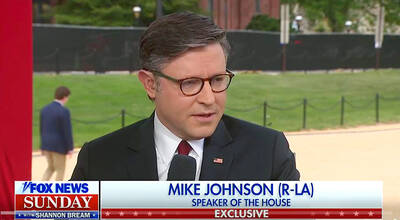
RESOLUTE BACKING: Two Republican senators are planning to introduce legislation that would impose immediate sanctions on China if it attempts to invade Taiwan US House of Representatives Speaker Mike Johnson on Sunday reaffirmed US congressional support for Taiwan, saying the US and “all freedom-loving people” have a stake in preventing China from seizing Taiwan by force. Johnson made the remarks in an interview with Fox News Sunday on US President Donald Trump’s summit with Chinese President Xi Jinping (習近平) last week. In an interview that aired on Friday on Fox News, just as Trump wrapped up a high-stakes visit to China, he said he has yet to green-light a new US$14 billion arms package to Taiwan and that it “depends on China.” “It’s a very good
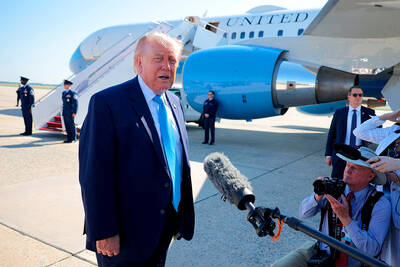
US President Donald Trump yesterday said he would speak to President William Lai (賴清德) as his administration considers whether to move ahead with a US$14 billion weapons sale to Taiwan — a potential arms deal that has drawn criticism from China. “Well, I’ll speak to him. I speak to everybody,” Trump told reporters yesterday when asked if he had any plans to call his counterpart, although he did not offer a time frame for when such a conversation could take place. Trump previously said he would speak to the person “that’s running Taiwan,” without specifying who he meant. “We have that situation very
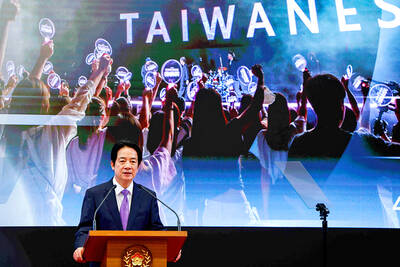
SPEAKING UP: If he had the opportunity to talk with Trump, Lai said he would tell the US president that China was undermining peace in the region The future of Taiwan must not be decided by external forces nor can it be held hostage by fear, division or short-term gain, President William Lai (賴清德) said yesterday in an address marking the second anniversary of his inauguration. Speaking at the Presidential Office, Lai said democracy is the most important part of Taiwan’s identity, and it is not a gift from heaven. Taiwan’s democracy is rooted in the sacrifices and devotion of many generations, and while differences are inevitable, he urged the ruling and opposition parties to demonstrate unity in confronting external threats and upholding national interests. “Taiwan’s future cannot be decided


 RSS
RSS