


About 1,000 Taiwan Power Co (Taipower, 台電) employees yesterday marched to the Executive Yuan in Taipei to protest a planned amendment to the Electricity Act (電業法) aimed at power market liberalization, which they said would split the state-owned company and allow private businesses to monopolize power rates.
The protest, which was launched solely by Taipower employees without the company’s union, started on Sept. 5 at the Ma-anshan Nuclear Power Plant in Pingtung County and concluded with yesterday’s rally, with some protesters traveling from Pingtung to Taipei on foot.
Although the Executive Yuan has yet to finalize a draft of the amendment to be submitted to the Legislative Yuan for review, protesters said the government was planning to force through the amendment in a short time.
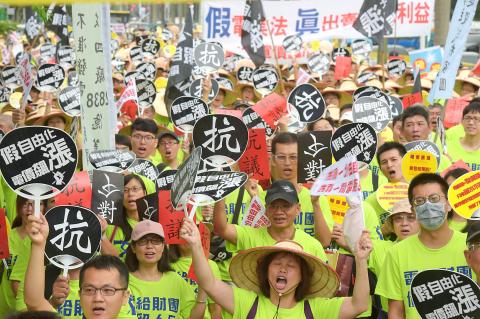
Photo: Huang Yao-cheng, Taipei Times
The draft amendment aims to open the power market and separate the energy industry into three categories: power generation, power distribution and energy brokerage, with the power distribution industry to remain state-owned.
Protesters said the proposed liberalization would only benefit large businesses and cause electricity prices to rise, while Taipower might be split into different companies to make way for competitors.
Tseng Yueh-hui (曾玥惠), spokeswoman for the demonstrators, said Taipower has been asked to shoulder government policy costs, such as an electricity subsidy for schools, a “renewable energy” subsidy and reserve capacity maintenance, but those costs are not factored into Taipower’s pricing mechanism.
Power rates will increase if the amendment is approved and the power industry is deregulated, as those costs will be transferred to consumers, Tseng said, adding that it is estimated the price of electricity will go up at least 142 percent.
Hsiao Hsin-yi (蕭信義), director of the demonstration, said Taipower is allowed a fixed profit margin of 3 percent, while surplus profit is invested in developing sources of renewable energy, but independent power producers are not required to divert funds to renewable energy development unless they have a profit margin of more than 25 percent.
“What is lining the pockets of businesses if this is not?” Hsiao asked.
Nations and regions that have liberalized their power markets — such as the UK, Germany, Spain, California in the US, Ontario in Canada and the Philippines — have suffered from skyrocketing electricity prices, while Japan and South Korea aborted liberalization plans.
Liberalization does not necessarily lead to decreased commodity prices, Hsiao said, citing as an example Formosa Plastics Group (台塑集團), which promised prices one-third of those of state-owned oil refiner CPC Corp, Taiwan (台灣中油) that never happened after the oil industry was deregulated.
The liberalization of the energy market will also be detrimental to the development of “green” energy, as the government’s procurement policy on renewable energy has forced Taipower to sell “green” energy at prices much lower than procurement costs to support the burgeoning industry, said Hsiao Hsuan-chung (蕭鉉鐘), deputy director of the demonstration.
“Once the power market is liberalized, independent power producers will no longer invest in renewable energy and will instead opt for the cheapest coal-fired power generation,” Hsiao Hsuan-chung said.
Independent power producers will also be able to capitalize on Taipower’s infrastructure without paying for construction and maintenance costs, creating an unfair environment for competition, he said.
Tseng said the demonstrators demand that the power industry remain state-owned to keep electricity prices stable and to develop renewable energy.
Executive Yuan spokesman Tung Chen-yuan (童振源) said the Ministry of Economic Affairs would communicate with Taipower employees and the public after it finalizes the draft amendment.
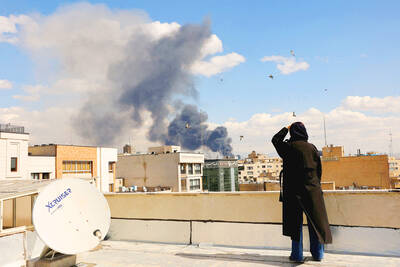
CHAOS: Iranians took to the streets playing celebratory music after reports of Khamenei’s death on Saturday, while mourners also gathered in Tehran yesterday Iranian Supreme Leader Ayatollah Ali Khamenei was killed in a major attack on Iran launched by Israel and the US, throwing the future of the Islamic republic into doubt and raising the risk of regional instability. Iranian state television and the state-run IRNA news agency announced the 86-year-old’s death early yesterday. US President Donald Trump said it gave Iranians their “greatest chance” to “take back” their country. The announcements came after a joint US and Israeli aerial bombardment that targeted Iranian military and governmental sites. Trump said the “heavy and pinpoint bombing” would continue through the week or as long
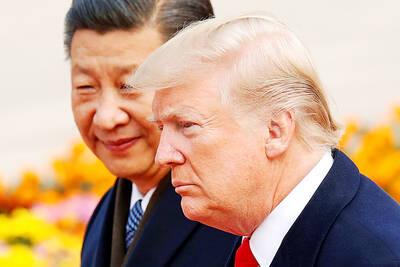
TRUST: The KMT said it respected the US’ timing and considerations, and hoped it would continue to honor its commitments to helping Taiwan bolster its defenses and deterrence US President Donald Trump is delaying a multibillion-dollar arms sale to Taiwan to ensure his visit to Beijing is successful, a New York Times report said. The weapons sales package has stalled in the US Department of State, the report said, citing US officials it did not identify. The White House has told agencies not to push forward ahead of Trump’s meeting with Chinese President Xi Jinping (習近平), it said. The two last month held a phone call to discuss trade and geopolitical flashpoints ahead of the summit. Xi raised the Taiwan issue and urged the US to handle arms sales to
BIG SPENDERS: Foreign investors bought the most Taiwan equities since 2005, signaling confidence that an AI boom would continue to benefit chipmakers Taiwan Semiconductor Manufacturing Co’s (TSMC, 台積電) market capitalization swelled to US$2 trillion for the first time following a 4.25 percent rally in its American depositary receipts (ADR) overnight, putting the world’s biggest contract chipmaker sixth on the list of the world’s biggest companies by market capitalization, just behind Amazon.com Inc. The site CompaniesMarketcap.com ranked TSMC ahead of Saudi Aramco and Meta Platforms Inc. The Taiwanese company’s ADRs on Tuesday surged to US$385.75 on the New York Stock Exchange, as strong demand for artificial intelligence (AI) applications led to chip supply constraints and boost revenue growth to record-breaking levels. Each TSMC ADR represents

State-run CPC Corp, Taiwan (CPC, 台灣中油) yesterday said that it had confirmed on Saturday night with its liquefied natural gas (LNG) and crude oil suppliers that shipments are proceeding as scheduled and that domestic supplies remain unaffected. The CPC yesterday announced the gasoline and diesel prices will rise by NT$0.2 and NT$0.4 per liter, respectively, starting Monday, citing Middle East tensions and blizzards in the eastern United States. CPC also iterated it has been reducing the proportion of crude oil imports from the Middle East and diversifying its supply sources in the past few years in response to geopolitical risks, expanding


 RSS
RSS