


A fire tore through a bus carrying an airport-bound Chinese tour group on National Freeway No. 2 yesterday afternoon, killing all 26 people onboard. The cause of the fire is under investigation.
The 24-member tour group from Dalian in Liaoning Province included 15 women, six men and three youngsters, the youngest of whom was 11, the Tourism Bureau said, while the other two fatalities were the bus driver, Su Wen-cheng (蘇文成), and a guide surnamed Cheng (鄭).
The group had arrived in Taiwan on Tuesday last week and were scheduled to return home yesterday afternoon on a flight from Taiwan Taoyuan International Airport, the bureau said.
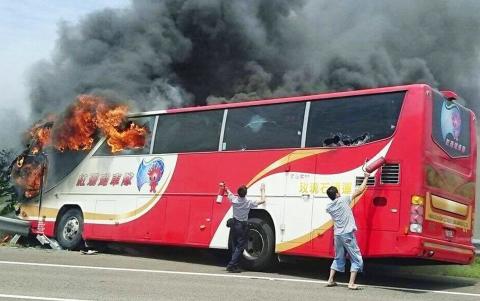
Photo: AP / Yan Cheng / Scoop Commune
The National Highway Police Bureau said the bus appeared to have veered out of control after catching fire and then hit the guard rails on the outer lane of the freeway’s westbound lanes.
Police bureau footage shows smoke emerging from the roof of the bus as the driver drove along the inner lane of the freeway.
The bus then hit a traffic island separating the freeway’s westbound lane and eastbound lanes before running into the guard rail along the outer lane.
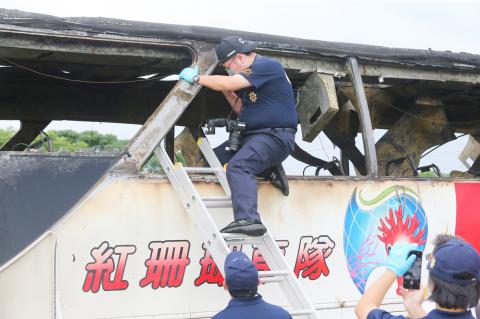
Photo: CNA
The drivers of other vehicles pulled over and attempted to put out the flames with fire extinguishers, but the fire had grown too large for them to put out, the Central News Agency reported.
Thirteen firefighting vehicles and 30 firefighters were sent to the scene, but the bus was an inferno by the time they arrived.
“There was not enough time for them to escape,” Taoyuan Fire Department chief Lai Chi-chong (賴志忠) told reporters.
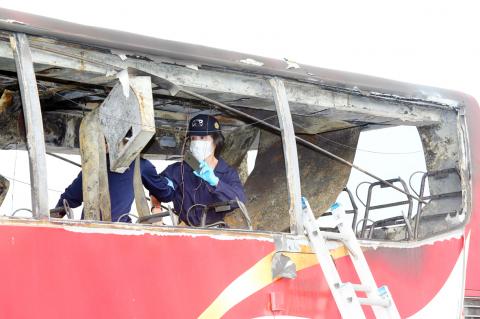
Photo: CNA
Firefighters and accident investigators who examined the charred remains of the bus said the passengers appeared to have tried to move to the back of the bus so they could leave through the emergency exit on the right side of the vehicle.
The Directorate-General of Highways (DGH) said that the bus’ main door and its emergency exit appeared to have been blocked by the guard rail, which probably explained why the doors were not opened.
The Chinese-language Liberty Times (the sister newspaper of the Taipei Times) quoted an unnamed eyewitness as saying passengers were pounding on the bus windows for help as the driver swerved sharply before the crash.
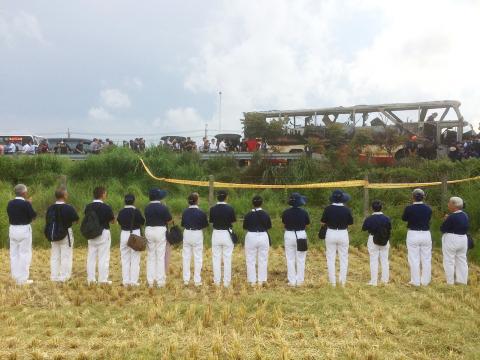
Photo courtesy of the Buddhist Compassion Relief Tzu Chi Foundation
DGH records show that the bus left its manufacturer in May 2010 and passed every required inspection at the vehicle supervision office.
The records also show that Su obtained his license to drive large passenger vehicles in 1996 and had no record of driving while intoxicated.
The tour bus company that owned the bus has four others of the same model and the DGH said it has asked the firm to suspend use of the four immediately.
The agency said those four buses, along with similar models owned by other tour bus firms, would be recalled and be inspected by technical specialists from the manufacturer.
Passenger buses must be equipped with at least three emergency hammers to break the windows and have two fire extinguishers, the DGH said, and buses with a capacity for 32 to 47 passengers must also have five emergency exits.
DGH records show that there have been 37 bus fires since 2006, but yesterday’s was the first one in which the vehicle was completely destroyed and where there were so many casualties.
The Tourism Bureau said the Chinese travel agency that put together the tour group and the Taiwanese travel agency that arranged the tour had bought insurance policies for each member of the group, while the bus company also has insurance covering its passengers.
There have been a total of 98 accidents involving Chinese tourists since 2008, in which 90 people were killed and 390 injured.
Of those accidents, 38 involved tour buses, accounting for 25 deaths and 273 injuries.
Yesterday’s fire was the deadliest incident involving Chinese tourists since a tour bus crash in 2010 killed 19.
Additional reporting by CNA and AP
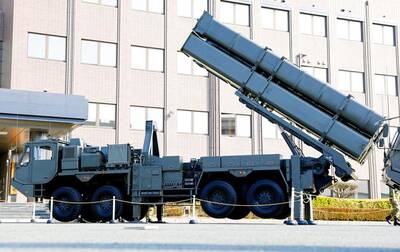
Japan has deployed long-range missiles in a southwestern region near China, the Japanese defense minister said yesterday, at a time when ties with Beijing are at their lowest in recent years. The missiles were installed in Kumamoto in the southern region of Kyushu, as Japan is attempting to shore up its military capacity as China steps up naval activity in the East China Sea. “Standoff defense capabilities enable us to counter the threat of enemy forces attempting to invade our country ... while ensuring the safety of our personnel,” Japanese Minister of Defense Shinjiro Koizumi said. “This is an extremely important initiative for
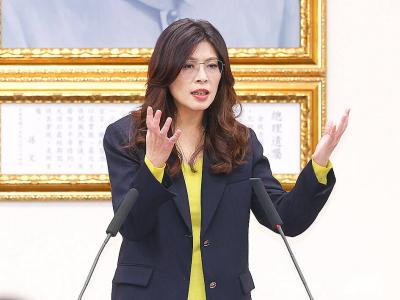
Chinese Nationalist Party (KMT) Chairwoman Cheng Li-wun (鄭麗文) today accepted an invitation from Chinese President Xi Jinping (習近平) to lead a delegation to China next month, saying she hopes to promote the peaceful development of cross-strait relations and bring stability to the Taiwan Strait. “I am grateful and happy to accept this invitation,” Cheng said in a statement from the KMT chairperson’s office. Cheng said she hopes both sides can work together to promote the peaceful development of cross-strait relations, enhance exchange and cooperation, bring stability to the Taiwan Strait and improve people’s livelihoods. At today's news conference, Cheng said any efforts to
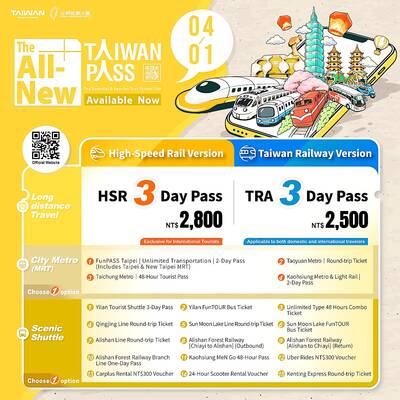
MORE POPULAR: Taiwan Pass sales increased by 59 percent during the first quarter compared with the same period last year, the Tourism Administration said The Tourism Administration yesterday said that it has streamlined the Taiwan Pass, with two versions available for purchase beginning today. The tourism agency has made the pass available to international tourists since 2024, allowing them to access the high-speed rail, Taiwan Railway Corp services, four MRT systems and four Taiwan Tourist Shuttles. Previously, five types of Taiwan Pass were available, but some tourists have said that the offerings were too complicated. The agency said only two types of Taiwan Pass would be available, starting from a three-day pass with the high-speed rail and a three-day pass with Taiwan Railway Corp. The former costs NT$2,800

The nation’s fastest supercomputer, Nano 4 (晶創26), is scheduled to be launched in the third quarter, and would be used to train large language models in finance and national defense sectors, the National Center for High-Performance Computing (NCHC) said. The supercomputer, which would operate at about 86.05 petaflops, is being tested at a new cloud computing center in the Southern Taiwan Science Park in Tainan. The exterior of the server cabinet features chip circuitry patterns overlaid with a map of Taiwan, highlighting the nation’s central position in the semiconductor industry. The center also houses Taiwania 2, Taiwania 3, Forerunner 1 and


 RSS
RSS