


Taiwan is to play a critical role in NASA’s Resource Prospector mission, which aims to be the first mining expedition on the moon in the early 2020s, and is expected to use a Taiwanese-made lunar lander to excavate water, oxygen and hydrogen.
The Chungshan Institute of Science and Technology is to build an uncrewed lunar lander to carry a rover to polar regions of the moon to mine resources, particularly subsurface water, international program director Han Kuo-chang (韓國璋) said.
The project is the first time Taiwan has participated in a NASA moon mission and it is hoped it will boost the nation’s visibility in the international aerospace industry.
“Taiwan has an outstanding ability to build electronic components and auxiliary systems for spacecraft, but the nation has had little opportunity to participate in space missions, so it has limited space flight history. The participation in NASA’s Resource Prospector mission might earn Taiwan a ticket into the aerospace industry supply chain,” Han said.
The institute is to deliver a lunar lander on a budget of about NT$1.5 billion (US$46.84 million).
It has to select and test commercially available parts that can function in space, where they would be exposed to extreme heat and radiation, Han said.
“It will be Taiwan’s first moon landing mission, and challenges involved in building a lunar lander include analyzing the orbit, controlling lander posture and velocity and landing the vehicle in the desired location where there is no air resistance and little atmospheric pressure. All those are very difficult,” he said.
However, the Resource Prospector mission is not the first time that the institute has worked on a NASA project.
It built the 1 tonne Alpha Magnetic Spectrometer for the International Space Station, which measures antimatter in cosmic rays and searches for evidence of dark matter.
The spectrometer has functioned uninterruptedly since 2011 in an environment where equipment can easily malfunction due to high daily temperature differentials and high-energy cosmic rays.
“The institute’s space computer is one of the most reliable NASA has ever had, which is why NASA chose to collaborate with Taiwan instead of South Korea in the moon-mining mission,” Han said.
The mission is aimed at reducing the cost of deep-space exploration by harvesting the basic building blocks of life and fuel, and generating the components in space.
NASA began exploring whether there was water on the moon in the 1990s and space missions have since proven its existence.
The Resource Prospector mission is to determine if the water can be extracted, Han said.
The rover is to explore polar regions of the moon and areas where sunlight does not reach, because it is believed that is where sub-surface water is most likely to be found.
The moon lander is expected to be completed by 2018 and the mission is expected to be launched in the early 2020s — if it is given the green light.

PROVOCATIVE: Chinese Deputy Ambassador to the UN Sun Lei accused Japan of sending military vessels to deliberately provoke tensions in the Taiwan Strait China denounced remarks by Japan and the EU about the South China Sea at a UN Security Council meeting on Monday, and accused Tokyo of provocative behavior in the Taiwan Strait and planning military expansion. Ayano Kunimitsu, a Japanese vice foreign minister, told the Council meeting on maritime security that Tokyo was seriously concerned about the situation in the East China and South China seas, and reiterated Japan’s opposition to any attempt to change the “status quo” by force, and obstruction of freedom of navigation and overflight. Stavros Lambrinidis, head of the EU delegation to the UN, also highlighted South China Sea
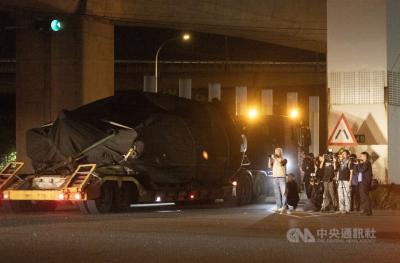
The final batch of 28 M1A2T Abrams tanks purchased from the US arrived at Taipei Port last night and were transported to the Armor Training Command in Hsinchu County’s Hukou Township (湖口), completing the military’s multi-year procurement of 108 of the tanks. Starting at 12:10am today, reporters observed more than a dozen civilian flatbed trailers departing from Taipei Port, each carrying an M1A2T tank covered with black waterproof tarps. Escorted by military vehicles, the convoy traveled via the West Coast Expressway to the Armor Training Command, with police implementing traffic control. The army operates about 1,000 tanks, including CM-11 Brave Tiger
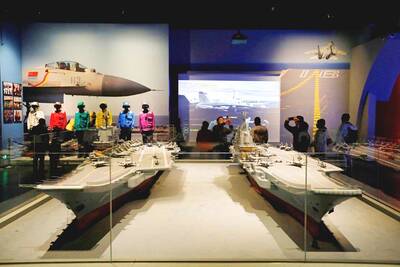
China on Wednesday teased in a video an aircraft carrier that could be its fourth, and the first using nuclear power, while making an allusion to Taiwan and vowing to further build up its islands, as it looks to boost maritime power, secure resources and bolster territorial claims. The video, issued on the eve of the 77th founding anniversary of the Chinese People’s Liberation Army Navy, featured fictional officers with names that are homophones of three commissioned aircraft carriers, the Liaoning (遼寧), Shandong (山東) and Fujian (福建). Titled Into the Deep, it showed a 19-year-old named “Hejian” (何劍) joining the group, sparking
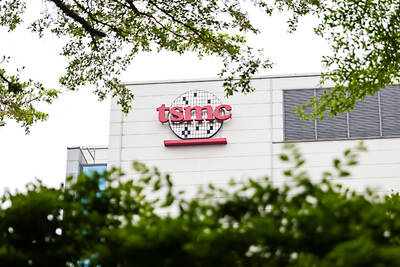
Taiwan Semiconductor Manufacturing Co (TSMC, 台積電), the world’s largest contract chipmaker, said it expects its 2-nanometer (2nm) chip capacity to grow at a compound annual rate of 70 percent from this year to 2028. The projection comes as five fabs begin volume production of 2-nanometer chips this year — two in Hsinchu and three in Kaohsiung — TSMC senior vice president and deputy cochief operating officer Cliff Hou (侯永清) said at the company’s annual technology symposium in Silicon Valley, California, last week. Output in the first year of 2-nanometer production, which began in the fourth quarter of last year, is expected to


 RSS
RSS