


Despite the Chinese Nationalist Party’s (KMT) strong opposition to a proposal to remove portraits of Republic of China (ROC) “founding father” Sun Yat-sen (孫逸仙) from public buildings, a survey released yesterday showed that most people would prefer that the national flag be hung in their place.
The survey, conducted by Taiwan Indicators Survey Research (TISR) on Monday and Tuesday, asked respondents which objects they think should be displayed in government buildings and public schools, allowing them to choose one or more among the following: the national flag, Sun’s portrait or a picture of the nation’s incumbent president.
The majority (83.2 percent) chose the national flag, followed by Sun’s portrait (58.1 percent) and the president’s picture (33.5 percent).
Another 7.6 percent chose none of the above, while 4.9 percent had no opinion.
Under the National Emblem and National Flag of the Republic of China Act (中華民國國徽國旗法), Sun’s portrait should be hung above the national flag center-front of the place where government authorities, schools, organizations and military troops congregate.
Democratic Progressive Party (DPP) Legislator Gao Jyh-peng (高志鵬) has proposed that the regulation be abolished, which was met with harsh criticism by KMT legislators and officials, with some labeling it part of a DPP plan to “eradicate the ROC.”
With the nation set to witness its third transition of power, the survey also asked respondents about the draft presidential transition act, with 76.5 percent of respondents agreeing on the need for speedy legislation of the act, while 7.1 percent thought otherwise.
A cross-analysis of the polling results showed that even among pro-KMT respondents, 70.7 percent supported the passage of a government transition act, while 17.1 percent opposed the idea.
“The results suggest that the issue has received a high degree of public consensus. The new legislature must value the public’s opinion and respond positively,” the research center said.
With regard to the thorny issue of the KMT’s contentious assets, 54.8 percent of respondents said the party’s assets should be dealt with according to the law, while 31.7 percent said since most of the assets belong to the country, they ought to be returned to the government immediately.
Asked about president-elect Tsai Ing-wen (蔡英文), who has yet to be sworn into office, 66.3 percent of respondents said they were satisfied with her performance thus far.
As for the fate of the KMT’s next chairperson, who is to be elected on March 26, more than half of respondents believed the party was incapable of change and would eventually be weeded out.
The telephone-based survey collected 1,006 valid samples from Taiwanese aged 20 or above. It had a margin of error of 3.1 percentage points.
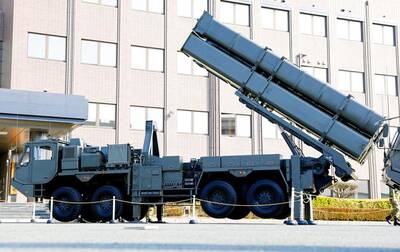
Japan has deployed long-range missiles in a southwestern region near China, the Japanese defense minister said yesterday, at a time when ties with Beijing are at their lowest in recent years. The missiles were installed in Kumamoto in the southern region of Kyushu, as Japan is attempting to shore up its military capacity as China steps up naval activity in the East China Sea. “Standoff defense capabilities enable us to counter the threat of enemy forces attempting to invade our country ... while ensuring the safety of our personnel,” Japanese Minister of Defense Shinjiro Koizumi said. “This is an extremely important initiative for
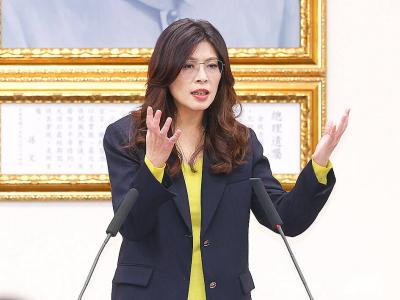
Chinese Nationalist Party (KMT) Chairwoman Cheng Li-wun (鄭麗文) today accepted an invitation from Chinese President Xi Jinping (習近平) to lead a delegation to China next month, saying she hopes to promote the peaceful development of cross-strait relations and bring stability to the Taiwan Strait. “I am grateful and happy to accept this invitation,” Cheng said in a statement from the KMT chairperson’s office. Cheng said she hopes both sides can work together to promote the peaceful development of cross-strait relations, enhance exchange and cooperation, bring stability to the Taiwan Strait and improve people’s livelihoods. At today's news conference, Cheng said any efforts to
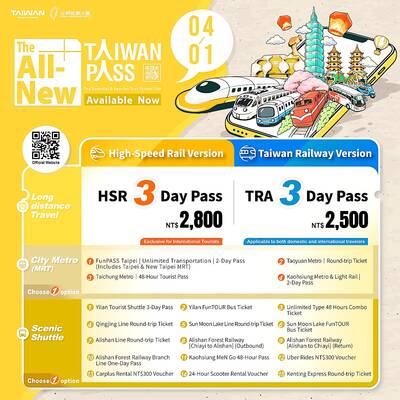
MORE POPULAR: Taiwan Pass sales increased by 59 percent during the first quarter compared with the same period last year, the Tourism Administration said The Tourism Administration yesterday said that it has streamlined the Taiwan Pass, with two versions available for purchase beginning today. The tourism agency has made the pass available to international tourists since 2024, allowing them to access the high-speed rail, Taiwan Railway Corp services, four MRT systems and four Taiwan Tourist Shuttles. Previously, five types of Taiwan Pass were available, but some tourists have said that the offerings were too complicated. The agency said only two types of Taiwan Pass would be available, starting from a three-day pass with the high-speed rail and a three-day pass with Taiwan Railway Corp. The former costs NT$2,800

The nation’s fastest supercomputer, Nano 4 (晶創26), is scheduled to be launched in the third quarter, and would be used to train large language models in finance and national defense sectors, the National Center for High-Performance Computing (NCHC) said. The supercomputer, which would operate at about 86.05 petaflops, is being tested at a new cloud computing center in the Southern Taiwan Science Park in Tainan. The exterior of the server cabinet features chip circuitry patterns overlaid with a map of Taiwan, highlighting the nation’s central position in the semiconductor industry. The center also houses Taiwania 2, Taiwania 3, Forerunner 1 and


 RSS
RSS