


The Taiwan Solidarity Union (TSU) caucus yesterday urged teachers not to use the new version of high-school social studies textbooks approved by the National Academy for Educational Research (NAER), which it said contain distorted and unsubstantiated historical information and aim to instill a China-centric mindset in young Taiwanese.
“The Ministry of Education has claimed that it was only responsible for reviewing high-school curricula and that it was up to textbook publishers to decide the content of the books they print,” TSU caucus whip Lai Chen-chang (賴振昌) told a news conference in Taipei.
However, Lai said that since the new curriculum has been “painted red,” most of the publishers have fallen in line, printing textbooks that do not conform to historical facts.
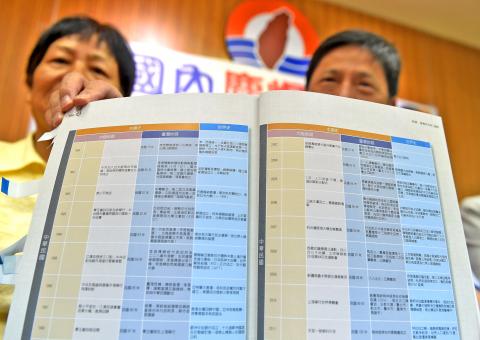
Photo: Chien Jung-fong, Taipei Times
Singling out the Shi Ji Cultural Publishing Co (史記文化事業), Lai said that the company combined the histories of Taiwan and China into what it called “national history,” which also included historical events that occurred during the Japanese colonial era.
“Shi Ji’s proprietor, Cheng Chih-shen (鄭旗生), doubles as the executive officer of the pro-unification Chinese Integration Association, while one of the firm’s textbook compilation committee members, Hao Ming-huang (邵銘煌), is the former director of the Chinese Nationalist Party’s [KMT] history department. Both men are considered ‘deep-blue’ diehards,” Lai said.
Lai said the publisher’s history textbook used the controversial term “returning to the embrace of the motherland” twice.
The book suggests that former president Lee Teng-hui’s (李登輝) formulation of the “two states theory” in 1999 hindered cross-strait negotiations, and the “one side, one country” model proposed by Lee’s successor, Chen Shui-bian (陳水扁), had destabilized Taiwan-US relations, Lai said.
The book has two full pages on the so-called “1992 consensus” embraced by President Ma Ying-jeou (馬英九) and also praises the Economic Cooperation Framework Agreement for elevating cross-strait exchanges to the next level. Lai said.
The “1992 consensus” refers to a tacit understanding that the KMT says was reached with Beijing that both sides agree that there is only “one China,” with each side having its own interpretations of what China is. Former KMT lawmaker (蘇起) said in 2006 that he had made up the term in 2000, when he was head of the Mainland Affairs Council.
“This is not a school textbook, but rather propaganda material designed to promote the KMT’s history and cross-strait unification,” Lai said, calling on high-school teachers not to use the new editions of book.
TSU Legislator Chou Ni-an (周倪安) said the lack of references in the books to democracy activist Deng Nan-jung (鄭南榕), the 228 Incident and the 1979 Kaohsiung Incident underscored the curriculum review team’s aim to cover up the former KMT regime’s disregard for human rights by creating the impression that the government had attached great importance to the issue.
“We as Taiwanese must stand up against the government’s brainwashing scheme and safeguard true human rights and democracy,” Chou said.
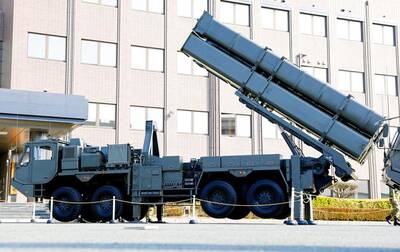
Japan has deployed long-range missiles in a southwestern region near China, the Japanese defense minister said yesterday, at a time when ties with Beijing are at their lowest in recent years. The missiles were installed in Kumamoto in the southern region of Kyushu, as Japan is attempting to shore up its military capacity as China steps up naval activity in the East China Sea. “Standoff defense capabilities enable us to counter the threat of enemy forces attempting to invade our country ... while ensuring the safety of our personnel,” Japanese Minister of Defense Shinjiro Koizumi said. “This is an extremely important initiative for
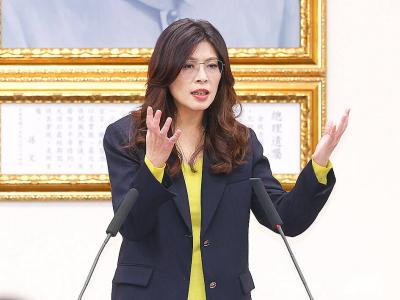
Chinese Nationalist Party (KMT) Chairwoman Cheng Li-wun (鄭麗文) today accepted an invitation from Chinese President Xi Jinping (習近平) to lead a delegation to China next month, saying she hopes to promote the peaceful development of cross-strait relations and bring stability to the Taiwan Strait. “I am grateful and happy to accept this invitation,” Cheng said in a statement from the KMT chairperson’s office. Cheng said she hopes both sides can work together to promote the peaceful development of cross-strait relations, enhance exchange and cooperation, bring stability to the Taiwan Strait and improve people’s livelihoods. At today's news conference, Cheng said any efforts to
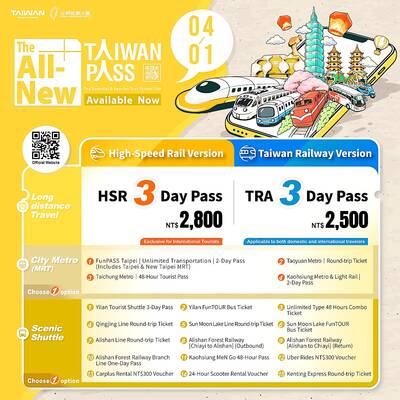
MORE POPULAR: Taiwan Pass sales increased by 59 percent during the first quarter compared with the same period last year, the Tourism Administration said The Tourism Administration yesterday said that it has streamlined the Taiwan Pass, with two versions available for purchase beginning today. The tourism agency has made the pass available to international tourists since 2024, allowing them to access the high-speed rail, Taiwan Railway Corp services, four MRT systems and four Taiwan Tourist Shuttles. Previously, five types of Taiwan Pass were available, but some tourists have said that the offerings were too complicated. The agency said only two types of Taiwan Pass would be available, starting from a three-day pass with the high-speed rail and a three-day pass with Taiwan Railway Corp. The former costs NT$2,800
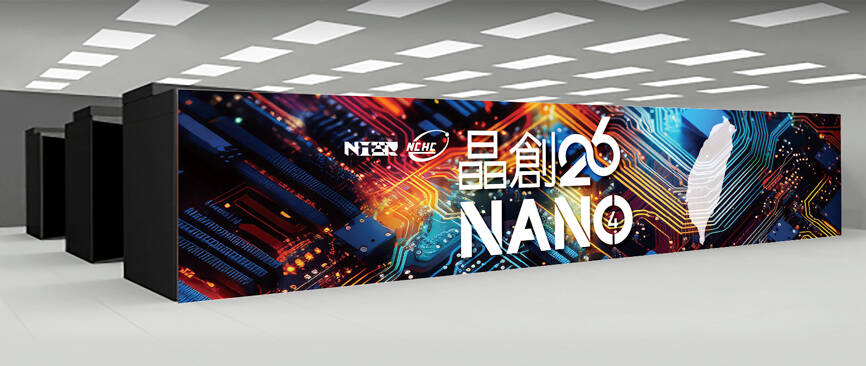
The nation’s fastest supercomputer, Nano 4 (晶創26), is scheduled to be launched in the third quarter, and would be used to train large language models in finance and national defense sectors, the National Center for High-Performance Computing (NCHC) said. The supercomputer, which would operate at about 86.05 petaflops, is being tested at a new cloud computing center in the Southern Taiwan Science Park in Tainan. The exterior of the server cabinet features chip circuitry patterns overlaid with a map of Taiwan, highlighting the nation’s central position in the semiconductor industry. The center also houses Taiwania 2, Taiwania 3, Forerunner 1 and


 RSS
RSS