


Taiwanese travelers to China will no longer need to apply for an entry permit starting from July 1, China’s State Council announced yesterday.
The amendments to the “Measure for the Control of Chinese Citizens Traveling to or from the Region of Taiwan (中國公民往來台灣地區管理辦法)” state that Taiwanese can travel to China as long as they hold a valid Mainland Travel Permit for Taiwan Residents (台灣人民來往大陸通行證) — commonly referred to as a Taiwan compatriot permit (台胞證), China’s official Xinhua news agency reported.
China’s Taiwan Affairs Office (TAO) spokesperson Ma Xiaoguang (馬曉光) said that the changes were made to simplify application procedures for Taiwanese travelers.
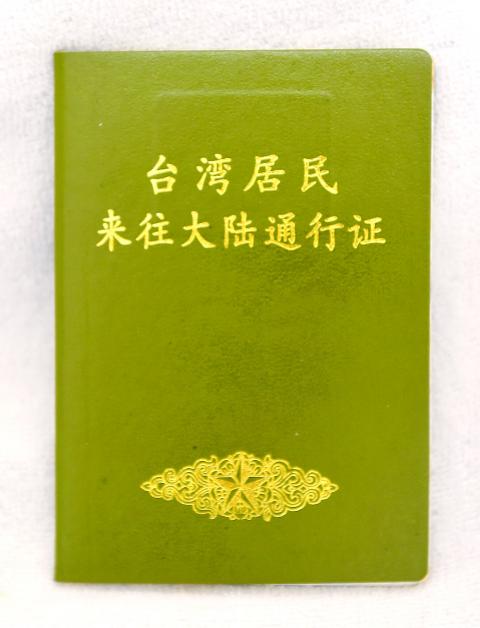
Photo: Chang Chia-ming, Taipei Times
To apply for a Mainland Travel Permit, applicants only need to present their Taiwanese identification card and passport, as well as a filled-in application form and a photograph.
Currently, applicants have to provide documents stating their purpose of visit, the TAO said.
“We believe that the measure would further bring compatriots on both sides of the [Taiwan] Strait closer,” Ma said.
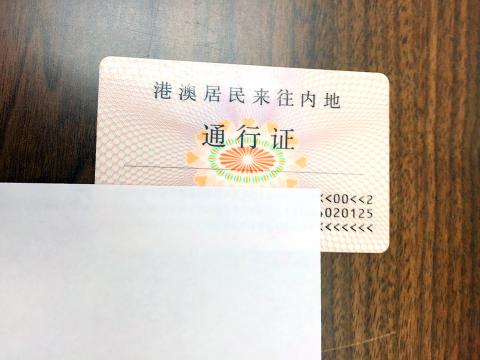
Photo: CNA
Cabinet spokesperson Sun Lih-chyun (孫立群) said that convenience of people-to-people interaction has always been a goal for both sides of the Taiwan Strait, and that Beijing’s announcement is helpful in enhancing cross-strait interaction.
Mainland Affairs Council (MAC) spokesperson Wu Mei-hung (吳美紅) said that Taiwan holds a positive view of the measure, but added that further observation is needed after the policy goes into effect next month to gauge its outcome.
The measure was announced after National Committee of the Chinese People’s Political Consultative Conference Chairman Yu Zhengsheng (俞正聲) said on Monday that the Mainland Travel Permit for Taiwan Residents would be replaced with IC cards allowing automatic entry.
Yu’s announcement has been panned by the Democratic Progressive Party (DPP) and Taiwan Solidarity Union as an attempt to treat Taiwanese like Hong Kong and Macau residents.
China’s Ministry of Public Security yesterday said it would start trials of the cards in certain locations this year.
Wu said the MAC is looking into who would be affected, the parameters of the trials and the functions of the digitized versions of the permit.
DPP spokesperson Cheng Yun-peng (鄭運鵬) said that there should be no political motivation attached to what appears to be the equivalent of a visa waiver, and called on the administration of President Ma Ying-jeou (馬英九) to be extremely careful on how Beijing implements the waiver due to its similarities with its treatment of residents in Hong Kong and Macau.
Additional reporting by Chen Hui-ping

National Taiwan University (NTU) yesterday said it disqualified a person from an entrance examination for using AI smart glasses to cheat, along with two others for making untruthful statements in their curriculum vitae. The three applicants were given null scores, Taiwan’s highest-ranked university said, calling on prospective students to be honest in the admissions process. NTU registrar Lee Hung-sen (李宏森) said that the cheating applicant wore a hat and thick-rimmed glasses to the second written exam for medical school, claiming that they felt cold. Suspicions were aroused when the applicant stared oddly at the test for long stretches while steadily bringing the paper
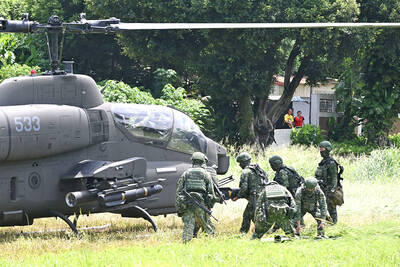
MILITARY ISSUES: A partisan divide between the Cabinet and the legislature ‘raised questions about Taiwan’s ability to adequately fund its defense,’ the report said Taiwan’s defense budget, military personnel numbers and resilience are challenges to its ability to meet national defense goals, the US Naval Institute said in a report published on Tuesday. In response to the perception of a growing military threat posed by China, Taiwan has embarked on an effort to enhance the capabilities needed to deter an attempt by Beijing to annex the nation by force, the institute said in the US Congressional Research Service report, titled Taiwan: Defense and Military Issues, which was filed on Thursday last week. Taiwan’s defense budget increased by about 7.5 percent from 2024 to last year, it
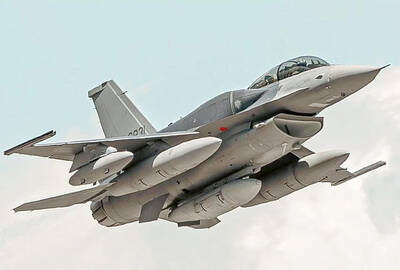
66 FIGHTER JETS: The aircraft is likely undergoing preparations for its transfer to Taiwan — a significant step forward in the nation’s modernization program, a lawmaker said The first of Taiwan’s order of F-16V Block 70 aircraft has been sighted in Texas ahead of delivery, Democratic Progressive Party (DPP) Legislator Wang Ting-yu (王定宇) said. Taiwan’s first F-16V Block 70 two-seat aircraft, tail number 6831, was seen flying from Lockheed Martin’s production facility in Greenville, South Carolina, to Naval Air Station Joint Reserve Base Fort Worth in Texas, Wang wrote on Facebook yesterday. The plane is likely undergoing preparations for its transfer to Taiwan, marking a significant step forward in the Republic of China Air Force’s modernization program, Wang said, citing military analysts. The F-16V Block 70 is a new-build version
NOT JUST NUMBERS: What matters to intelligence work is crucial, reliable information, so even a few credible leads can be highly valuable to national security, a legislator said The National Security Bureau (NSB) yesterday said it has finished the establishment of an information-reporting channel for Chinese nationals, the aim of which is to broaden intelligence gathering on China’s political, military, economic and social developments. Chinese nationals can submit information on the Web page, https://report.nsb.gov.tw, the NSB said in a statement. The move aims to expand the bureau’s diverse intelligence sources and is pursuant to the National Intelligence Services Act (國家情報工作法), it said, adding that it referenced practices adopted by intelligence agencies in the US, the UK and Israel. An increasing number of people are approaching Taiwanese agencies to provide information, as


 RSS
RSS