


Chang Yu-feng (張瑜鳳), the division chief judge who oversaw a case involving Legislative Speaker Wang Jin-pyng (王金平) at the Taipei District Court, was removed from the panel of chief judges, sparking speculation yesterday that she was being punished for ruling against the Chinese Nationalist Party (KMT).
In a Judicial Yuan review of all chief judges on Wednesday, Chang was removed by a seven to four vote due to what the committee said was a “poor performance.” She was the only one who failed to pass the review, which involved 34 judges.
“The composition of the review committee is just and objective, and the review process is fair and transparent,” the Judicial Yuan said.

Photo: Chien Li-chung, Taipei Times
The Democratic Progressive Party (DPP) yesterday said Chang’s removal was to make an example of her and shows the KMT’s intention to interfere with Wang’s second trial.
Chang was the chief judge in a trial that ruled on Sept. 13 last year in favor of Wang’s provisional injunction seeking to retain his KMT membership and position as head of the legislature.
“It seems that [Chang’s removal] is overtime for the ‘September strife’ between (President) Ma Ying-jeou (馬英九) and Wang, and apparently a political crackdown,” DPP spokesperson Huang Di-ying (黃帝穎) told a press conference yesterday.
The “September strife” was a political crisis last year, in which Ma and the KMT accused Wang of being involved in illegal lobbying of the judiciary and tried to revoke his KMT membership, invalidate his status as a KMT legislator-at-large and as legislative speaker.
The timing and motive of Chang’s removal is suspicious and intriguing, DPP caucus Director-General Tsai Chi-chang (蔡其昌) said.
“We wonder why all chief judges subject to committee review were able to pass without seeing a vote, while Chang was the only one whose performance was decided by a ballot,” Tsai said.
Tsai said the removal took place two days before the second trial in the Wang case at the Taiwan High Court and “appeared to be an attempt warn to judges who handle the case in the future.”
The Judicial Yuan is responsible for offering an explanation about the decision to remove Chang and tell the public that it did not interfere in the process, DPP Legislator Chen Chi-mai (陳其邁) said. “If the Judicial Yuan fails to do so, the incident will very likely further damage the judicial system, which has been hampered by its bad reputation as various public opinion polls have shown that most Taiwanese do not trust the system.”
KMT Legislator Lo Shu-lei (羅淑蕾) said clarification is needed.
“The Ministry of Justice or the Judicial Yuan has to clarify the reason [for Chang’s removal],” Lo said. “What wrong did [Chang] do? Is her axing because she upheld justice and ruled in favor of Wang? This is just going too far. Has the nation’s judicial institution become a place for political duels?”
KMT Legislator Tsai Chin-lung (蔡錦隆) said that “there is room for imagination.”
“Won’t [the review result] make people think that there is some sort of political scheme at work? It is certainly weird that there was only one in 34 [presiding judges who were reviewed and got axed],” Tsai Chin-lung said.
KMT-commissioned attorney Lo Min-ton (羅明通) said the situation is not within a commissioned lawyer’s purview, so they have nothing to say about Chang’s removal.
“It is inappropriate for me to comment on this matter,” Wang said in response to media queries.
Additional reporting by Alison Hsiao

Taiwan is projected to lose a working-age population of about 6.67 million people in two waves of retirement in the coming years, as the nation confronts accelerating demographic decline and a shortage of younger workers to take their place, the Ministry of the Interior said. Taiwan experienced its largest baby boom between 1958 and 1966, when the population grew by 3.78 million, followed by a second surge of 2.89 million between 1976 and 1982, ministry data showed. In 2023, the first of those baby boom generations — those born in the late 1950s and early 1960s — began to enter retirement, triggering
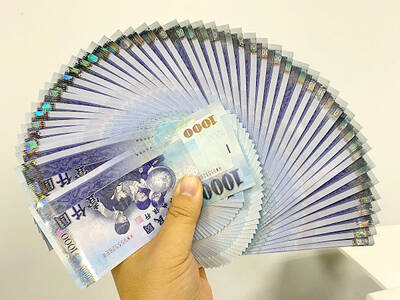
ECONOMIC BOOST: Should the more than 23 million people eligible for the NT$10,000 handouts spend them the same way as in 2023, GDP could rise 0.5 percent, an official said Universal cash handouts of NT$10,000 (US$330) are to be disbursed late next month at the earliest — including to permanent residents and foreign residents married to Taiwanese — pending legislative approval, the Ministry of Finance said yesterday. The Executive Yuan yesterday approved the Special Act for Strengthening Economic, Social and National Security Resilience in Response to International Circumstances (因應國際情勢強化經濟社會及民生國安韌性特別條例). The NT$550 billion special budget includes NT$236 billion for the cash handouts, plus an additional NT$20 billion set aside as reserve funds, expected to be used to support industries. Handouts might begin one month after the bill is promulgated and would be completed within
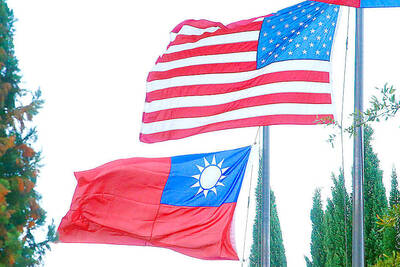
NO CHANGE: The TRA makes clear that the US does not consider the status of Taiwan to have been determined by WWII-era documents, a former AIT deputy director said The American Institute in Taiwan’s (AIT) comments that World War-II era documents do not determine Taiwan’s political status accurately conveyed the US’ stance, the US Department of State said. An AIT spokesperson on Saturday said that a Chinese official mischaracterized World War II-era documents as stating that Taiwan was ceded to the China. The remarks from the US’ de facto embassy in Taiwan drew criticism from the Ma Ying-jeou Foundation, whose director said the comments put Taiwan in danger. The Chinese-language United Daily News yesterday reported that a US State Department spokesperson confirmed the AIT’s position. They added that the US would continue to
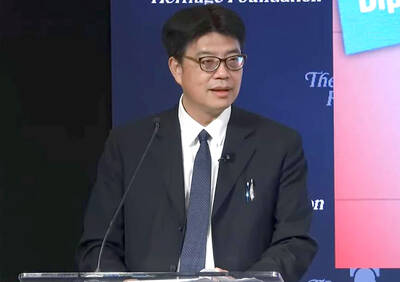
IMPORTANT BACKER: China seeks to expel US influence from the Indo-Pacific region and supplant Washington as the global leader, MAC Minister Chiu Chui-cheng said China is preparing for war to seize Taiwan, Mainland Affairs Council (MAC) Minister Chiu Chui-cheng (邱垂正) said in Washington on Friday, warning that Taiwan’s fall would trigger a regional “domino effect” endangering US security. In a speech titled “Maintaining the Peaceful and Stable Status Quo Across the Taiwan Strait is in Line with the Shared Interests of Taiwan and the United States,” Chiu said Taiwan’s strategic importance is “closely tied” to US interests. Geopolitically, Taiwan sits in a “core position” in the first island chain — an arc stretching from Japan, through Taiwan and the Philippines, to Borneo, which is shared by


 RSS
RSS