


President Ma Ying-jeou (馬英九) yesterday began a series of intensive meetings with Chinese Nationalist Party (KMT) lawmakers, as he sought to heal the rift caused by the party’s much-criticized revocation of Legislative Speaker Wang Jin-pyng’s (王金平) membership over allegations of illegal lobbying.
Ma and Premier Jiang Yi-huah (江宜樺) both appealed for “party unity,” urging lawmakers “to refrain from giving the Democratic Progressive Party [DPP] an opportunity that it can take advantage of,” KMT Policy Committee chief executive Lin Hung-chih (林鴻池) said after a meeting.
The meeting between KMT government officials and lawmakers was held yesterday afternoon to consolidate the party’s position on various issues that will be tackled when the new legislative session starts today.
In a departure from past practice, Wang was not invited to the meeting. The KMT said this was because his party membership has been rescinded — although the Taipei District Court has granted Wang’s injunction against the party’s move to revoke his membership and invalidate his status as head of the legislature.
About 50 lawmakers — out of the total 63 — showed up for the meeting, but a number of them just signed in and left. Only 10 spoke out unbidden at the meeting.
KMT Legislator Lin Te-fu (林德福) said Ma dismissed conspiracy theories that he went after Wang because of a plot seeking his ouster and rebutted criticism characterizing the incident as a political struggle between Wang and him.
Despite divisions among KMT lawmakers over the case, there was a consensus that “the KMT caucus would continue its support for President Ma” while showing their “respect for Speaker Wang,” Lin Te-fu said.
A number of KMT lawmakers close to Wang — including Wong Chung-chun (翁重鈞), Wang Hui-mei (王惠美), Lee Hung-chun (李鴻鈞) and Lu Chia-chen (盧嘉辰), who all showed up at the airport on Tuesday last week to greet Wang on his return from an overseas trip to Malaysia where he attended his daughter’s wedding — were absent from the meeting.
Ma also began to hold small group discussions with KMT lawmakers last night, Presidential Office spokesperson Li Chia-fei (李佳霏) said.
The 63 KMT lawmakers were divided into seven groups to have dinner with Ma beginning last night to seek their views on the Wang issue, Li said.

LEVERAGE: China did not ‘need to fire a shot’ to deny Taiwan airspace over Africa when it owns ‘half the continent’s debt,’ a US official said, calling it economic warfare The EU has raised concerns about overflight rights following the delay of President William Lai’s (賴清德) planned state visit to the Kingdom of Eswatini after three African nations denied overflight clearance for his charter at the last minute. Taiwanese allies Paraguay and Saint Kitts and Nevis, as well as several US lawmakers and the Inter-Parliamentary Alliance on China (IPAC) condemned China for allegedly pressuring the countries. Lai was scheduled to fly directly to Taiwan’s only African ally from yesterday to Sunday to celebrate the 40th anniversary of King Mswati III’s accession and his 58th birthday, but Seychelles, Mauritius and Madagascar suddenly revoked
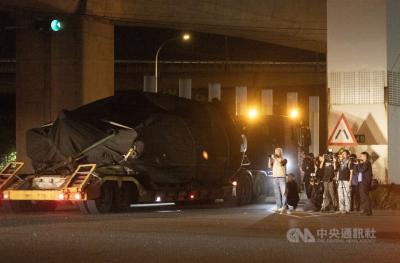
The final batch of 28 M1A2T Abrams tanks purchased from the US arrived at Taipei Port last night and were transported to the Armor Training Command in Hsinchu County’s Hukou Township (湖口), completing the military’s multi-year procurement of 108 of the tanks. Starting at 12:10am today, reporters observed more than a dozen civilian flatbed trailers departing from Taipei Port, each carrying an M1A2T tank covered with black waterproof tarps. Escorted by military vehicles, the convoy traveled via the West Coast Expressway to the Armor Training Command, with police implementing traffic control. The army operates about 1,000 tanks, including CM-11 Brave Tiger
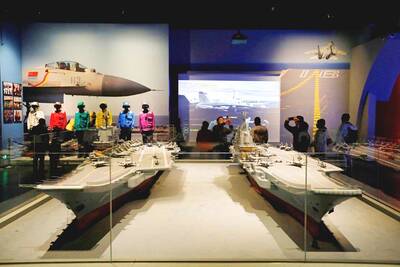
China on Wednesday teased in a video an aircraft carrier that could be its fourth, and the first using nuclear power, while making an allusion to Taiwan and vowing to further build up its islands, as it looks to boost maritime power, secure resources and bolster territorial claims. The video, issued on the eve of the 77th founding anniversary of the Chinese People’s Liberation Army Navy, featured fictional officers with names that are homophones of three commissioned aircraft carriers, the Liaoning (遼寧), Shandong (山東) and Fujian (福建). Titled Into the Deep, it showed a 19-year-old named “Hejian” (何劍) joining the group, sparking
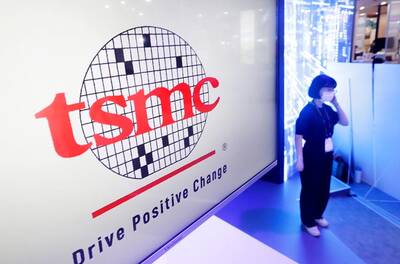
BIG YEAR: The company said it would also release its A12 chip the same year to keep a ‘reliable stream of new silicon technologies’ flowing to its customers Taiwan Semiconductor Manufacturing Co (TSMC, 台積電) yesterday said its newest A13 chip is to enter volume production in 2029 as the chipmaker seeks to hold onto its tech leadership and demand for next-generation chips used in artificial intelligence (AI), high-performance-computing (HPC) and mobile applications. TSMC, the world’s biggest contract chipmaker, also unveiled its A12 chip at its annual technology symposium in Santa Clara, California. The A12 chip, which features TSMC’s super-power-rail technology to provide backside power delivery for AI and HPC applications, is also to enter volume production in 2029, a year after the scheduled release of the A14 chip. The technology moves


 RSS
RSS