


Three US congressional members have written to President Ma Ying-jeou (馬英九) to protest plans to tear down two shortwave radio towers in Yunlin County’s Huwei Township (虎尾) and in Greater Tainan.
They say the towers — at least partly built with US funds — may still be needed to broadcast uncensored news into China.
The towers are being used by Falun Gong and its media organization, the Sound of Hope Radio Network, to transmit broadcasts that are critical of the Chinese government and its human rights record.
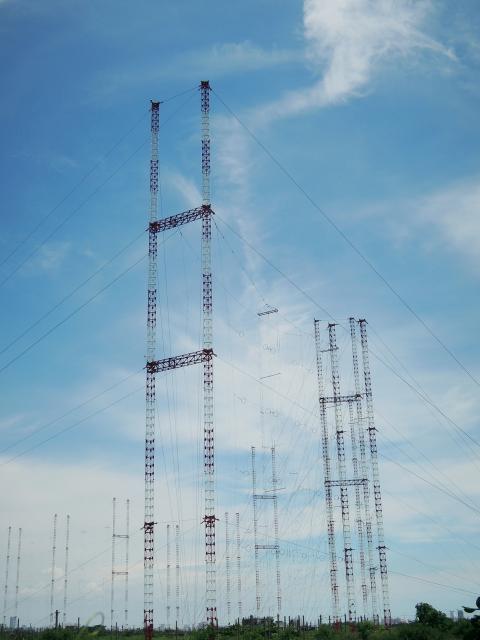
Photo: Taipei Times
A statement issued by Falun Gong in Washington on Monday said that Radio Taiwan International (RTI) had already begun tearing down the towers in Greater Tainan and that requests from the US Congress to stop the demolition were being ignored.
The statement said that Beijing was putting “huge pressure” on Taiwan to stop shortwave broadcasts aimed at China.
It said that RTI had changed its mission from spreading “freedom and democracy to China” to marketing and promoting Taiwan.
The statement said the towers were built in the 1960s and 1970s, several with funding from the US military.
“RTI plans to close two major radio facilities, Huwei and Tainan substations,” it said.
It said the two radio stations had 28 shortwave radio towers equipped with antennae with a transmission power of at least 2,700 kilowatts and could cover all of China.
“The Chinese Communist Party is very scared about the power of these towers and they want the towers to be demolished,” the statement signed by Sound of Hope Radio Network president Allen Zeng said.
“Any plan to tear down these facilities is premature and should be suspended pending analysis of other potential use of the facilities,” US Representative Frank Wolf wrote in a letter to Ma.
“Any demolitions that would reduce the capability to transmit into China should be halted until alternatives can be fully explored,” US Representative Dana Rohrabacher wrote in another letter to Ma.
US Representative Christopher Smith has also written to the president to express his concern that “any teardown would undermine the purpose for which these facilities were built” and would deprive US broadcasters of a chance to save expenses.
“I believe that any plan to tear down the Tainan and Huwei facilities should be delayed until their strategic utilization by international shortwave broadcasters is fully studied,” Smith said.
RTI Tainan substation director Tseng Wen-san (曾文三) yesterday said the plan to demolish the Greater Tainan facility was made due to a river expansion project and had nothing to do with “the Chinese communists.”
“It is an established policy that the Tian Ma Radio Station [the Tainan substation] will be relocated to Yunlin County’s Baojhong Township (褒忠),” he said, adding: “After the relocation to Yunlin, no changes will be made to our international radio broadcasts.”
Additional reporting by Tsai Wen-chu
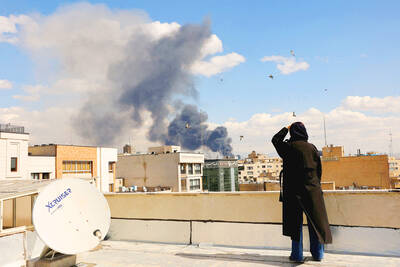
CHAOS: Iranians took to the streets playing celebratory music after reports of Khamenei’s death on Saturday, while mourners also gathered in Tehran yesterday Iranian Supreme Leader Ayatollah Ali Khamenei was killed in a major attack on Iran launched by Israel and the US, throwing the future of the Islamic republic into doubt and raising the risk of regional instability. Iranian state television and the state-run IRNA news agency announced the 86-year-old’s death early yesterday. US President Donald Trump said it gave Iranians their “greatest chance” to “take back” their country. The announcements came after a joint US and Israeli aerial bombardment that targeted Iranian military and governmental sites. Trump said the “heavy and pinpoint bombing” would continue through the week or as long
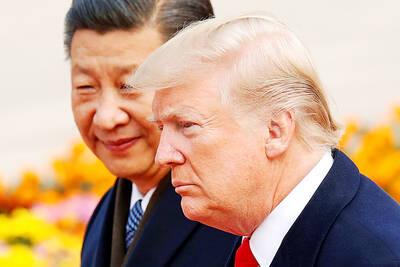
TRUST: The KMT said it respected the US’ timing and considerations, and hoped it would continue to honor its commitments to helping Taiwan bolster its defenses and deterrence US President Donald Trump is delaying a multibillion-dollar arms sale to Taiwan to ensure his visit to Beijing is successful, a New York Times report said. The weapons sales package has stalled in the US Department of State, the report said, citing US officials it did not identify. The White House has told agencies not to push forward ahead of Trump’s meeting with Chinese President Xi Jinping (習近平), it said. The two last month held a phone call to discuss trade and geopolitical flashpoints ahead of the summit. Xi raised the Taiwan issue and urged the US to handle arms sales to

State-run CPC Corp, Taiwan (CPC, 台灣中油) yesterday said that it had confirmed on Saturday night with its liquefied natural gas (LNG) and crude oil suppliers that shipments are proceeding as scheduled and that domestic supplies remain unaffected. The CPC yesterday announced the gasoline and diesel prices will rise by NT$0.2 and NT$0.4 per liter, respectively, starting Monday, citing Middle East tensions and blizzards in the eastern United States. CPC also iterated it has been reducing the proportion of crude oil imports from the Middle East and diversifying its supply sources in the past few years in response to geopolitical risks, expanding
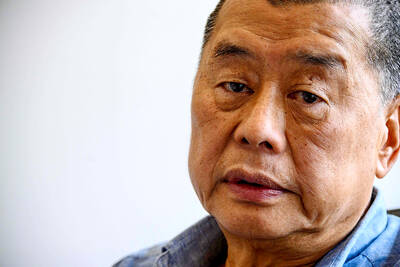
Pro-democracy media tycoon Jimmy Lai’s (黎智英) fraud conviction and prison sentence were yesterday overturned by a Hong Kong court, in a surprise legal decision that comes soon after Lai was jailed for 20 years on a separate national security charge. Judges Jeremy Poon (潘兆初), Anthea Pang (彭寶琴) and Derek Pang (彭偉昌) said in the judgement that they allowed the appeal from Lai, and another defendant in the case, to proceed, as a lower court judge had “erred.” “The Court of Appeal gave them leave to appeal against their conviction, allowed their appeals, quashed the convictions and set aside the sentences,” the judges


 RSS
RSS