


Cooperation between the Taipei City Government and a multinational consortium on the Taipei Twin Towers project next to the Taipei Railway Station collapsed yesterday when the developer failed to furnish a NT$1.89 billion (US$63.7 million) performance bond.
Taipei City Department of Rapid Transit Systems (DORTS) Commissioner Richard Chen (陳椿亮) confirmed that the consortium, led by Taipei Gateway International Development (太極雙星), has lost its bid for the project and said the city government will start negotiating the contract with the second-priority bidder, BES Engineering Corp (中華工程), to continue with the project’s development.
The NT$70 billion project is one of the most expensive development projects in Taiwan. The collapse of the cooperation came amid speculation that Taipei Gateway International Development is experiencing financial difficulties.
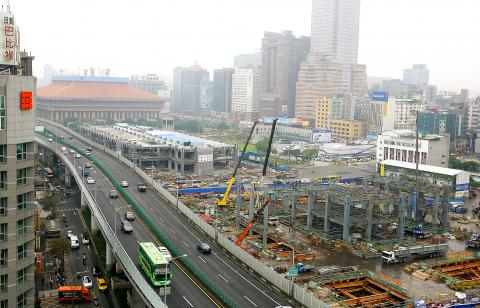
Photo: CNA
The company had promised to wire US$100 million to the department’s designated bank account by midnight on Thursday to secure the contract and prove its financial strength. It sent a copy of a wire transfer record via fax to the department at 11:42pm on Thursday as confirmation that it paid the performance bond.
Chen and the department had expressed optimism about the cooperation after receiving the fax. However, the department checked with the Taipei Fubon Bank (台北富邦銀行) yesterday morning and found that no money had been transferred to the account.
“It is a requirement for the developer to pay the performance bond to enter into the contract. Since it has failed to do so by the deadline, we will move on to discuss the contract with the second bidder and continue with the procedures. Whether the company had financial difficulty in paying the amount is not our concern,” Chen told a press conference.
The consortium, composed of Taipei Gateway International Development, and IGB and Mid Valley City, both from Malaysia, won the first-priority bid in October last year to develop the two high-rise buildings, which are to serve as the main hub for the Taiwan Taoyuan International Airport MRT line to Taipei and five other railway and MRT lines.
However, since the consortium won the priority, allegations about the company’s financial strength, qualification and bribery have cast a shadow over the project.
Democratic Progressive Party Taipei City Councilor Wang Shi-chien (王世堅) lashed out at the city government, saying it was covering up for the company.
He urged Taipei Mayor Hau Lung-bin (郝龍斌) to apologize for the collapsed cooperation, and demanded that Chen and related department heads take full responsibility and tender their resignations.
“The cooperation is a scheme and the city government has clearly been covering up for the company. Now that the bidding process has proved to be a farce, Hau’s team has lost its credibility and must take full responsibility for the ridiculous project,” Wang said.
Hau declined to comment on the incident and said the department would follow standard procedures in handling the contract.
Chen said the department would reflect on the bidding process and administrative responsibility, but declined to say whether he would offer to resign over the collapsed cooperation.
The project, initiated by President Ma Ying-jeou (馬英九) during his term as Taipei mayor in 2004, suffered four failed bidding processes until the consortium won the first-priority bid in October last year.
The developer had planned to complete the twin towers in 2018, but the latest setback would cause the project to be delayed by at least three months.
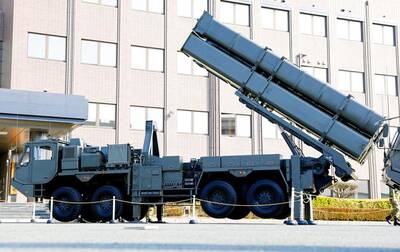
Japan has deployed long-range missiles in a southwestern region near China, the Japanese defense minister said yesterday, at a time when ties with Beijing are at their lowest in recent years. The missiles were installed in Kumamoto in the southern region of Kyushu, as Japan is attempting to shore up its military capacity as China steps up naval activity in the East China Sea. “Standoff defense capabilities enable us to counter the threat of enemy forces attempting to invade our country ... while ensuring the safety of our personnel,” Japanese Minister of Defense Shinjiro Koizumi said. “This is an extremely important initiative for
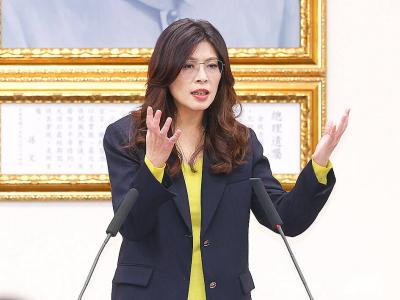
Chinese Nationalist Party (KMT) Chairwoman Cheng Li-wun (鄭麗文) today accepted an invitation from Chinese President Xi Jinping (習近平) to lead a delegation to China next month, saying she hopes to promote the peaceful development of cross-strait relations and bring stability to the Taiwan Strait. “I am grateful and happy to accept this invitation,” Cheng said in a statement from the KMT chairperson’s office. Cheng said she hopes both sides can work together to promote the peaceful development of cross-strait relations, enhance exchange and cooperation, bring stability to the Taiwan Strait and improve people’s livelihoods. At today's news conference, Cheng said any efforts to
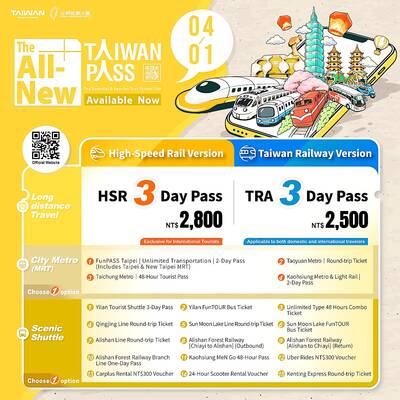
MORE POPULAR: Taiwan Pass sales increased by 59 percent during the first quarter compared with the same period last year, the Tourism Administration said The Tourism Administration yesterday said that it has streamlined the Taiwan Pass, with two versions available for purchase beginning today. The tourism agency has made the pass available to international tourists since 2024, allowing them to access the high-speed rail, Taiwan Railway Corp services, four MRT systems and four Taiwan Tourist Shuttles. Previously, five types of Taiwan Pass were available, but some tourists have said that the offerings were too complicated. The agency said only two types of Taiwan Pass would be available, starting from a three-day pass with the high-speed rail and a three-day pass with Taiwan Railway Corp. The former costs NT$2,800
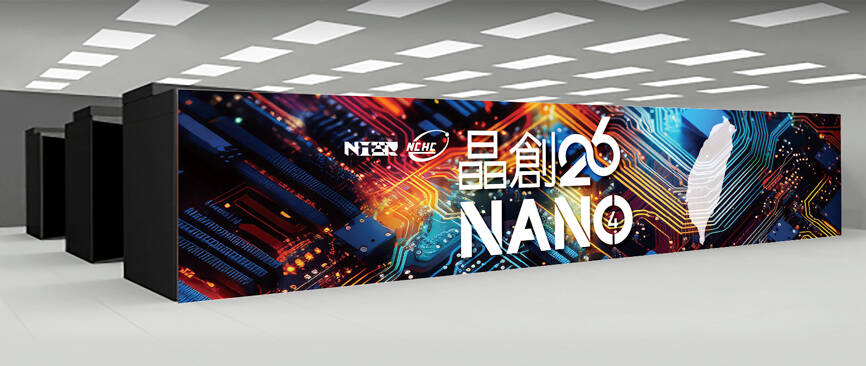
The nation’s fastest supercomputer, Nano 4 (晶創26), is scheduled to be launched in the third quarter, and would be used to train large language models in finance and national defense sectors, the National Center for High-Performance Computing (NCHC) said. The supercomputer, which would operate at about 86.05 petaflops, is being tested at a new cloud computing center in the Southern Taiwan Science Park in Tainan. The exterior of the server cabinet features chip circuitry patterns overlaid with a map of Taiwan, highlighting the nation’s central position in the semiconductor industry. The center also houses Taiwania 2, Taiwania 3, Forerunner 1 and


 RSS
RSS