


The Taipei District Prosecutors’ Office yesterday indicted and requested life imprisonment for former National Fire Agency (NFA) director-general Huang Chi-min (黃季敏), who was charged with receiving bribes from contractors in several procurements for disaster-prevention equipment.
The graft case against Huang, who became something of a national hero after his handling of rescue efforts during Typhoon Morakot, is expected to be referred to the Taipei District Court today at the earliest.
Taipei District Prosecutors’ Office spokesman Huang Mo-hsin (黃謀信) said the money allocated for the procurement projects was earmarked for disaster prevention equipment and was public money meant to save lives.
“However, Huang Chi-min received bribes amounting to NT$19.24 million [US$660,500] for his own self-interest, and has shown no remorse or inclination to confess to his wrongdoings, which is why the office decided to seek the most severe punishment of a life sentence,” Huang Mo-hsin said.
Huang Chi-min, 60, who served as director-general of the agency between 2003 and 2009, is suspected of favoring certain contractors in nine procurement projects for disaster-prevention communications systems in return for bribes.
Following a three-year investigation launched on the heels of Huang Chi-min’s retirement from the agency in 2009, about 160 investigators on Aug. 29 raided his residence, his office at Formosa Plastics Corp (台塑) in Taipei — where he then served as a vice general manager before being suspended — and 39 other locations.
Huang Chi-min was also taken in for questioning on that day, along with more than 20 others, including his wife and brother, Chen Su-hsia (陳素霞) and Huang Wen-chou (黃文宙), agency officials and contractors.
Prosecutors have held the 60-year-old incommunicado since Aug. 30 for fear of possible collusion.
Also in detention are NFA Information Office director Tsai Mu-huo (蔡木火) and Shih Chien University associate professor Chin Li-peng (金力鵬), who is suspected of benefiting an unidentified contractor by rigging bids in exchange for a bribe of NT$1 million.
Aside from the August raids — which led to the discovery of 18 gold bars weighing a total of 17kg and worth close to NT$23 million at Huang Chi-min’s residence and office — prosecutors have conducted six other searches.
During a raid on Sept. 6, prosecutors seized an additional NT$900,000 in cash.
More valuables were discovered during a third search on Sept. 14, including two gold bars weighing 1kg each, seven pieces of gold jewelry and NT$4 million in cash, as well as ¥6 million (US$70,700), US$40,000 and HK$180,000 (US$23,200) in foreign banknotes.
Prosecutors have also seized NT$35 million that was wired from a domestic bank account belonging to Huang Wen-chou to an overseas account in Singapore, which was later transferred back to Taiwan.
Meanwhile, prosecutors are still looking into more allegations against Huang Chi-min, including a NT$40 million investment in a Taipei-based cram school that is suspected of being a front for money laundering, from which he receives an annual bonus of about NT$1 million.
Allegations made by the Chinese-language Next Magazine that Huang Chi-min bought his way from NFA deputy director-general to the head of the agency by giving a NT$10 million bribe to the then-first lady Wu Shu-jen (吳淑珍) are also being investigated.
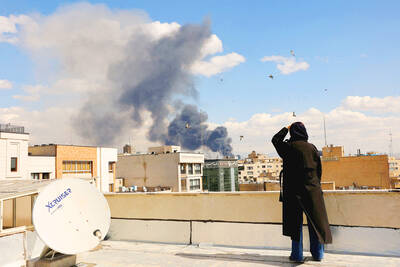
CHAOS: Iranians took to the streets playing celebratory music after reports of Khamenei’s death on Saturday, while mourners also gathered in Tehran yesterday Iranian Supreme Leader Ayatollah Ali Khamenei was killed in a major attack on Iran launched by Israel and the US, throwing the future of the Islamic republic into doubt and raising the risk of regional instability. Iranian state television and the state-run IRNA news agency announced the 86-year-old’s death early yesterday. US President Donald Trump said it gave Iranians their “greatest chance” to “take back” their country. The announcements came after a joint US and Israeli aerial bombardment that targeted Iranian military and governmental sites. Trump said the “heavy and pinpoint bombing” would continue through the week or as long
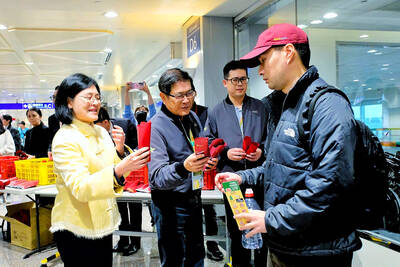
An Emirates flight from Dubai arrived at Taiwan Taoyuan International Airport yesterday afternoon, the first service of the airline since the US and Israel launched strikes against Iran on Saturday. Flight EK366 took off from the United Arab Emirates (UAE) at 3:51am yesterday and landed at 4:02pm before taxiing to the airport’s D6 gate at Terminal 2 at 4:08pm, data from the airport and FlightAware, a global flight tracking site, showed. Of the 501 passengers on the flight, 275 were Taiwanese, including 96 group tour travelers, the data showed. Tourism Administration Deputy Director-General Huang He-ting (黃荷婷) greeted Taiwanese passengers at the airport and
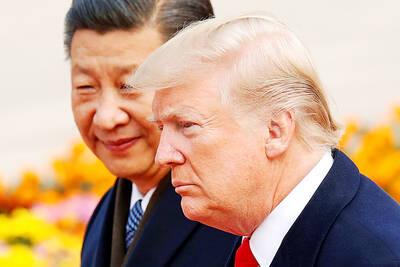
TRUST: The KMT said it respected the US’ timing and considerations, and hoped it would continue to honor its commitments to helping Taiwan bolster its defenses and deterrence US President Donald Trump is delaying a multibillion-dollar arms sale to Taiwan to ensure his visit to Beijing is successful, a New York Times report said. The weapons sales package has stalled in the US Department of State, the report said, citing US officials it did not identify. The White House has told agencies not to push forward ahead of Trump’s meeting with Chinese President Xi Jinping (習近平), it said. The two last month held a phone call to discuss trade and geopolitical flashpoints ahead of the summit. Xi raised the Taiwan issue and urged the US to handle arms sales to
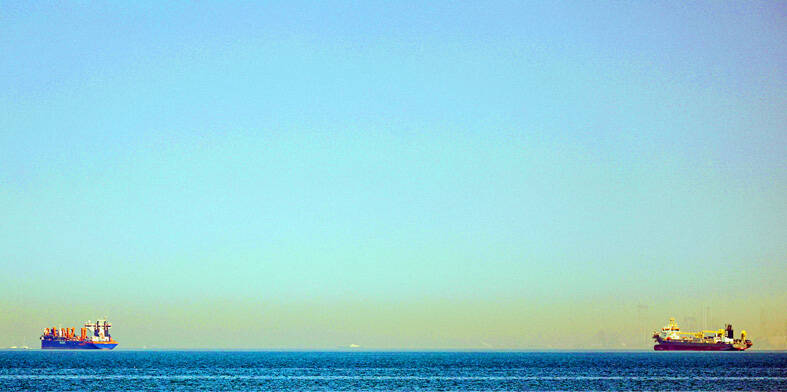
State-run CPC Corp, Taiwan (CPC, 台灣中油) yesterday said that it had confirmed on Saturday night with its liquefied natural gas (LNG) and crude oil suppliers that shipments are proceeding as scheduled and that domestic supplies remain unaffected. The CPC yesterday announced the gasoline and diesel prices will rise by NT$0.2 and NT$0.4 per liter, respectively, starting Monday, citing Middle East tensions and blizzards in the eastern United States. CPC also iterated it has been reducing the proportion of crude oil imports from the Middle East and diversifying its supply sources in the past few years in response to geopolitical risks, expanding


 RSS
RSS