


The British businessman whose murder has sparked political upheaval in China was poisoned after he threatened to expose a plan by a Chinese leader’s wife to move money abroad, two sources with knowledge of the police investigation said.
It was the first time a specific motive has been revealed for Neil Heywood’s murder in November last year, a death that ended Chongqing party boss Bo Xilai’s (薄熙來) hopes of emerging as a top central leader and unbalanced the Chinese Communist Party’s looming leadership succession.
Bo’s wife, Gu Kailai (谷開來), asked Heywood late last year to move a large sum of money abroad, and she became outraged when he demanded a larger cut of the money than she had expected because of the size of the transaction, the sources said.
She accused him of being greedy and hatched a plan to kill him after he said he could expose her dealings, one of the sources said, summarizing the police case. Both sources have spoken to investigators in Chongqing, the southwestern Chinese city where Heywood was killed and where Bo had cast himself as a crime-fighting leader.
Gu is in police custody on suspicion of committing or arranging Heywood’s murder, though no details of the motive or the crime itself have been publicly released, other than a general comment from Chinese state media that he was killed after a financial dispute.
The sources have close ties to Chinese police and said they were given details of the investigation.
They said Heywood — formerly a close friend of Gu and who had been helping her with her overseas financial dealings — was killed after he threatened to expose what she was doing.
“Heywood told her that if she thought he was being too greedy, then he didn’t need to become involved and wouldn’t take a penny of the money, but he also said he could also expose it,” the first source said.
The sources said police suspected the 41-year-old was poisoned by a drink. They did not know precisely where he died in Chongqing, but they and other sources with access to official information say they believed Heywood was killed at a secluded hilltop retreat, the Nanshan Lijing Holiday Hotel, which is also marketed as the Lucky Holiday Hotel.
The sources said Gu and Heywood, who had lived in China since the early 1990s, shared a long and close personal relationship, but were not romantically involved.
The sources did not know details of the offshore transactions that Heywood facilitated for Gu, but said exposure of the deals would have imperiled her and her ambitious husband, who was campaigning for promotion to the top ranks of China’s leadership. Bo has since been ousted over the scandal.
“After Gu Kailai found that Heywood wouldn’t agree to go along and was even resisting with threats — that he could expose this money with unknown provenance — then that was a major risk to Gu Kailai and Bo Xilai,” said the first source, requesting anonymity because of the sensitivity of the case.
It was not possible to get official confirmation of the case police are building against Gu. The Chinese government did not respond to faxed questions about the case. Some of Bo’s leftist supporters have said the case could be a campaign to discredit him.
Gu, who is in custody and facing a possible death sentence for murder, and Bo could not be reached for comment. Bo has not been seen since appearing at parliament last month, when he held a news conference decrying the “filth” being poured on his family.
Efforts to contact Heywood’s mother and sister at their homes in London were unsuccessful. The door to his mother’s home carried a note saying she would not speak to reporters.
Heywood had spent his last week in Chongqing in Nan’an district, an area politically loyal to Bo, and stayed at two hotels: the Nanshan Lijing Holiday Hotel and the Sheraton hotel.
Staff at each hotel said they knew nothing of a British man dying there. A guard was barring access to an apparently empty row of villas within the grounds of the Nanshan Lijing Holiday Hotel on Sunday and yesterday, saying a meeting was going on.
Heywood’s falling-out with Gu followed a period in which she had grown distant from her ambitious, perpetually busy husband and she had turned to Heywood as a soulmate, sources said.
“Bo and Gu Kailai had not been a proper husband and wife for years ... Gu Kailai and Heywood had a deep personal relationship and she took the break between them deeply to heart,” said Wang Kang, a well-connected Chongqing businessman who has learned some details of the case from Chinese officials.
“Her mentality was ‘you betrayed me, and so I’ll get my revenge,’” Wang said in his office, decorated with pictures of himself meeting senior officials, including Bo’s late father, the revolutionary veteran Bo Yibo (薄一波), a comrade of Mao Zedong (毛澤東).
Heywood got to know the powerful family when Bo Xilai was mayor of Dalian in the 1990s. Heywood helped with getting the couple’s son, Bo Guagua (薄瓜瓜), into an exclusive British school, Harrow, said one of the sources with police contacts.
The scandal over Heywood’s death broke in February when Bo’s former police chief, Wang Lijun (王立軍), fled to a US consulate after he had confronted Bo with allegations of Gu’s involvement. He spent about 24 hours inside the consulate before he left into the hands of Chinese central government authorities.
Bo was stripped of all his party positions last week, ending his bid to join the upper echelons of the Chinese leadership at a party congress late this year, and opening the door to jockeying among rivals to get a place in the new lineup.
It was not immediately clear how Heywood would have helped Gu shift large sums of money offshore, though China’s capital controls pose a formidable barrier to anyone trying to move large sums of yuan out of the country.
Chinese leaders’ salaries are not extravagant and there have been questions about how Bo managed to fund the expensive Western schooling and lifestyle for his son, Bo Guagua, who also studied at Oxford university and is enrolled at Harvard. Bo said in March the schools were funded by scholarships.
The sources said there had been no sign of any dispute between Gu and Heywood until October and November last year when the argument over funds began. The lack of a paper trail made it difficult for police to determine how much money was involved, they added.
Police suspect Heywood took a poisoned drink, according to one of the sources, and died on Nov. 15. Both sources said Gu was not present at the scene.
The sources said Heywood had stayed at the Nanshan Lijing Holiday Hotel, a secluded complex overlooking Chongqing that Gu had visited in the past. Staff there said they had no knowledge of the death there of a British man.

Japan has deployed long-range missiles in a southwestern region near China, the Japanese defense minister said yesterday, at a time when ties with Beijing are at their lowest in recent years. The missiles were installed in Kumamoto in the southern region of Kyushu, as Japan is attempting to shore up its military capacity as China steps up naval activity in the East China Sea. “Standoff defense capabilities enable us to counter the threat of enemy forces attempting to invade our country ... while ensuring the safety of our personnel,” Japanese Minister of Defense Shinjiro Koizumi said. “This is an extremely important initiative for
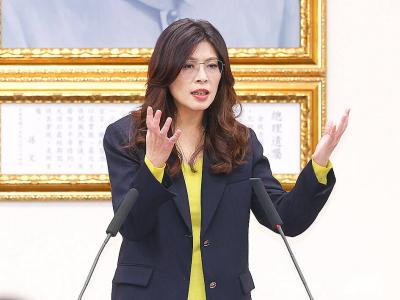
Chinese Nationalist Party (KMT) Chairwoman Cheng Li-wun (鄭麗文) today accepted an invitation from Chinese President Xi Jinping (習近平) to lead a delegation to China next month, saying she hopes to promote the peaceful development of cross-strait relations and bring stability to the Taiwan Strait. “I am grateful and happy to accept this invitation,” Cheng said in a statement from the KMT chairperson’s office. Cheng said she hopes both sides can work together to promote the peaceful development of cross-strait relations, enhance exchange and cooperation, bring stability to the Taiwan Strait and improve people’s livelihoods. At today's news conference, Cheng said any efforts to

MORE POPULAR: Taiwan Pass sales increased by 59 percent during the first quarter compared with the same period last year, the Tourism Administration said The Tourism Administration yesterday said that it has streamlined the Taiwan Pass, with two versions available for purchase beginning today. The tourism agency has made the pass available to international tourists since 2024, allowing them to access the high-speed rail, Taiwan Railway Corp services, four MRT systems and four Taiwan Tourist Shuttles. Previously, five types of Taiwan Pass were available, but some tourists have said that the offerings were too complicated. The agency said only two types of Taiwan Pass would be available, starting from a three-day pass with the high-speed rail and a three-day pass with Taiwan Railway Corp. The former costs NT$2,800

The nation’s fastest supercomputer, Nano 4 (晶創26), is scheduled to be launched in the third quarter, and would be used to train large language models in finance and national defense sectors, the National Center for High-Performance Computing (NCHC) said. The supercomputer, which would operate at about 86.05 petaflops, is being tested at a new cloud computing center in the Southern Taiwan Science Park in Tainan. The exterior of the server cabinet features chip circuitry patterns overlaid with a map of Taiwan, highlighting the nation’s central position in the semiconductor industry. The center also houses Taiwania 2, Taiwania 3, Forerunner 1 and


 RSS
RSS