


Taliban militants yesterday opened fire on a delegation of senior Afghan officials — including two of Afghan President Hamid Karzai’s brothers — visiting villages in southern Afghanistan where a US soldier is suspected of killing 16 civilians.
The attack came as students in the east staged the first significant protest in response to Sunday’s shootings, raising worries of a repeat of the wave of violent demonstrations that rocked the nation after last month’s burning of Korans by troops at a US base.
The militants killed an Afghan soldier who was providing security for the delegation in Balandi village, said General Abdul Razaq, the police chief for Kandahar Province, where the visit took place.
Another Afghan soldier and a military prosecutor were wounded, he said.
The delegation was in a mosque for a service for those killed on Sunday when the gunfire erupted.
One of the president’s brothers, Qayum Karzai, said the attack didn’t seem serious to him.
“We were giving them our condolences, then we heard two very, very light shots,” he said. “Then we assumed that it was the national army that started to fire in the air.”
He said the members of the delegation, which also included Kandahar Governor Tooryalai Wesa and Afghan Minister of Border and Tribal Affairs Asadullah Khalid, were safe and headed back to Kandahar city.
Before the attack on the delegation, the Taliban vowed to kill and behead those responsible for the civilian deaths in the two villages in Panjwai district, considered the birthplace of the militant group.
Nine of the 16 killed were children, and three were women, according to President Karzai.
The US has an army staff sergeant in custody who is suspected of carrying out Sunday’s killings, but has not released his name.
Villagers have described him stalking from house to house in the middle of the night, opening fire on sleeping families and then burning some of the dead bodies.
Their anger was evident yesterday in discussions with the visiting officials before the attack cut the visit short.
“Today, the Kandahar governor was trying to explain to the villagers that he was only one soldier, that he was not a sane person and that he was sick,” said Abdul Rahim Ayubi, a Kandahar lawmaker who was part of the delegation. “But the people were just shouting and they were very angry. They didn’t listen to the governor. They accused him of defending the Americans instead of defending the Kandahari people.”
The delegation did manage before the shooting started to pay out compensation to family members of the victims — US$2,000 for each death and US$1,000 for each person wounded.
Meanwhile, hundreds of students staged the first significant protest in response to the tragedy. The students protesting at a university in Jalalabad city, 125km east of Kabul, were incensed.
“Death to America!” and “Death to the soldier who killed our civilians!” shouted the crowd.
Some carried a banner that called for a public trial of the soldier, who US officials have identified as a married, 38-year-old father of two who was trained as a sniper and recently suffered a head injury in Iraq. Other protesters burned an effigy of US President Barack Obama.
“The reason we are protesting is because of the killing of innocent children and other civilians by this tyrant US soldier,” said Sardar Wali, a university student. “We want the United Nations and the Afghan government to publicly try this guy.”
Taliban spokesman Zabiullah Mujahid said in a statement that the soldier should be tried as a war criminal and executed by the victims’ relatives.
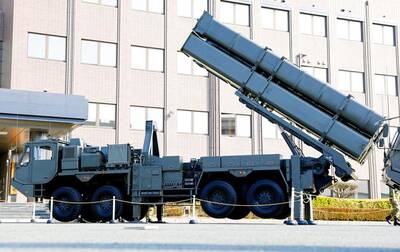
Japan has deployed long-range missiles in a southwestern region near China, the Japanese defense minister said yesterday, at a time when ties with Beijing are at their lowest in recent years. The missiles were installed in Kumamoto in the southern region of Kyushu, as Japan is attempting to shore up its military capacity as China steps up naval activity in the East China Sea. “Standoff defense capabilities enable us to counter the threat of enemy forces attempting to invade our country ... while ensuring the safety of our personnel,” Japanese Minister of Defense Shinjiro Koizumi said. “This is an extremely important initiative for
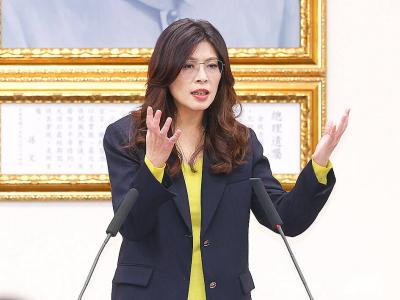
Chinese Nationalist Party (KMT) Chairwoman Cheng Li-wun (鄭麗文) today accepted an invitation from Chinese President Xi Jinping (習近平) to lead a delegation to China next month, saying she hopes to promote the peaceful development of cross-strait relations and bring stability to the Taiwan Strait. “I am grateful and happy to accept this invitation,” Cheng said in a statement from the KMT chairperson’s office. Cheng said she hopes both sides can work together to promote the peaceful development of cross-strait relations, enhance exchange and cooperation, bring stability to the Taiwan Strait and improve people’s livelihoods. At today's news conference, Cheng said any efforts to

MORE POPULAR: Taiwan Pass sales increased by 59 percent during the first quarter compared with the same period last year, the Tourism Administration said The Tourism Administration yesterday said that it has streamlined the Taiwan Pass, with two versions available for purchase beginning today. The tourism agency has made the pass available to international tourists since 2024, allowing them to access the high-speed rail, Taiwan Railway Corp services, four MRT systems and four Taiwan Tourist Shuttles. Previously, five types of Taiwan Pass were available, but some tourists have said that the offerings were too complicated. The agency said only two types of Taiwan Pass would be available, starting from a three-day pass with the high-speed rail and a three-day pass with Taiwan Railway Corp. The former costs NT$2,800

The nation’s fastest supercomputer, Nano 4 (晶創26), is scheduled to be launched in the third quarter, and would be used to train large language models in finance and national defense sectors, the National Center for High-Performance Computing (NCHC) said. The supercomputer, which would operate at about 86.05 petaflops, is being tested at a new cloud computing center in the Southern Taiwan Science Park in Tainan. The exterior of the server cabinet features chip circuitry patterns overlaid with a map of Taiwan, highlighting the nation’s central position in the semiconductor industry. The center also houses Taiwania 2, Taiwania 3, Forerunner 1 and


 RSS
RSS