


A series of demerits were handed out to military personnel involved in the wrongful execution of Chiang Kuo-ching (江國慶) and all their medals, certificates and accolades have been recalled and rescinded, the Ministry of National Defense said yesterday, sparking criticism that the wrongdoers had merely received a “slap on the wrist.”
Chiang was convicted of the 1996 rape and murder of a five-year-old girl and he was executed in 1997, but a posthumous retrial last year of the former air force serviceman exonerated him after it was revealed that his confession was coerced.
Chiang was 21 years old when he was executed.
In May last year, the Taipei District Prosecutor’s Office indicted Hsu Jung-chou (許榮洲), another airman, for the crime.
Chiang’s family has received NT$100 million (US$3.3 million) in compensation and has also initiated legal proceedings asking for reparations from those involved in the case.
Former air force commander-in-chiefs Huang Hsien-jung (黃顯榮), Chen Chao-min (陳肇敏) and Lee Tien-yu (李天羽) — who were all involved in the Chiang case — received punishments ranging from one minor demerit to one major demerit, none of which will affect the three retired generals’ pensions.
Democratic Progressive Party (DPP) Legislator Huang Wei-cher (黃偉哲) said the judgement showed that members of the armed forces were covering up for each other, adding that when the media’s attention was on the Chiang case, the ministry not only paid Chiang’s family a great sum of money, it also talked about confiscating property from Chen and others.
Huang said the public would not accept a punishment akin to “a light slap on the wrist” and that it was not right that the public is left to pay for the mistakes of Chen and others. Huang called on the Control Yuan to look into possible wrongdoing on the part of the ministry.
DPP Legislator Tsai Huang-liang (蔡煌瑯) said the punishments were too minor and “completely meaningless.”
It cannot give Chiang’s family any closure nor can it satisfy the public’s desire for justice, Tsai said, adding that the judicial system should step up its investigation.
According to Tsai, those who made mistakes must pay the price, and only then can it be called social justice.
Ministry spokesperson David Lo (羅紹和) said in an interview yesterday that the 23 members of the armed forces involved had received between one minor demerit and two major demerits, in accordance with the extent of their involvement in Chiang’s case.
Lo said the ministry had also rescinded all awards, medals, certificates and accolades that had been awarded to 33 people following the initial ruling that led to Chiang’s execution.
The punishments meted out by the ministry for personnel involved in the Chiang case were based on the principle of not punishing those who did nothing wrong, but also not letting off those who had done wrong, Lo said.
The punishments were appropriate, Lo added.
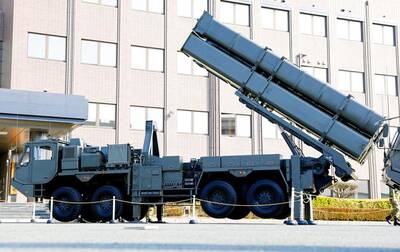
Japan has deployed long-range missiles in a southwestern region near China, the Japanese defense minister said yesterday, at a time when ties with Beijing are at their lowest in recent years. The missiles were installed in Kumamoto in the southern region of Kyushu, as Japan is attempting to shore up its military capacity as China steps up naval activity in the East China Sea. “Standoff defense capabilities enable us to counter the threat of enemy forces attempting to invade our country ... while ensuring the safety of our personnel,” Japanese Minister of Defense Shinjiro Koizumi said. “This is an extremely important initiative for
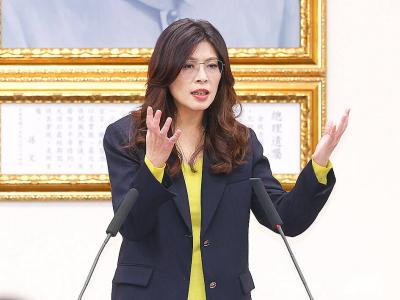
Chinese Nationalist Party (KMT) Chairwoman Cheng Li-wun (鄭麗文) today accepted an invitation from Chinese President Xi Jinping (習近平) to lead a delegation to China next month, saying she hopes to promote the peaceful development of cross-strait relations and bring stability to the Taiwan Strait. “I am grateful and happy to accept this invitation,” Cheng said in a statement from the KMT chairperson’s office. Cheng said she hopes both sides can work together to promote the peaceful development of cross-strait relations, enhance exchange and cooperation, bring stability to the Taiwan Strait and improve people’s livelihoods. At today's news conference, Cheng said any efforts to

MORE POPULAR: Taiwan Pass sales increased by 59 percent during the first quarter compared with the same period last year, the Tourism Administration said The Tourism Administration yesterday said that it has streamlined the Taiwan Pass, with two versions available for purchase beginning today. The tourism agency has made the pass available to international tourists since 2024, allowing them to access the high-speed rail, Taiwan Railway Corp services, four MRT systems and four Taiwan Tourist Shuttles. Previously, five types of Taiwan Pass were available, but some tourists have said that the offerings were too complicated. The agency said only two types of Taiwan Pass would be available, starting from a three-day pass with the high-speed rail and a three-day pass with Taiwan Railway Corp. The former costs NT$2,800

The nation’s fastest supercomputer, Nano 4 (晶創26), is scheduled to be launched in the third quarter, and would be used to train large language models in finance and national defense sectors, the National Center for High-Performance Computing (NCHC) said. The supercomputer, which would operate at about 86.05 petaflops, is being tested at a new cloud computing center in the Southern Taiwan Science Park in Tainan. The exterior of the server cabinet features chip circuitry patterns overlaid with a map of Taiwan, highlighting the nation’s central position in the semiconductor industry. The center also houses Taiwania 2, Taiwania 3, Forerunner 1 and


 RSS
RSS