


The Supreme Administrative Court yesterday rejected the government’s appeal against a previous ruling on the Central Taiwan Science Park’s Phase 3 development project.
The court ruled that work at the Phase 3 zone in Cising Farm (七星農場) in Taichung County’s Houli Township (后里) must remain suspended, while the original ruling stopping work at the Phase 4 zone in Changhua County’s Erlin Township (二林) was revoked.
In late July, the Taipei High Administrative Court ruled construction work in both zones should be suspended because of the safety risk posed by the projects, which could cause irreparable environmental damage.
The Environmental Protection Administration (EPA), the Central Taiwan Science Park Administration and the National Science Council appealed that decision last month.
Yesterday’s rejection of their appeal means the suspension of the Phase 3 development would remain in place until a new environmental impact assessment (EIA) report is submitted. Whether the suspension of Phase 4 will go ahead will be up to the Taipei High Administrative Court.
The Supreme Administrative Court rejected the appeal on several grounds.
First, it said the development could result in irreparable environmental damage, since the project failed to pass Article 5 of the Environmental Impact Assessment Act (環境影響評估法), which deals with “development activities for which there is concern of adverse impact on the environment.”
Second, the operators failed to submit a health risk assessment report.
Third, the considerable amounts of hazardous wastewater being released at the Cising Farm site posed a danger. The affected area is near Niouchou Creek (牛稠坑溝) to the north of the park and downstream of the Shuang Liao (雙寮) water intake of Da-an Creek (大安溪). Water from this catchment area is used for irrigation and household water consumption, and therefore the release of polluted water in the area constituted a risk to health and safety, the court said.
It also said the chemical toxins in the wastewater were found to pose a considerable threat to the environment and the health of local residents.
Fourth, the suspension of the development would not have an adverse impact on public interests. The interests of the companies themselves constitute private interests.
Fifth, the Taipei High Administrative Court had already annulled the EIA report, therefore the report should be considered revoked.
Environmental Protection Administration Minister Stephen Shen (沈世宏) responded by saying Phase 3 had already passed an EIA, and therefore the court’s rejection of the appeal was immaterial.
The park administration said it was surprised, but added it would carry on with construction of public infrastructure in the Phase 3 area since it had obtained the EPA’s approval to do so.
Park administration director-general Yang Wen-ke (楊文科) said companies with operations in the Phase 3 area would not be affected by yesterday’s ruling.
The nation’s No. 2 LCD panel maker, AU Optronics Corp (友達光電), is one of the biggest firms in the park. It was set to install equipment for its second 8.5-generation plant there later this year, paving the way for the launch of TV panel production next year.
Yang said the park administration has updated assessments of the impact on the environment and health of residents in the area, which also received approval from the EPA.
The agency’s EIA committee gave conditional approval to the Phase 3 development project at the park on Tuesday, saying that although manufacturing activities would be suspended, construction work could continue.
Yang expected the construction work to be resumed in the middle of this month at the earliest.
The Executive Yuan said it would wait until it received a written copy of the ruling to comment.
Also See: Quantifying the non-quantifiable
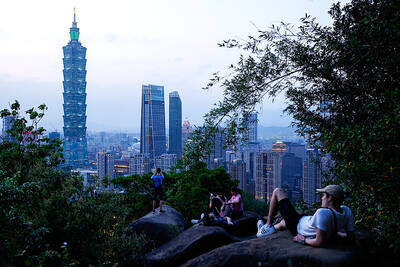
MORE VISITORS: The Tourism Administration said that it is seeing positive prospects in its efforts to expand the tourism market in North America and Europe Taiwan has been ranked as the cheapest place in the world to travel to this year, based on a list recommended by NerdWallet. The San Francisco-based personal finance company said that Taiwan topped the list of 16 nations it chose for budget travelers because US tourists do not need visas and travelers can easily have a good meal for less than US$10. A bus ride in Taipei costs just under US$0.50, while subway rides start at US$0.60, the firm said, adding that public transportation in Taiwan is easy to navigate. The firm also called Taiwan a “food lover’s paradise,” citing inexpensive breakfast stalls
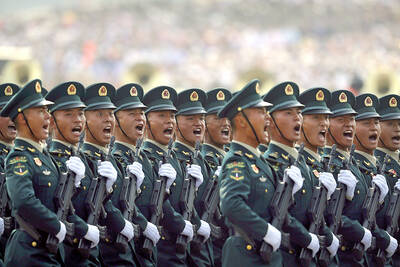
US PUBLICATION: The results indicated a change in attitude after a 2023 survey showed 55 percent supported full-scale war to achieve unification, the report said More than half of Chinese were against the use of force to unify with Taiwan under any circumstances, a survey conducted by the Atlanta, Georgia-based Carter Center and Emory University found. The survey results, which were released on Wednesday in a report titled “Sovereignty, Security, & US-China Relations: Chinese Public Opinion,” showed that 55.1 percent of respondents agreed or somewhat agreed that “the Taiwan problem should not be resolved using force under any circumstances,” while 24.5 percent “strongly” or “somewhat” disagreed with the statement. The results indicated a change in attitude after a survey published in “Assessing Public Support for (Non)Peaceful Unification

PLUGGING HOLES: The amendments would bring the legislation in line with systems found in other countries such as Japan and the US, Legislator Chen Kuan-ting said Democratic Progressive Party (DPP) Legislator Chen Kuan-ting (陳冠廷) has proposed amending national security legislation amid a spate of espionage cases. Potential gaps in security vetting procedures for personnel with access to sensitive information prompted him to propose the amendments, which would introduce changes to Article 14 of the Classified National Security Information Protection Act (國家機密保護法), Chen said yesterday. The proposal, which aims to enhance interagency vetting procedures and reduce the risk of classified information leaks, would establish a comprehensive security clearance system in Taiwan, he said. The amendment would require character and loyalty checks for civil servants and intelligence personnel prior to
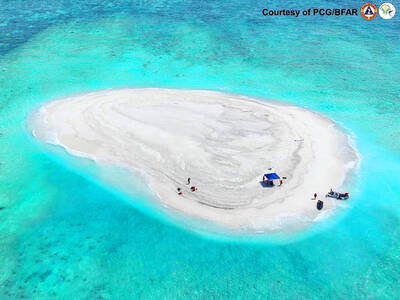
The China Coast Guard has seized control of a disputed reef near a major Philippine military outpost in the South China Sea, Beijing’s state media said, adding to longstanding territorial tensions with Manila. Beijing claims sovereignty over almost all of the South China Sea and has waved away competing assertions from other countries as well as an international ruling that its position has no legal basis. China and the Philippines have engaged in months of confrontations in the contested waters, and Manila is taking part in sweeping joint military drills with the US which Beijing has slammed as destabilizing. The Chinese coast guard


 RSS
RSS