


The government is relaxing long-term restrictions on Taiwanese companies’ China-bound investments, especially in the flat-panel and chipmaking sectors, a government official said yesterday.
The measure aims to help local manufacturers, primarily technology firms, catch up with competitors in expanding their presence in China, one of the world’s fastest-growing electronics markets.
“The world has changed drastically since we first allowed [Chinese investment for chipmakers] three years ago ... To cope with the changes, we cannot stick to existing [rules],” Minister of Economic Affairs Shih Yen-shiang (施顏祥) told a media briefing yesterday.
Taiwanese liquid-crystal-display (LCD) panel makers, including AU Optronics Corp (友達光電), will now be allowed to build advanced production lines in China to produce TV panels.
But there are limitations. Companies intending to build advanced 7.5-generation factories in China will have to operate at least a more advanced 8.5-generation plant in Taiwan, and will have to come up with new investment at home, the ministry said.
The government will only permit Taiwanese panel makers to build three advanced factories in China, the ministry said.
The latest move matches Seoul’s recent lifting of a ban on flat-panel investment in China.
The South Korean government has approved proposals by Samsung Electronics Co and LG Display Co to build TV panel factories in China by forming joint ventures with Chinese local governments. Samsung and LG Display plan to build a 7.5G plant and a 8.5G plant in China.
“We will accelerate the pace of [capacity] expansion in China,” AU Optronics spokesperson Yawen Hsiao (蕭雅雯) said. “It is reasonable to consider building a 7.5G plant in China as our Chinese customers need big TV panels.”
The ministry is also loosening restrictions on contract chipmakers’ investing in China.
Taiwanese contract chipmakers will now be allowed to own shares in Chinese chipmakers after being given permission to build less advanced 8-inch factories in China in 2006.
This will help Taiwan Semiconductor Manufacturing Co (TSMC, 台積電) obtain an 8 percent stake in China’s biggest chipmaker Semiconductor Manufacturing International Corp (SMIC, 中芯國際), along with US$200 million in damages to settle intellectual property cases with TSMC.
United Microelectronics Corp (UMC, 聯電), the nation’s second-biggest contract chipmaker, will be able to solve the long-term problem of accepting a 15 percent share of He Jian Technology (Suzhou) Co (和艦) given by the chipmaker for helping it establish the firm.
UMC’s board gave the go-ahead to a proposal to buy another 85 percent of the Chinese chipmaker for US$285 million to fully own He Jian last April.
Taiwanese contract chipmakers would have to make sure they keep their technological lead by two technological nodes, the ministry said.
Local companies are expected to submit applications for Chinese investments by the end of this month, the ministry said.
“We have sent the proposal to the government and we are waiting for approval,” said a UMC official, who declined to be named.
The ministry yesterday also lifted restrictions on local chip testers and packagers. They can now provide services for customers using advanced technologies in China. The companies would have to file applications for new investment on new equipment totaling more than US$50 million.
The ministry also eased restrictions in other sectors including investing in China’s real estate, telecoms and securities markets.
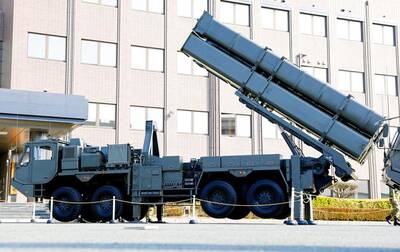
Japan has deployed long-range missiles in a southwestern region near China, the Japanese defense minister said yesterday, at a time when ties with Beijing are at their lowest in recent years. The missiles were installed in Kumamoto in the southern region of Kyushu, as Japan is attempting to shore up its military capacity as China steps up naval activity in the East China Sea. “Standoff defense capabilities enable us to counter the threat of enemy forces attempting to invade our country ... while ensuring the safety of our personnel,” Japanese Minister of Defense Shinjiro Koizumi said. “This is an extremely important initiative for
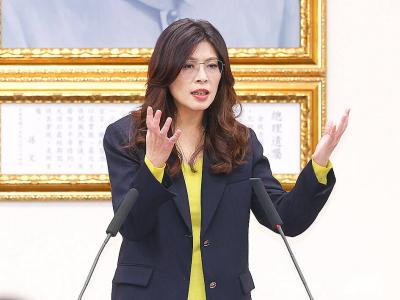
Chinese Nationalist Party (KMT) Chairwoman Cheng Li-wun (鄭麗文) today accepted an invitation from Chinese President Xi Jinping (習近平) to lead a delegation to China next month, saying she hopes to promote the peaceful development of cross-strait relations and bring stability to the Taiwan Strait. “I am grateful and happy to accept this invitation,” Cheng said in a statement from the KMT chairperson’s office. Cheng said she hopes both sides can work together to promote the peaceful development of cross-strait relations, enhance exchange and cooperation, bring stability to the Taiwan Strait and improve people’s livelihoods. At today's news conference, Cheng said any efforts to
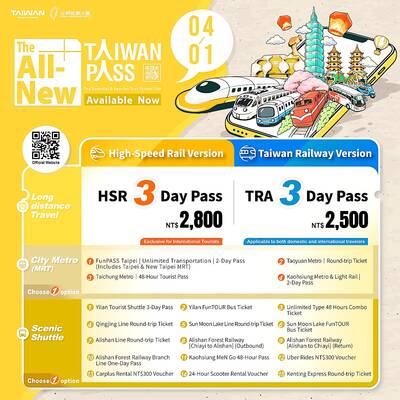
MORE POPULAR: Taiwan Pass sales increased by 59 percent during the first quarter compared with the same period last year, the Tourism Administration said The Tourism Administration yesterday said that it has streamlined the Taiwan Pass, with two versions available for purchase beginning today. The tourism agency has made the pass available to international tourists since 2024, allowing them to access the high-speed rail, Taiwan Railway Corp services, four MRT systems and four Taiwan Tourist Shuttles. Previously, five types of Taiwan Pass were available, but some tourists have said that the offerings were too complicated. The agency said only two types of Taiwan Pass would be available, starting from a three-day pass with the high-speed rail and a three-day pass with Taiwan Railway Corp. The former costs NT$2,800
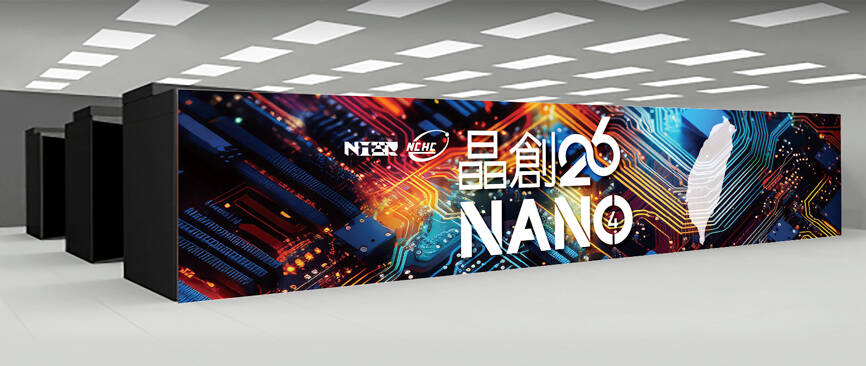
The nation’s fastest supercomputer, Nano 4 (晶創26), is scheduled to be launched in the third quarter, and would be used to train large language models in finance and national defense sectors, the National Center for High-Performance Computing (NCHC) said. The supercomputer, which would operate at about 86.05 petaflops, is being tested at a new cloud computing center in the Southern Taiwan Science Park in Tainan. The exterior of the server cabinet features chip circuitry patterns overlaid with a map of Taiwan, highlighting the nation’s central position in the semiconductor industry. The center also houses Taiwania 2, Taiwania 3, Forerunner 1 and


 RSS
RSS