


The US is imposing duties on US$2.8 billion in steel-pipe imports from China after saying subsidies on the products may harm US steelmakers, a move that threatens to escalate trade tensions between the two countries.
The US International Trade Commission (ITC) voted 6-0 on Wednesday in Washington. The Commerce Department set duties in November ranging from 10.4 percent to 15.8 percent, subject to the ITC’s ruling, on Chinese pipes used in oil wells. A preliminary ruling by the ITC in May led Chinese producers to halt exports to the US, state-owned Tianjin Pipe Group Corp (天津鋼管集團) said.
The case is the largest so-called countervailing duty complaint filed against Chinese products, and was brought by groups and companies, including US Steel Corp. Tariffs have been a point of tension between the two nations since US President Barack Obama imposed duties on Chinese tire imports in September. Obama, during a visit to Beijing on Nov. 17, promised along with Chinese President Hu Jintao (胡錦濤) to work on easing trade frictions.
“The steel industry is a canary in the coal mine of the US-China trade relations,” Michelle Applebaum, who runs a Chicago-based equity research company that advises investors on the industry, said in an interview.
She owns shares in companies including Nucor Corp and Reliance Steel & Aluminum Co.
The Commerce Department will decide in April if Chinese companies are also dumping products on the US market at prices below their value, a Federal Register notice said. That could result in additional tariffs on those companies.
The Chinese embassy in Washington declined to comment, referring queries to a Nov. 25 statement by the country’s Ministry of Commerce after the US Commerce Department set the tariff rates.
In that statement, Yao Jian (姚堅), a spokesman for the ministry said: “China is strongly opposed to the US move of continuing with its discriminatory measures and arbitrarily raising the anti-subsidy duty rates.”
The two countries have US$409 billion in annual two-way trade and have swapped complaints about steel, poultry and tires as a global recession spurred countries to protect jobs. China announced on Nov. 6 the start of an anti-dumping probe into US cars.
The pipe case was brought by the United Steelworkers union; Pittsburgh-based US Steel, the country’s biggest steelmaker; US operations of Evraz Group SA, Russia’s second-largest mill; and Pennsylvania-based Wheatland Tube Co.
US Steel rose US$0.55 to US$55.26 at 2:05pm on Wednesday in New York Stock Exchange composite trading. Charlotte, North Carolina-based Nucor, the second-largest US steelmaker, climbed US$0.84 to US$46.90. The Standard & Poor’s 500 steel index, made up of five companies, rose as much as 1.6 percent.
US Steel “is pleased with the affirmative determination,” the company said in an e-mailed response to questions. The “enormous surge of unfairly traded goods resulted in an overhang of inventory that crippled the domestic industry.”
Wednesday’s ruling “means a more level field upon which to compete and the beginnings of the end to the mercantilism being practiced by trading competitors like China,” Nucor chief executive officer Dan DiMicco said in response to an e-mailed question.
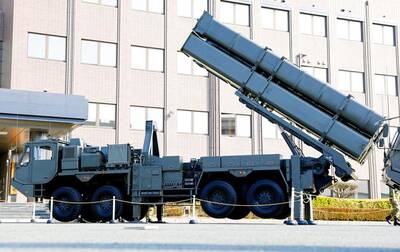
Japan has deployed long-range missiles in a southwestern region near China, the Japanese defense minister said yesterday, at a time when ties with Beijing are at their lowest in recent years. The missiles were installed in Kumamoto in the southern region of Kyushu, as Japan is attempting to shore up its military capacity as China steps up naval activity in the East China Sea. “Standoff defense capabilities enable us to counter the threat of enemy forces attempting to invade our country ... while ensuring the safety of our personnel,” Japanese Minister of Defense Shinjiro Koizumi said. “This is an extremely important initiative for
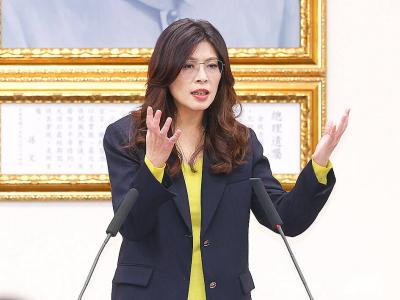
Chinese Nationalist Party (KMT) Chairwoman Cheng Li-wun (鄭麗文) today accepted an invitation from Chinese President Xi Jinping (習近平) to lead a delegation to China next month, saying she hopes to promote the peaceful development of cross-strait relations and bring stability to the Taiwan Strait. “I am grateful and happy to accept this invitation,” Cheng said in a statement from the KMT chairperson’s office. Cheng said she hopes both sides can work together to promote the peaceful development of cross-strait relations, enhance exchange and cooperation, bring stability to the Taiwan Strait and improve people’s livelihoods. At today's news conference, Cheng said any efforts to
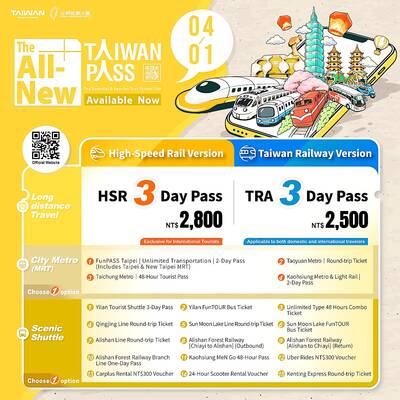
MORE POPULAR: Taiwan Pass sales increased by 59 percent during the first quarter compared with the same period last year, the Tourism Administration said The Tourism Administration yesterday said that it has streamlined the Taiwan Pass, with two versions available for purchase beginning today. The tourism agency has made the pass available to international tourists since 2024, allowing them to access the high-speed rail, Taiwan Railway Corp services, four MRT systems and four Taiwan Tourist Shuttles. Previously, five types of Taiwan Pass were available, but some tourists have said that the offerings were too complicated. The agency said only two types of Taiwan Pass would be available, starting from a three-day pass with the high-speed rail and a three-day pass with Taiwan Railway Corp. The former costs NT$2,800
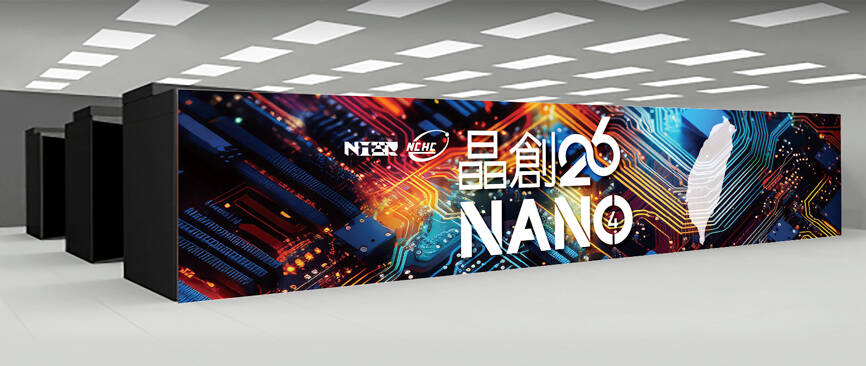
The nation’s fastest supercomputer, Nano 4 (晶創26), is scheduled to be launched in the third quarter, and would be used to train large language models in finance and national defense sectors, the National Center for High-Performance Computing (NCHC) said. The supercomputer, which would operate at about 86.05 petaflops, is being tested at a new cloud computing center in the Southern Taiwan Science Park in Tainan. The exterior of the server cabinet features chip circuitry patterns overlaid with a map of Taiwan, highlighting the nation’s central position in the semiconductor industry. The center also houses Taiwania 2, Taiwania 3, Forerunner 1 and


 RSS
RSS