


Falun Gong practitioner Shao Yuhua (邵玉華) — who came to Taiwan 11 years ago after marrying a Taiwanese man and now holds Republic of China (ROC) citizenship — and her daughter were allegedly arrested by state security agents in China, members of the Taiwan Falun Dafa Association said yesterday.
“My wife went back to her hometown in Nanyang, Henan Province, with our 10-year-old daughter to visit her family last month soon after the summer vacation started,” Shao’s husband, Cheng Shu-ta (鄭書達), told a news conference in Taipei yesterday. “Her family in Henan told me yesterday [Friday] that she — along with our daughter — were arrested by state security agents.”
Cheng said his wife had been staying with her sister Shao Yuxiu (邵玉秀), who is also a Falun Gong practitioner, during her visit to China.
At about 6am on Friday, a few men who identified themselves as agents from the Ministry of State Security showed up at the door and took away Shao Yuhua and her daughter, Cheng said. The men also took Shao Yuhua’s cellphone, baggage and passport, he said.
“So far, we’re still not clear where she is,” he said.
Although it was not clear why Shao Yuhua was taken away, Taiwan Falun Dafa Association chairman Chang Ching-hsi (張清溪) suspected it had to do with her being a Falun Gong practitioner.
“We urge [China] to release the two kidnapped ROC citizens and their families and relatives in China immediately. We want promises that no such human rights violations will be committed again,” Chang said.
“As an immigrant spouse from China, Shao Yuhua is supposed to be protected by governments on both sides of the Taiwan Strait, but she is now missing because of her spiritual beliefs,” he said.
“How can the people of Taiwan believe there can be friendly exchanges between China and Taiwan?” he asked.
Chang called on the Mainland Affairs Council (MAC) and the Strait Exchange Foundation (SEF) to intervene.
After the news conference, Chang and several other Falun Gong practitioners went to the Landis Hotel where China’s Taiwan Affairs Office spokesman Yang Yi (楊毅) was scheduled to attend a dinner reception hosted by Taiwanese business leaders, hoping to deliver their petition to Yang.
However, Yang ignored the practitioners and walked straight into an elevator.
Contacted by the Taipei Times for comment, MAC vice-chairman Liu Te-shun (劉德勳) said that as soon as the MAC learned the news from the media, it “asked the SEF to get in touch with the Association for Relations Across the Taiwan Strait to see how we can help.”
NOTE: In the article above, we reported that Falun Gong practitioner Shao Yuhua's daughter was detained and that her sister is also a Falun Gong follower. Shao's daughter was not detained. Her sister does not practice Falun Gong and was detained briefly by Chinese police and released. Only Shao remains in detention. The Taipei Times regrets the error.

KEY INDUSTRY: The vice premier discussed a plan to create a non-red drone supply chain by next year, which has been allocated a budget of more than NT$7.2 billion The government has budgeted NT$44.2 billion (US$1.38 billion) to cultivate Taiwan’s uncrewed aerial vehicle (UAV) industry over the next five years, which would make the nation a major player in the industry’s democratic supply chain in the Asia-Pacific region, Premier Cho Jung-tai (卓榮泰) said yesterday. Cho made the remarks during a visit to the facilities of Cub Elecparts Inc (為升電裝). Democratic Progressive Party (DPP) Legislator Chen Su-yueh (陳素月) and Chinese Nationalist Party (KMT) Legislator Hsieh Yi-fong (謝依鳳) also participated in the trip. Cub Elecparts has transitioned from the automotive industry to the defense industry, which is the top priority among the nation’s

‘UNFRIENDLY’: Changing the nationality listing of Taiwanese residents to ‘China’ goes against EU foreign policy as well as democratic and human rights principles, MOFA said Taiwan yesterday called on Denmark to correct its designation of the nationality of Taiwanese residents as “China” or face retaliatory measures. The Danish government in 2024 changed the nationality of Taiwanese citizens on their residence permits from “Taiwan” to “China.” The decision goes against EU foreign policy and contravenes democratic and human rights principles, Ministry of Foreign Affairs (MOFA) spokesman Hsiao Kuang-wei (蕭光偉) said. Denmark should present a solution acceptable to Taiwan as soon as possible and correct the erroneous designation to preserve the longstanding friendship between the two nations, Hsiao said. The issue could damage Denmark’s image and business reputation in Taiwan,
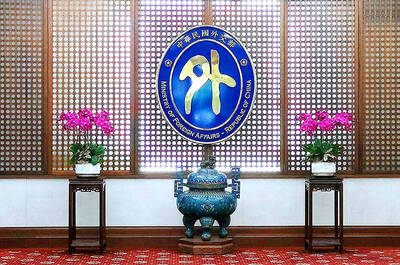
SOUTH KOREA DISPUTE: If Seoul continues to ignore its request, Taiwan would change South Korea’s designation on its arrival cards, the foreign ministry said If South Korea does not reply appropriately to a request to correct Taiwan’s name on its e-Arrival card system before March 31, the government would take corresponding measures to change how South Korea is labeled on the online Taiwan Arrival Card system, the Ministry of Foreign Affairs said yesterday. South Korea’s e-Arrival card system lists Taiwan as “China (Taiwan)” in the “point of departure” and “next destination” fields. Taipei has asked Seoul to change the wording. Since March 1, South Koreans who hold government-issued Alien Resident Certificates (ARC) have been identified as from “South Korea” rather than the “Republic of Korea,” the
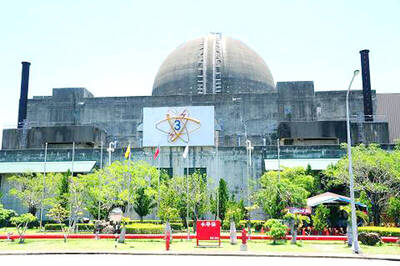
SUFFICIENT: The president said Taiwan has enough oil for next month, with reserves covering more than 100 days and natural gas enough for 12 to 14 days A restart plan for the Guosheng Nuclear Power Plant in New Taipei City’s Wanli District (萬里) and the Ma-anshan Nuclear Power Plant in Pingtung County’s Hengchun Township (恆春) would be submitted to the Nuclear Safety Commission by the end of the month, President William Lai (賴清德) said yesterday, reversing the government’s policy to abolish nuclear energy. On May 17 last year, Taiwan shut down its last nuclear reactor and became the first non-nuclear nation in East Asia, fulfilling the Democratic Progressive Party (DPP) government’s pledge of a “nuclear-free homeland.” Even without nuclear power, Taiwan can maintain a stable electricity supply until 2032,


 RSS
RSS