


The UN World Food Program (WFP) yesterday compared the escalating global food crisis to a “silent tsunami” that could plunge more than 100 million people into hunger and poverty.
WFP executive director Josette Sheeran said the international community needed to respond like it did to 2004’s giant Indian Ocean wave that killed 250,000 and left 10 million destitute.
Sheeran spoke in London ahead of talks on the global food crisis convened by British Prime Minister Gordon Brown in Downing Street, attended by aid organizations, agricultural experts and representatives of leading supermarket chains.
“This is the new face of hunger — the millions of people who were not in the urgent hunger category six months ago but now are,” Sheeran said.
“The response calls for large-scale, high-level action by the global community, focused on emergency and longer-term solutions,” she said.
Rising food prices, stoked by increased fuel costs, have led to the world’s first major food crisis since World War II and sparked protests around the world.
Experts believe rising food prices have pushed about 100 million people deeper into poverty, requiring a response like the record £6 billion (US$11.9 billion) given to help the tsunami victims, Sheeran said.
“We need that same kind of action and generosity. What we are seeing now is affecting more people on every continent, destroying even more livelihoods and the nutrition losses will hurt children for a lifetime,” she said.
Meanwhile, Brown said rising food costs pose as great a threat to world prosperity as the global credit crunch, warning the crisis would likely reverse progress in the developing world and plunge millions into extreme poverty.
In a statement released ahead of the meeting, Brown said urgent action to stimulate food production was needed, including a review of the impact of biofuels on global agriculture.
“Tackling hunger is a moral challenge to each of us and it is also a threat to the political and economic stability of nations,” Brown said
He said he fears the use of agricultural land to produce biofuels may be a key factor in driving up prices. Britain has introduced targets aimed at producing 5 percent of transport fuel from biofuels by 2010, but Brown said his government will now review the policy.
Also See: African allies not severely affected by soaring prices
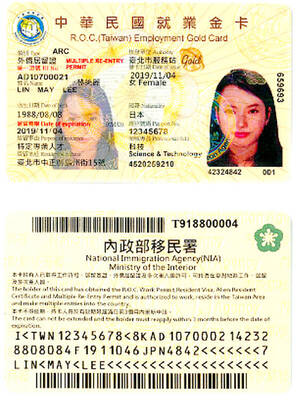
GAINING STEAM: The scheme initially failed to gather much attention, with only 188 cards issued in its first year, but gained popularity amid the COVID-19 pandemic Applications for the Employment Gold Card have increased in the past few years, with the card having been issued to a total of 13,191 people from 101 countries since its introduction in 2018, the National Development Council (NDC) said yesterday. Those who have received the card have included celebrities, such as former NBA star Dwight Howard and Australian-South Korean cheerleader Dahye Lee, the NDC said. The four-in-one Employment Gold Card combines a work permit, resident visa, Alien Resident Certificate (ARC) and re-entry permit. It was first introduced in February 2018 through the Act Governing Recruitment and Employment of Foreign Professionals (外國專業人才延攬及雇用法),
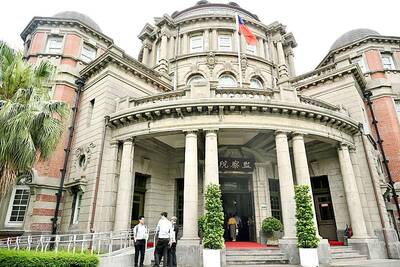
WARNING: From Jan. 1 last year to the end of last month, 89 Taiwanese have gone missing or been detained in China, the MAC said, urging people to carefully consider travel to China Lax enforcement had made virtually moot regulations banning civil servants from making unauthorized visits to China, the Control Yuan said yesterday. Several agencies allowed personnel to travel to China after they submitted explanations for the trip written using artificial intelligence or provided no reason at all, the Control Yuan said in a statement, following an investigation headed by Control Yuan member Lin Wen-cheng (林文程). The probe identified 318 civil servants who traveled to China without permission in the past 10 years, but the true number could be close to 1,000, the Control Yuan said. The public employees investigated were not engaged in national
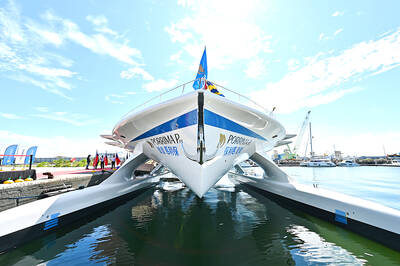
The zero emissions ship Porrima P111 was launched yesterday in Kaohsiung, showcasing the nation’s advancement in green technology, city Mayor Chen Chi-mai (陳其邁) said. The nation last year acquired the Swiss-owned vessel, formerly known as Turanor PlanetSolar, in a bid to boost Taiwan’s technology sector, as well as ecotourism in Palau, Chen said at the ship’s launch ceremony at Singda Harbor. Palauan President Surangel Whipps Jr and Minister of Foreign Affairs Lin Chia-lung (林佳龍) also attended the event. The original vessel was the first solar-powered ship to circumnavigate the globe in a voyage from 2010 to 2012. Taiwan-based Porrima Inc (保利馬) installed upgrades with
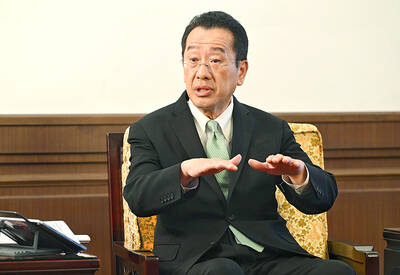
ENHANCE DETERRENCE: Taiwan has to display ‘fierce resolve’ to defend itself for China to understand that the costs of war outweigh potential gains, Koo said Taiwan’s armed forces must reach a high level of combat readiness by 2027 to effectively deter a potential Chinese invasion, Minister of National Defense Wellington Koo (顧立雄) said in an interview with the Chinese-language Liberty Times (sister newspaper of the Taipei Times) published yesterday. His comments came three days after US Secretary of State Marco Rubio told the US Senate that deterring a Chinese attack on Taiwan requires making a conflict “cost more than what it’s worth.” Rubio made the remarks in response to a question about US policy on Taiwan’s defense from Republican Senator John Cornyn, who said that Chinese


 RSS
RSS