


China sentenced a man to death and jailed 28 people for up to life yesterday for their roles in a massive slavery and child labor scandal at brick kilns.
Owners, managers and enforcers at the prison-like kilns, which state media said numbered in the hundreds in Shanxi Province, were convicted of charges including forced labor, illegal detention and causing injury, an official said.
Zhao Yanbing (趙延兵) received the death penalty from the Linfen Intermediate People's Court for inflicting a beating that led to the death of a worker at a kiln in Hongtong County that was at the center of the scandal.
Zhao beat the worker with a shovel for being slow and buried the body after he died the next day in his dormitory, the door and windows of which were locked to prevent workers fleeing.
Heng Tinghan (衡庭漢), who ran the kiln where 31 workers worked 14 to 16 hours a day for little or no pay, was jailed for life, Shanxi Provincial High Court Vice President Liu Jimin (劉冀民) said during an online video press conference.
The scandal exploded after hundreds of parents complained their children were being forced to work in brick kilns in Henan, Shanxi and Shaanxi provinces.
Heng, 42, had become the chief villain in the scandal after media reports that a worker died at the kiln he ran in Hongtong's Caosheng Village and ran pictures of workers with their skin rubbed raw or severely burned.
His kiln enslaved 34 laborers, including nine who were mentally disabled, Liu said.
The court heard that between March last year and May of this year, 19 workers were injured and one died.
Kiln boss Wang Bingbing (王兵兵) was sentenced to nine years in jail for unlawful detention, Liu said. Wang's father was a village Chinese Communist Party secretary and he was expelled from the party after the scandal broke.
The People's Daily has quoted Wang as saying the operation originally had employed local workers, but began using those provided by human traffickers last year after falling into debt.
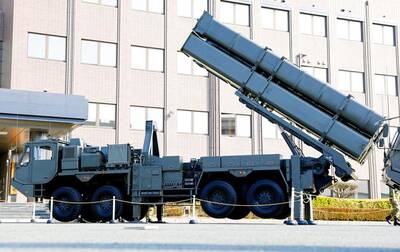
Japan has deployed long-range missiles in a southwestern region near China, the Japanese defense minister said yesterday, at a time when ties with Beijing are at their lowest in recent years. The missiles were installed in Kumamoto in the southern region of Kyushu, as Japan is attempting to shore up its military capacity as China steps up naval activity in the East China Sea. “Standoff defense capabilities enable us to counter the threat of enemy forces attempting to invade our country ... while ensuring the safety of our personnel,” Japanese Minister of Defense Shinjiro Koizumi said. “This is an extremely important initiative for
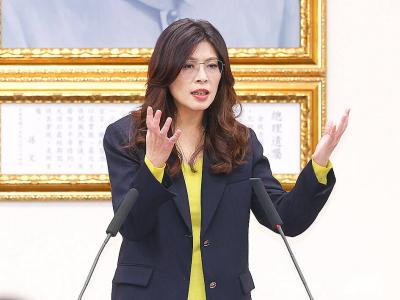
Chinese Nationalist Party (KMT) Chairwoman Cheng Li-wun (鄭麗文) today accepted an invitation from Chinese President Xi Jinping (習近平) to lead a delegation to China next month, saying she hopes to promote the peaceful development of cross-strait relations and bring stability to the Taiwan Strait. “I am grateful and happy to accept this invitation,” Cheng said in a statement from the KMT chairperson’s office. Cheng said she hopes both sides can work together to promote the peaceful development of cross-strait relations, enhance exchange and cooperation, bring stability to the Taiwan Strait and improve people’s livelihoods. At today's news conference, Cheng said any efforts to

MORE POPULAR: Taiwan Pass sales increased by 59 percent during the first quarter compared with the same period last year, the Tourism Administration said The Tourism Administration yesterday said that it has streamlined the Taiwan Pass, with two versions available for purchase beginning today. The tourism agency has made the pass available to international tourists since 2024, allowing them to access the high-speed rail, Taiwan Railway Corp services, four MRT systems and four Taiwan Tourist Shuttles. Previously, five types of Taiwan Pass were available, but some tourists have said that the offerings were too complicated. The agency said only two types of Taiwan Pass would be available, starting from a three-day pass with the high-speed rail and a three-day pass with Taiwan Railway Corp. The former costs NT$2,800

The nation’s fastest supercomputer, Nano 4 (晶創26), is scheduled to be launched in the third quarter, and would be used to train large language models in finance and national defense sectors, the National Center for High-Performance Computing (NCHC) said. The supercomputer, which would operate at about 86.05 petaflops, is being tested at a new cloud computing center in the Southern Taiwan Science Park in Tainan. The exterior of the server cabinet features chip circuitry patterns overlaid with a map of Taiwan, highlighting the nation’s central position in the semiconductor industry. The center also houses Taiwania 2, Taiwania 3, Forerunner 1 and


 RSS
RSS