


In contrast to what democratic countries did in containing the spread of communism during the Cold War, China is now containing democracy by continuing to oppress the freedom of choice of the Taiwanese people, the Ministry of Foreign Affairs (MOFA) said on Tuesday.
MOFA released a commentary, which was jointly written by minister Mark Chen (陳唐山) and three other vice ministers, concerning the rise of China.
The release of the statement was timed to coincide with China's publication of its Foreign Policy White Paper for 2006, which came out last Thursday.
The MOFA paper criticized China's rise for threatening its democratic neighbors. It said that the Cold War containment strategy used by democratic countries against communism has now been reversed by authoritarian China, which is using its economic might to contain the spread of democracy.
"The cross-strait situation is entirely the opposite [of the Cold War situation] and this is demonstrated by China's denial of the Taiwanese people's right to peaceful development and freedom of choice.
"Taiwan's situation is neither a problem to cross-strait relations nor to China's internal affairs, rather it should be seen as a gauge for whether democracy in Asia is really progressing or going backwards," the MOFA statement said.
The commentary pointed out a number of problems accompanying the rise of China, including corruption: China ranked 78th out of 159 countries in terms of government corruption in this year's Transparency International survey.
The huge increase in China's military expenditure, which lacks transparency and yet is increasing at a much faster rate than its economic growth, has also caused great alarm among its neighboring countries, the paper said.
The MOFA singled out China's expansionary foreign policy as one of the most serious problems behind the rise of China. Although China still has about 150 million people living under the internationally defined poverty line of US$1 a day and is still a receiver of international aid, it cancelled 10.5 billion yuan (US$1.3 billion) in debt it was owed by 31 African countries in 2002
In addition, the MOFA commentary said that China's exploitation of cheap labor and its frequent violations of international environmental and labor standards means it has become a predator in the international economic system, causing the economies of many other countries to suffer and shrink.
While many countries are enthusiastically engaging with China, the MOFA urged these countries not to sacrifice the principles of democracy and human rights, which are vital to the interests of democratic countries situated in close proximity to China, including Taiwan.
In ensuring cross-Strait peace, the MOFA suggested that a UN-level inspection of the cross-Strait security situation in which the staff or inspectors dispatched by the UN are held accountable and make regular reports on security in the Taiwan Strait region.
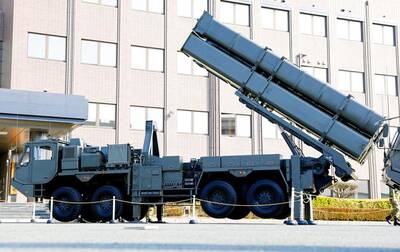
Japan has deployed long-range missiles in a southwestern region near China, the Japanese defense minister said yesterday, at a time when ties with Beijing are at their lowest in recent years. The missiles were installed in Kumamoto in the southern region of Kyushu, as Japan is attempting to shore up its military capacity as China steps up naval activity in the East China Sea. “Standoff defense capabilities enable us to counter the threat of enemy forces attempting to invade our country ... while ensuring the safety of our personnel,” Japanese Minister of Defense Shinjiro Koizumi said. “This is an extremely important initiative for
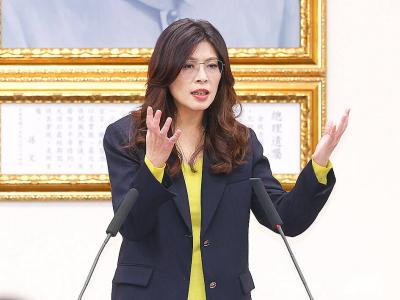
Chinese Nationalist Party (KMT) Chairwoman Cheng Li-wun (鄭麗文) today accepted an invitation from Chinese President Xi Jinping (習近平) to lead a delegation to China next month, saying she hopes to promote the peaceful development of cross-strait relations and bring stability to the Taiwan Strait. “I am grateful and happy to accept this invitation,” Cheng said in a statement from the KMT chairperson’s office. Cheng said she hopes both sides can work together to promote the peaceful development of cross-strait relations, enhance exchange and cooperation, bring stability to the Taiwan Strait and improve people’s livelihoods. At today's news conference, Cheng said any efforts to

MORE POPULAR: Taiwan Pass sales increased by 59 percent during the first quarter compared with the same period last year, the Tourism Administration said The Tourism Administration yesterday said that it has streamlined the Taiwan Pass, with two versions available for purchase beginning today. The tourism agency has made the pass available to international tourists since 2024, allowing them to access the high-speed rail, Taiwan Railway Corp services, four MRT systems and four Taiwan Tourist Shuttles. Previously, five types of Taiwan Pass were available, but some tourists have said that the offerings were too complicated. The agency said only two types of Taiwan Pass would be available, starting from a three-day pass with the high-speed rail and a three-day pass with Taiwan Railway Corp. The former costs NT$2,800

The nation’s fastest supercomputer, Nano 4 (晶創26), is scheduled to be launched in the third quarter, and would be used to train large language models in finance and national defense sectors, the National Center for High-Performance Computing (NCHC) said. The supercomputer, which would operate at about 86.05 petaflops, is being tested at a new cloud computing center in the Southern Taiwan Science Park in Tainan. The exterior of the server cabinet features chip circuitry patterns overlaid with a map of Taiwan, highlighting the nation’s central position in the semiconductor industry. The center also houses Taiwania 2, Taiwania 3, Forerunner 1 and


 RSS
RSS