


The Council of Agriculture will suspend importation of almost all Australian fruit from Jan. 1, according to reports in the Chinese-language media.
The council's Bureau of Plant Health Inspection and Quarantine said that Queensland fruit flies have been listed as a quarantine pest, according to a report in the China Times.
The affected fruit include apples, citrus fruits and cherries, the report said.
The ban applies to all regions of Australia except for the Riverland district in Queensland, which has been declared free of the pest.
Officials said that fruit flies are unique to Australia and affect much of the country's fruit.
If Queensland fruit flies proved to be as adaptable to temperature changes as local fruit flies, then Taiwanese fruit would come under serious threat, the officials were quoted as saying.
They said that unless Australian officials could ensure effective inspection procedures, Taiwan would not continue importing Australian fruit from the affected regions.
Fruit imports from Korea and Japan are also to be suspended starting from February.
The measure is being taken because of the purported risk of fruit moth infestation, an action that will hurt luxury items such as fruit gift boxes.
Fruit flies have the potential to contaminate food with bacteria and other organisms.
The insects can be a problem all year round, but they are especially common during late summer and fall because they are attracted to ripe or fermenting fruit and vegetables.
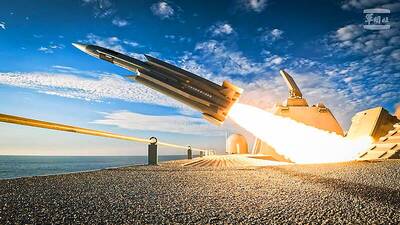
DETERRENCE: With 1,000 indigenous Hsiung Feng II and III missiles and 400 Harpoon missiles, the nation would boast the highest anti-ship missile density in the world With Taiwan wrapping up mass production of Hsiung Feng II and III missiles by December and an influx of Harpoon missiles from the US, Taiwan would have the highest density of anti-ship missiles in the world, a source said yesterday. Taiwan is to wrap up mass production of the indigenous anti-ship missiles by the end of year, as the Chungshan Institute of Science and Technology has been meeting production targets ahead of schedule, a defense official with knowledge of the matter said. Combined with the 400 Harpoon anti-ship missiles Taiwan expects to receive from the US by 2028, the nation would have

POSSIBILITIES EMERGE: With Taiwan’s victory and Japan’s narrow win over Australia, Taiwan now have a chance to advance if South Korea also beat the Aussies Taiwan has high hopes that the national baseball team would advance to the World Baseball Classic (WBC) quarter-finals after clinching a crucial 5-4 victory over South Korea in a nail-biting extra-inning game at the Tokyo Dome yesterday. Boosted by three home runs — two solo shots by Yu Chang (張育成) and Cheng Tsung-che (鄭宗哲) and a two-run homer by Stuart Fairchild — the triumph gave Taiwan a much-needed second victory in the five-team Pool C, where only the top two finishers would advance to the knockout stage in Miami, Florida. Entering extra innings with the game tied at four apiece, Taiwan scored
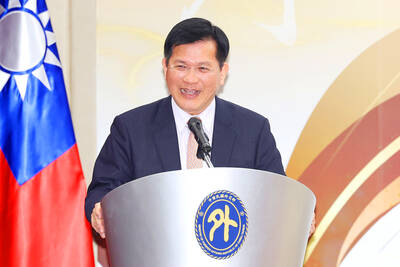
MISSION OF PEACE: The foreign minister urged Beijing to respect Taiwan’s existence as an independent nation, and work together to ensure peace and stability in the region Minister of Foreign Affairs Lin Chia-lung (林佳龍) yesterday rejected Chinese Minister of Foreign Affairs Wang Yi’s (王毅) comments about Taiwan, criticizing China as a “troublemaker” in the international community and a disruptor of cross-strait peace. Speaking at a news conference on the sidelines of the Chinese National People’s Congress, Wang said that Taiwan has always been a territory of China and that it would be impossible for it to become its own country. The “return” of Taiwan to China was the natural outcome of the Chinese people’s resistance against Japan in World War II, and that any pursuit of independence was “doomed

‘UNWAVERING FRIENDSHIP’: A representative of a Japanese group that co-organized a memorial, said he hopes Japanese never forget Taiwan’s kindness President William Lai (賴清德) yesterday marked the 15th anniversary of the Tohoku earthquake and tsunami, urging continued cooperation between Taiwan and Japan on disaster prevention and humanitarian assistance. Lai wrote on social media that Taiwan and Japan have always helped each other in the aftermath of major disasters. The magnitude 9 earthquake struck northeastern Japan on March 11, 2011, triggering a massive tsunami that claimed more than 19,000 lives, according to data from Japanese authorities. Following the disaster, Taiwan donated more than US$240 million in aid, making it one of the largest contributors of financial assistance to Japan. In addition to cash donations and


 RSS
RSS