


Former deputy secretary-general of the Presidential Office Chen Che-nan (陳哲男) was found to have asked for traveling expenses for secret overseas trips, traded stocks during office hours, made false declarations about his family property and abused his power as a public servant, according to the results of an internal investigation by the Presidential Office released yesterday.
The report was reviewed by President Chen Shui-bian (陳水扁), who demanded Presidential Office Secretary-General Yu Shyi-kun revise the office's internal management in order to avoid another such scandal.
According to Hsieh Chien-tsai (謝建財), the director-general of the Government Ethics Department, a task force established to investigate possible illegalities inside the Presidential Office questioned more than 300 staff members.
The report on newly discovered instances of alleged impropriaties by Chen Che-nan will now be transferred to judicial investigators working on his case, Hsieh said.
According to Hsieh, starting in May 2000, Kao Shen-shen (高慎慎), an Accounting Department official, helped Chen Che-nan manage his personal finances. Between early 2001 and March last year, Chen Che-nan asked Kao to help him with stock transactions. In August 2003, Kao opened a personal account, through which she used the money wired from Chen Che-nan to trade stocks for three times.
Hseih said that by comparing Kao and Chen's accounts, the task force discovered that they traded nine similar kinds of stocks. He said that the task force was not sure if Kao had profited because of her following Chen's instructions.
The task force, however, refused to confirm whether the amount of stock transactions was near NT$100 million (US$2.97 million), as reported by a Chinese-language evening newspaper yesterday.
Hsieh also stressed the limitations of the internal investigation.
Hsieh said Kao had helped Chen Che-nan make false declarations about his family property. Both Kao's actions and Chen Che-nan's abuse of power will be reported to the Control Yuan because of the obvious violation of the Civil Servant Work Act (公務人員服務法) and related laws.
The investigation also found that Chen Che-nan had made several secret overseas trips without filing applications for official leave.
The task force provided a record of 18 trips Chen Che-nan made while he was deputy secretary-general of the Presidential Office and national policy advisor.
According to Chu Yung-lung (朱永隆), director-general of the Presidential Office's Personnel Department, six trips were made without informing the department -- four to to Vietnam, one to South Korea and one to Indonesia. One of the trips to Vietnam and one to South Korea were business trips while the rest were personal visits, Chu said.
The Presidential Office's Department of Public Affairs refuted legislators' allegations that Chen Che-nan had visited Indonesia to arrange Vice President Annette Lu's (
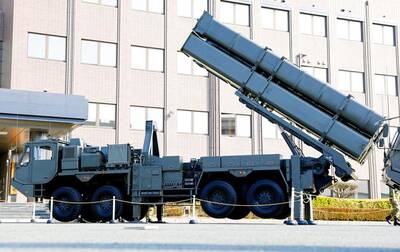
Japan has deployed long-range missiles in a southwestern region near China, the Japanese defense minister said yesterday, at a time when ties with Beijing are at their lowest in recent years. The missiles were installed in Kumamoto in the southern region of Kyushu, as Japan is attempting to shore up its military capacity as China steps up naval activity in the East China Sea. “Standoff defense capabilities enable us to counter the threat of enemy forces attempting to invade our country ... while ensuring the safety of our personnel,” Japanese Minister of Defense Shinjiro Koizumi said. “This is an extremely important initiative for
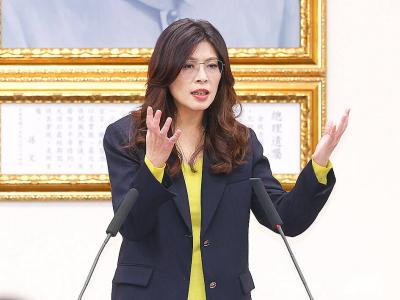
Chinese Nationalist Party (KMT) Chairwoman Cheng Li-wun (鄭麗文) today accepted an invitation from Chinese President Xi Jinping (習近平) to lead a delegation to China next month, saying she hopes to promote the peaceful development of cross-strait relations and bring stability to the Taiwan Strait. “I am grateful and happy to accept this invitation,” Cheng said in a statement from the KMT chairperson’s office. Cheng said she hopes both sides can work together to promote the peaceful development of cross-strait relations, enhance exchange and cooperation, bring stability to the Taiwan Strait and improve people’s livelihoods. At today's news conference, Cheng said any efforts to

MORE POPULAR: Taiwan Pass sales increased by 59 percent during the first quarter compared with the same period last year, the Tourism Administration said The Tourism Administration yesterday said that it has streamlined the Taiwan Pass, with two versions available for purchase beginning today. The tourism agency has made the pass available to international tourists since 2024, allowing them to access the high-speed rail, Taiwan Railway Corp services, four MRT systems and four Taiwan Tourist Shuttles. Previously, five types of Taiwan Pass were available, but some tourists have said that the offerings were too complicated. The agency said only two types of Taiwan Pass would be available, starting from a three-day pass with the high-speed rail and a three-day pass with Taiwan Railway Corp. The former costs NT$2,800

The nation’s fastest supercomputer, Nano 4 (晶創26), is scheduled to be launched in the third quarter, and would be used to train large language models in finance and national defense sectors, the National Center for High-Performance Computing (NCHC) said. The supercomputer, which would operate at about 86.05 petaflops, is being tested at a new cloud computing center in the Southern Taiwan Science Park in Tainan. The exterior of the server cabinet features chip circuitry patterns overlaid with a map of Taiwan, highlighting the nation’s central position in the semiconductor industry. The center also houses Taiwania 2, Taiwania 3, Forerunner 1 and


 RSS
RSS