


Peter Jennings, a Canadian journalist who had won over the US with his congenial and matter-of-fact style in the anchor chair of ABC News, died late Sunday after a brief bout with lung cancer, his family and employer announced. He was 67.
A mild-mannered man with keen news judgement, Jennings had been with ABC television for more than 40 years, more than 20 of them as anchor of World News Tonight, covering seminal events from the Vietnam War and the civil rights movement of the 1960s to the 1989 collapse of the Berlin Wall and the 2003 invasion of Iraq.
Jennings has not been on the air since April 5 when, fighting back tears, he told stunned viewers he had lung cancer and needed time to fight the deadly disease. He added he hoped to learn from almost 10 million cancer-stricken Americans "how to cope with the facts of life that none of us anticipated."
He underwent an aggressive chemotherapy treatment that resulted in significant weight loss and made his voice hoarse. But it was no match for the malign tumor, first detected just last spring, his colleagues said.
Jennings was a former smoker who quit in 1988 but had a relapse in the aftermath of the Sept. 11 terrorist attacks when he admitted he needed something to alleviate tension that came with his job.
In a brief statement, the family said Jennings had died peacefully in his New York apartment, surrounded by his wife, children and sister.
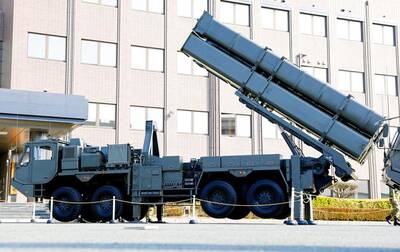
Japan has deployed long-range missiles in a southwestern region near China, the Japanese defense minister said yesterday, at a time when ties with Beijing are at their lowest in recent years. The missiles were installed in Kumamoto in the southern region of Kyushu, as Japan is attempting to shore up its military capacity as China steps up naval activity in the East China Sea. “Standoff defense capabilities enable us to counter the threat of enemy forces attempting to invade our country ... while ensuring the safety of our personnel,” Japanese Minister of Defense Shinjiro Koizumi said. “This is an extremely important initiative for
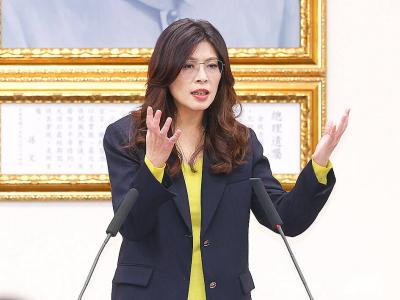
Chinese Nationalist Party (KMT) Chairwoman Cheng Li-wun (鄭麗文) today accepted an invitation from Chinese President Xi Jinping (習近平) to lead a delegation to China next month, saying she hopes to promote the peaceful development of cross-strait relations and bring stability to the Taiwan Strait. “I am grateful and happy to accept this invitation,” Cheng said in a statement from the KMT chairperson’s office. Cheng said she hopes both sides can work together to promote the peaceful development of cross-strait relations, enhance exchange and cooperation, bring stability to the Taiwan Strait and improve people’s livelihoods. At today's news conference, Cheng said any efforts to
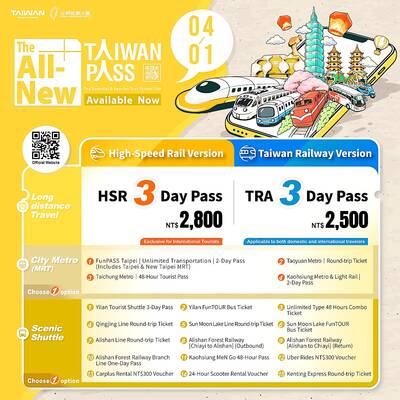
MORE POPULAR: Taiwan Pass sales increased by 59 percent during the first quarter compared with the same period last year, the Tourism Administration said The Tourism Administration yesterday said that it has streamlined the Taiwan Pass, with two versions available for purchase beginning today. The tourism agency has made the pass available to international tourists since 2024, allowing them to access the high-speed rail, Taiwan Railway Corp services, four MRT systems and four Taiwan Tourist Shuttles. Previously, five types of Taiwan Pass were available, but some tourists have said that the offerings were too complicated. The agency said only two types of Taiwan Pass would be available, starting from a three-day pass with the high-speed rail and a three-day pass with Taiwan Railway Corp. The former costs NT$2,800
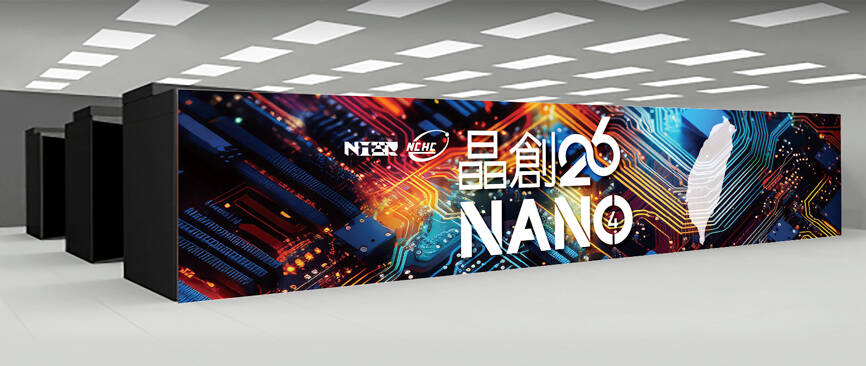
The nation’s fastest supercomputer, Nano 4 (晶創26), is scheduled to be launched in the third quarter, and would be used to train large language models in finance and national defense sectors, the National Center for High-Performance Computing (NCHC) said. The supercomputer, which would operate at about 86.05 petaflops, is being tested at a new cloud computing center in the Southern Taiwan Science Park in Tainan. The exterior of the server cabinet features chip circuitry patterns overlaid with a map of Taiwan, highlighting the nation’s central position in the semiconductor industry. The center also houses Taiwania 2, Taiwania 3, Forerunner 1 and


 RSS
RSS