


An alleged Starbucks copycat has caught the attention of the world's largest coffee retailer and might face a copyright-infringement suit.
The coffee giant's eyebrow has been raised by a local coffee shop's trademark and name -- Penland Star Coffee, or "star peninsula" in Chinese.
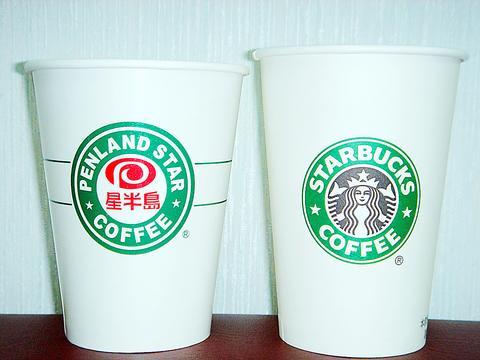
PHOTO: JACKIE LIN, TAIPEI TIMES
Penland Star's logo, composed of a green circle and white English words surrounding a red pattern with Chinese characters in the middle, is similar to the Starbucks logo at first glance.
"Compared with other coffee shops, there is a higher degree of imitation in the trademark [of Penland Star]," said Anita Jo (
Established in January 1998, President Coffee has helped develop Starbucks into becoming the nation's biggest coffee chain, with 140 outlets nationwide. Its success triggered a coffee-shop revolution, which has seen many firms mimic Starbucks' green halo.
The US headquarters is collecting information about Penland Star, but "there is no concrete legal action underway for the moment," Jo said.
Joy Pan (潘昭仙), a lawyer with the law firm Baker & McKenzie, said an important factor in determining whether a company's intellectual property rights have been infringed is to see whether the trademark in question would cause confusion on the part of the customer.
According to the Commercial Label Law (商標法), enterprise logos must be easy to distinguish.
Pan said that although Penland Star's trademark resembles the Starbucks logo, it would be less likely to mislead consumers as the colors and patterns of the two are different.
She said the more contested element would be Penland Star's Chinese name -- xing bandao (
Pan also said that a slogan printed on the bottom of Penland Star's employees' name cards was highly misleading.
The slogan reads, "Starbucks: navigator of modern coffee. Penland Star: following navigation to perfection."
Penland Star manager Jeff Hsiao (蕭傑夫) said the company wouldchange the slogan after a Chinese-language report accused it on Monday of infringing copyright.
Situated in Taipei's bustling Ximending entertainment district, Penland Star was launched one month ago in a shop no bigger than five ping (16.5m2), Hsiao said.
The shop sells around 30 kinds of beverages at prices between NT$35 and NT$60, nearly one-half of the retail prices of Starbucks.

The National Chungshan Institute of Science and Technology yesterday showcased its locally developed variants of the Vision 60 robotic patrol dog, which it plans to deploy on the nation’s outlying territories in the South China Sea. The variants were produced under the Joint Lab project — created by the institute and domestic companies — and assembled with domestically produced motors, lenses and artificial intelligence (AI) systems alongside licensed tech from the US, Missile and Rocket Systems Research Division deputy director Jen Kuo-kang (任國光) told the media event at a military base in Taipei’s Dazhi (大直) area. Taiwan has built up its strengths

RIGHT DIRECTION: Taiwan’s efforts to prevent forced labor include a proposal to ‘fully prohibit’ employers from withholding workers’ documents, an official said Taiwan is to establish a mechanism to restrict imports of goods linked to forced labor, the Executive Yuan said yesterday, after the US proposed imposing additional tariffs on Taiwanese goods over labor concerns. “The Ministry of Labor and the Ministry of Economic Affairs are to establish an interministerial review procedure,” Executive Yuan spokesperson Michelle Lee (李慧芝) said at a news briefing in Taipei. “The government is to use the Foreign Trade Act [貿易法] as the legal basis to restrict imports of goods produced with forced labor” and bring its supply chain governance more in line with international standards on human rights, resilience
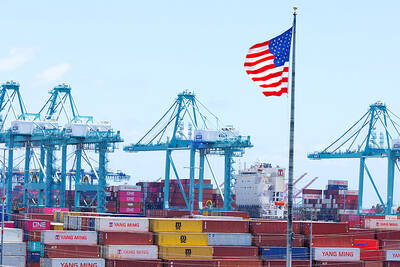
NOT IMMEDIATE: Taiwan has a chance to appeal the proposed 10 percent tariff before it starts, while other countries face a 12.5 percent tariff from the trade office Taiwan is among 60 economies determined by the US to have failed to impose or enforce a ban on the importation of goods produced with forced labor, according to a notice released on Tuesday by the Office of the US Trade Representative (USTR), which proposed imposing an additional 10 percent or more tariff on them. The USTR in a statement said that following an investigation, it had determined under Section 301 of the Trade Act of 1974 that the failure of the 60 economies to impose and effectively enforce a prohibition on the importation of goods produced with forced labor is
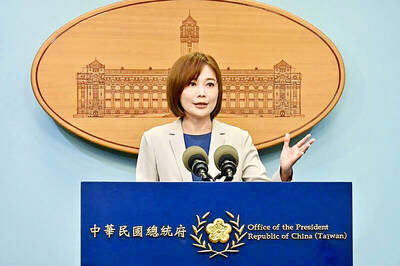
TIT-FOR-TAT: The US allegedly revoked the visa of a Chinese national working at Xinhua News Agency in the US in response to Beijing’s expulsion of Vivian Wang The Presidential Office yesterday condemned China for expelling a New York Times correspondent from Beijing following the newspaper’s interview with President William Lai (賴清德), saying the move highlighted Beijing’s suppression of press freedom and its threat to international news media. Taiwan has noted a series of recent incidents in which Beijing used similar tactics to “threaten and pressure international media outlets and journalists,” Presidential Office spokeswoman Karen Kuo (郭雅慧) said in a statement. “This concerns not only press freedom and freedom of expression, but also the safety of journalists, and Taiwan and relevant partners are paying close attention to the situation,” she


 RSS
RSS