


Former Treasury secretary Paul O'Neill said he never saw any evidence that Iraq had weapons of mass destruction -- US President George W. Bush's main justification for going to war -- and was told "deficits don't matter" when he warned of a looming fiscal crisis.
In a new book chronicling his rocky two-year tenure and in an interview with CBS's 60 Minutes aired on Sunday, O'Neill said removing Iraqi leader Saddam Hussein was a top priority at Bush's very first National Security Council meeting -- within days of the inauguration and eight months before the Sept. 11, 2001, attacks.
O'Neill, fired in a shake-up of Bush's economic team in December 2002, told CBS the discussion of Iraq continued at the next National Security Council meeting two days later and that he was given internal memos, including one outlining a "Plan for post-Saddam Iraq."
"In the 23 months I was there, I never saw anything that I would characterize as evidence of weapons of mass destruction," O'Neill told Time magazine in a separate interview. "There were allegations and assertions by people ... To me there is a difference between real evidence and everything else."
O'Neill also raised objections to a new round of tax cuts and said the president balked at his more aggressive plan to combat corporate crime after a string of accounting scandals because of opposition from "the corporate crowd," a key constituency.
O'Neill said he tried to warn Vice President Dick Cheney that growing budget deficits -- expected to top US$500 billion this fiscal year alone -- posed a threat to the US economy.
Cheney cut him off. "You know, Paul, Reagan proved deficits don't matter," he said, according to excerpts. Cheney continued: "We won the midterms [congressional elections]. This is our due."
A month later, Cheney told the Treasury secretary he was fired.
The vice president's office had no immediate comment, but John Snow, who replaced O'Neill, insisted that deficits "do matter" to the administration. "We're not happy about the size of these deficits. They're larger than they should be," Snow told ABC's This Week, adding that Bush was committed to cutting them in half over the next five years.
According to former Wall Street Journal reporter Ron Suskind, author of The Price of Loyalty on O'Neill's tenure, Defense Secretary Donald Rumsfeld called the former Treasury secretary and urged him not to contribute to the book.
Democrats seized on the account, particularly O'Neill's charges that Bush entered office intent on invading Iraq and was in search of a way to go about it.
"What Paul O'Neill says ... is what a lot of other people are beginning to conclude -- that there was an overstatement by the Bush administration of the weapons of mass destruction part of the argument for going to war against Saddam Hussein," Democratic presidential candidate Joseph Lieberman, a US senator from Connecticut, told Fox News Sunday.
In the CBS interview, O'Neill likened Bush at Cabinet meetings to "a blind man in a room full of deaf people." When he went in for his first one-on-one meeting with Bush "I was surprised that it turned out me talking, and the president just listening," O'Neill said.

LEVERAGE: China did not ‘need to fire a shot’ to deny Taiwan airspace over Africa when it owns ‘half the continent’s debt,’ a US official said, calling it economic warfare The EU has raised concerns about overflight rights following the delay of President William Lai’s (賴清德) planned state visit to the Kingdom of Eswatini after three African nations denied overflight clearance for his charter at the last minute. Taiwanese allies Paraguay and Saint Kitts and Nevis, as well as several US lawmakers and the Inter-Parliamentary Alliance on China (IPAC) condemned China for allegedly pressuring the countries. Lai was scheduled to fly directly to Taiwan’s only African ally from yesterday to Sunday to celebrate the 40th anniversary of King Mswati III’s accession and his 58th birthday, but Seychelles, Mauritius and Madagascar suddenly revoked
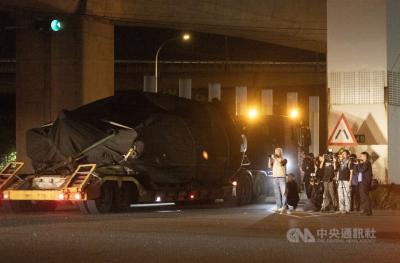
The final batch of 28 M1A2T Abrams tanks purchased from the US arrived at Taipei Port last night and were transported to the Armor Training Command in Hsinchu County’s Hukou Township (湖口), completing the military’s multi-year procurement of 108 of the tanks. Starting at 12:10am today, reporters observed more than a dozen civilian flatbed trailers departing from Taipei Port, each carrying an M1A2T tank covered with black waterproof tarps. Escorted by military vehicles, the convoy traveled via the West Coast Expressway to the Armor Training Command, with police implementing traffic control. The army operates about 1,000 tanks, including CM-11 Brave Tiger
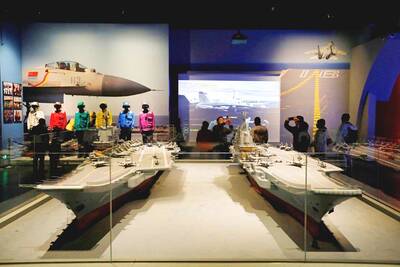
China on Wednesday teased in a video an aircraft carrier that could be its fourth, and the first using nuclear power, while making an allusion to Taiwan and vowing to further build up its islands, as it looks to boost maritime power, secure resources and bolster territorial claims. The video, issued on the eve of the 77th founding anniversary of the Chinese People’s Liberation Army Navy, featured fictional officers with names that are homophones of three commissioned aircraft carriers, the Liaoning (遼寧), Shandong (山東) and Fujian (福建). Titled Into the Deep, it showed a 19-year-old named “Hejian” (何劍) joining the group, sparking
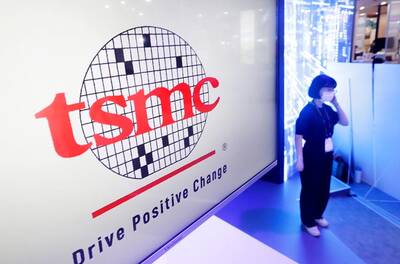
BIG YEAR: The company said it would also release its A12 chip the same year to keep a ‘reliable stream of new silicon technologies’ flowing to its customers Taiwan Semiconductor Manufacturing Co (TSMC, 台積電) yesterday said its newest A13 chip is to enter volume production in 2029 as the chipmaker seeks to hold onto its tech leadership and demand for next-generation chips used in artificial intelligence (AI), high-performance-computing (HPC) and mobile applications. TSMC, the world’s biggest contract chipmaker, also unveiled its A12 chip at its annual technology symposium in Santa Clara, California. The A12 chip, which features TSMC’s super-power-rail technology to provide backside power delivery for AI and HPC applications, is also to enter volume production in 2029, a year after the scheduled release of the A14 chip. The technology moves


 RSS
RSS