


The Taipei City Government yesterday agreed to release within three days a list of officials to be punished in connection with a scandal over the purchase of 140 buses ordered in 2000.
Chen Wu-cheng (陳武正), director of the city's Bureau of Transportation (BOT), announced the move in response to a demand by Taipei City Councilor Alex Fei (費鴻泰).
Taipei City councilors had accused the city government of covering up errors made in the procurement, after the buses' manufacturer changed the design of some and installed unauthorized emergency exits, allegedly without the knowledge of the BOT.
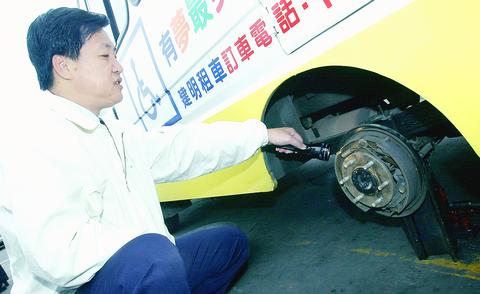
PHOTO: LEE HUNG-MING, TAIPEI TIMES
Fei raised the issue of the purchase in the city council Tuesday, saying that the city's BOT made "an obvious error" by covering up "administrative errors" made by the Taipei City Bus Administration when buying the buses.
"The BOT investigated the case and discovered the flaws, but has done nothing more for the past six months," Fei said yesterday.
"The city government should release the list of the government officials to be punished within three days. Any officials who violated the regulations should be prosecuted," Fei said.
The Taipei City Bus Administration, which was responsible for buying the 140 buses at the center of the controversy, allegedly allowed the vehicle manufacturer, Chengta (
The BOT, however, has said that it would not accept the buses, while Chengta has demanded that the changes were approved by the bus administration.
Each bus was priced at NT$3.92 million and the budget for the entire order was almost NT$550 million. The buses were scheduled for delivery on Sept. 2 last year. As yet, they have not been delivered.
The Taipei City Council's traffic committee invited officials to report on the current state of the bus purchase Tuesday and Wednesday, after Fei received the government's investigation report and made it public Tuesday.
The city government set up a task force to investigate the case last October. Its report states that the bus administration made "obvious administrative errors" in allowing the manufacturer to modify the original design for some of the buses by designing emergency exits for them. It concludes that the BOT was not informed.
Su Chung-kun (
Chen Wu-cheng (
The city government's Commission of Administrative Appeals is now investigating the case. It will seek to establish whether the bus administration approved the manufacturer's requests legally and whether the BOT was in fact informed.
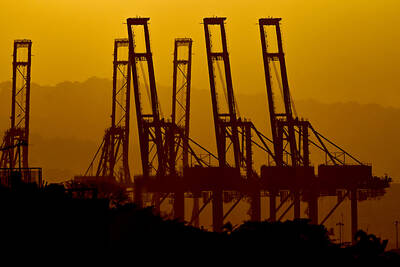
A subsidiary of a Hong Kong-based company that has lost control of two critical ports on the Panama Canal said it is seeking US$2 billion of compensation in damages from Panama over its “illegal” takeover of the ports. Panama Ports Co, a unit of Hong Kong’s CK Hutchison Holdings (長江和記實業), on Friday said in a statement that it is demanding the sum under international arbitration proceedings that it had already started. The Panamanian government last week seized control of the Balboa and Cristobal ports on each end of the Panama Canal, after the country’s Supreme Court declared earlier that a concession allowing
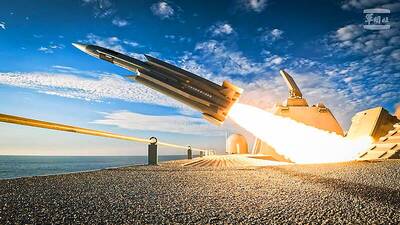
DETERRENCE: With 1,000 indigenous Hsiung Feng II and III missiles and 400 Harpoon missiles, the nation would boast the highest anti-ship missile density in the world With Taiwan wrapping up mass production of Hsiung Feng II and III missiles by December and an influx of Harpoon missiles from the US, Taiwan would have the highest density of anti-ship missiles in the world, a source said yesterday. Taiwan is to wrap up mass production of the indigenous anti-ship missiles by the end of year, as the Chungshan Institute of Science and Technology has been meeting production targets ahead of schedule, a defense official with knowledge of the matter said. Combined with the 400 Harpoon anti-ship missiles Taiwan expects to receive from the US by 2028, the nation would have

POSSIBILITIES EMERGE: With Taiwan’s victory and Japan’s narrow win over Australia, Taiwan now have a chance to advance if South Korea also beat the Aussies Taiwan has high hopes that the national baseball team would advance to the World Baseball Classic (WBC) quarter-finals after clinching a crucial 5-4 victory over South Korea in a nail-biting extra-inning game at the Tokyo Dome yesterday. Boosted by three home runs — two solo shots by Yu Chang (張育成) and Cheng Tsung-che (鄭宗哲) and a two-run homer by Stuart Fairchild — the triumph gave Taiwan a much-needed second victory in the five-team Pool C, where only the top two finishers would advance to the knockout stage in Miami, Florida. Entering extra innings with the game tied at four apiece, Taiwan scored
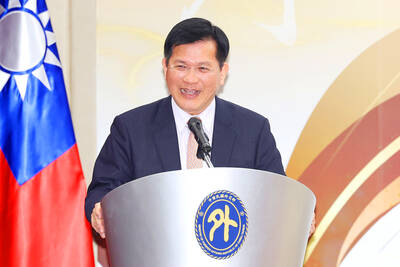
MISSION OF PEACE: The foreign minister urged Beijing to respect Taiwan’s existence as an independent nation, and work together to ensure peace and stability in the region Minister of Foreign Affairs Lin Chia-lung (林佳龍) yesterday rejected Chinese Minister of Foreign Affairs Wang Yi’s (王毅) comments about Taiwan, criticizing China as a “troublemaker” in the international community and a disruptor of cross-strait peace. Speaking at a news conference on the sidelines of the Chinese National People’s Congress, Wang said that Taiwan has always been a territory of China and that it would be impossible for it to become its own country. The “return” of Taiwan to China was the natural outcome of the Chinese people’s resistance against Japan in World War II, and that any pursuit of independence was “doomed


 RSS
RSS