


US Vice President Dick Cheney's doctors implanted a pager-sized type of pacemaker in his chest on Saturday to guard against episodes of a rapid heartbeat after finding him susceptible to them.
Cheney, 60, who has had four heart attacks since 1978, walked out of George Washington University Hospital just hours after the surgery. He waved to onlookers and said: "Feel good, sore shoulder, good shape."
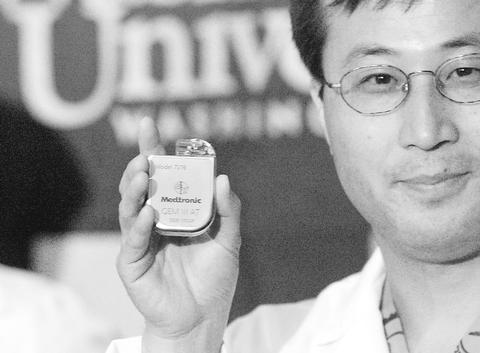
PHOTO: REUTERS
He looked a little tired and stiff as he climbed into a limousine to return to his home at the Naval Observatory with his wife Lynne. He planned to be back at work at the White House today.
It was the third major procedure addressing his heart problems in the last eight months and came after a monitoring device two weeks ago discovered he was having brief episodes of a rapid heartbeat.
"Everything went exceedingly well, exactly as planned," said Alan Wasserman, chairman of the department of medicine at the hospital.
Cheney's personal cardiologist, Jonathan Reiner, said Cheney's prognosis was "terrific" and insisted there were no reasons why he could not continue to function normally in the country's second highest job.
At the end of the procedure, the vice president opened his eyes and asked what time it was. Later he ate lunch and took a call from President George W. Bush. Cheney spent less than seven-and-a-half hours in the hospital.
Bush, talking to reporters at his Camp David retreat as he met the Japanese prime minister, said he did not expect his hard-driving vice president to slow down.
"I know he ought to work at a pace he is comfortable with. And, I know Dick Cheney well and if I were to say, `You've got to slow down, Mr vice president,' he's going to say, `Forget it,' because he's got a job to do, and he's a valuable member of my administration," Bush said.
Surgically placed under the skin on the upper left side of his chest was an implantable cardioverter defibrillator (ICD). It weighs less than 80 grams and functions as a pacemaker, to speed the heart rate, and as a defibrillator, to slow it down. About 150,000 Americans have one.
The surgery came after doctors conducted an "electrophysiology" study on Cheney, which involves threading wires into his heart from the groin and using them to stimulate the heart with a mild shock to see if they could induce an abnormal heart rhythm, which was the case.
This proved to them that he was at risk of developing an irregular heart rhythm and convinced them to implant the device. The test took 35 minutes and the surgery another hour.
Sung Lee, who performed the surgery, said Cheney may never actually need the device but that it would respond within 10 seconds to any prolonged instances of a heartbeat rapid enough to be life-threatening or cause him to lose consciousness.
Lee said there is a possibility cellular phones could affect the device if the phone was right on top of the defibrillator so Cheney will be advised to use cell phones on his right side only.
Cheney might feel a "pop" in his chest if the device pulses an electrical charge to adjust his heart rate, Reiner said.
"Good," he said when asked how he felt as he arrived at the hospital with his wife Lynne at 8am. Was he anticipating an easy day? "I am," he replied.
"You know, quite frankly, I think he was happier to do this than to get some planned dental work," said Reiner.
Cheney said on Friday doctors told him there was "no reason" he could not continue to function normally as vice president.
"I have no long-term doubts. The doctors have assured me that there is no reason why either the procedure or the device that is being implanted should in any way inhibit my capacity to function as vice president," he said before the operation.
"It's like having an emergency room implanted in your chest," said Dr. Douglas Zipes, a cardiologist at Indiana University School of Medicine in Indianapolis. Experts said the device should prevent any problems.
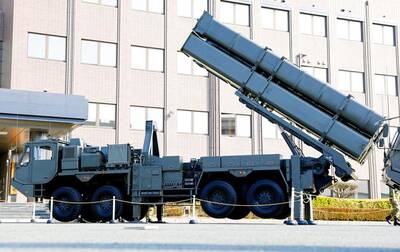
Japan has deployed long-range missiles in a southwestern region near China, the Japanese defense minister said yesterday, at a time when ties with Beijing are at their lowest in recent years. The missiles were installed in Kumamoto in the southern region of Kyushu, as Japan is attempting to shore up its military capacity as China steps up naval activity in the East China Sea. “Standoff defense capabilities enable us to counter the threat of enemy forces attempting to invade our country ... while ensuring the safety of our personnel,” Japanese Minister of Defense Shinjiro Koizumi said. “This is an extremely important initiative for
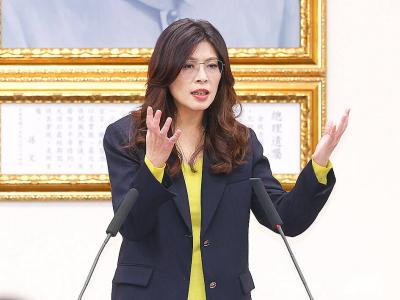
Chinese Nationalist Party (KMT) Chairwoman Cheng Li-wun (鄭麗文) today accepted an invitation from Chinese President Xi Jinping (習近平) to lead a delegation to China next month, saying she hopes to promote the peaceful development of cross-strait relations and bring stability to the Taiwan Strait. “I am grateful and happy to accept this invitation,” Cheng said in a statement from the KMT chairperson’s office. Cheng said she hopes both sides can work together to promote the peaceful development of cross-strait relations, enhance exchange and cooperation, bring stability to the Taiwan Strait and improve people’s livelihoods. At today's news conference, Cheng said any efforts to
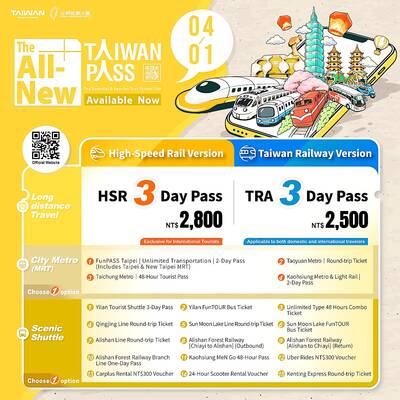
MORE POPULAR: Taiwan Pass sales increased by 59 percent during the first quarter compared with the same period last year, the Tourism Administration said The Tourism Administration yesterday said that it has streamlined the Taiwan Pass, with two versions available for purchase beginning today. The tourism agency has made the pass available to international tourists since 2024, allowing them to access the high-speed rail, Taiwan Railway Corp services, four MRT systems and four Taiwan Tourist Shuttles. Previously, five types of Taiwan Pass were available, but some tourists have said that the offerings were too complicated. The agency said only two types of Taiwan Pass would be available, starting from a three-day pass with the high-speed rail and a three-day pass with Taiwan Railway Corp. The former costs NT$2,800

The nation’s fastest supercomputer, Nano 4 (晶創26), is scheduled to be launched in the third quarter, and would be used to train large language models in finance and national defense sectors, the National Center for High-Performance Computing (NCHC) said. The supercomputer, which would operate at about 86.05 petaflops, is being tested at a new cloud computing center in the Southern Taiwan Science Park in Tainan. The exterior of the server cabinet features chip circuitry patterns overlaid with a map of Taiwan, highlighting the nation’s central position in the semiconductor industry. The center also houses Taiwania 2, Taiwania 3, Forerunner 1 and


 RSS
RSS