


Prime Minister Thaksin Shinawatra suggested yesterday that a bomb destroyed a Thai Airways jetliner he was scheduled to board at Bangkok airport, and suggested that the assassination attempt was an inside job.
"It is relatively clear now it was not the engine, and the only thing that it could definitely be is an explosive device," Thaksin said in the northern city of Chiang Mai.
Thaksin had been due to fly with 148 other passengers from Bangkok to Chiang Mai on the Boeing 737-400 Saturday when it exploded 35 minutes before scheduled departure at the domestic terminal.
One cabin crew member died and seven airline staff were injured. No passengers had boarded the plane.
Thaksin said he had originally planned to go to Chiang Mai on Sunday but told his secretary Friday to change the flight to Saturday afternoon.
"If I was a target of the explosion, the one who placed the bomb would have had access to my schedule," he said.
Thaksin, who earlier was briefed by the national police chief, said he believed the blast was intended as a "threat to life" but was not the work of terrorists.
"I am not so sure that I was the target of this explosion ... but the ones who came with me were just my son and my secretary. I am not sure whether there were other important people on the plane or not. I guess not.''
Prasarn Wongwai, a former police general and adviser to Thaksin, said the source of the explosion "came from where the prime minister was supposed to be seated."
"I believe the bomb is the white phosphorus type," Prasarn said.
"I already talked to the prime minister and he seems to have a clue who did it. But he wouldn't want to talk too much because it might pressure the investigation officials," he said.
The Nation newspaper quoted a police source as saying that if a bomb was to blame, it could be linked to Thaksin's pledge to crack down on drug smuggling, largely blamed on drug lords in neighboring Myanmar.
Thaksin took power last month after his Thai Rak Thai, or Thai Love Thai, party won a general election by an unprecedented margin. The campaign was marred by violence and vote fraud, which is usual in Thai elections.
Thaksin said yesterday that his government's top priority over the next four years would be to curb the "rampant" drug trade. He will meet next weekend with all concerned government agencies to formulate a strategy.
Thaksin, who had flown to Chiang Mai by a military plane, opened a relative's shopping mall before returning to Bangkok later yesterday.
The Nation quoted an unidentified airline source as saying that the blast occurred under seats 11A and 11B, where Thaksin and his son, Phanthongthae, were supposed to sit.
Police Major General Tritos Ronnarithchai, responsible for security of VIPs in Thailand, said he had not received any intelligence of death threats to Thaksin.
Thaksin said Saturday his movements were now restricted for security reasons.
Thailand has a history of coups and violent overthrows of governments, but no prime minister has faced an assassination attempt. The nation has enjoyed political stability under a succession of democratic governments for the last eight years.
The prime minister had not reached the airport when the explosion occurred. No passengers or pilots had boarded the plane but the luggage had been loaded. A steward, Kampol Meerlap, who was preparing the front section of the aircraft, was killed.
Airline officials said it was impossible for the plane to explode from an internal malfunction if the engines had not yet been started. The fully loaded fuel tanks, located in the plane's wings, were intact, they said, indicating that burning fuel was not the cause of the explosion.
The explosion came two days after Thaksin gave Thailand's Constitutional Court 21 boxes of documents as part of his defense against a corruption indictment that could evict him from office.

Japan has deployed long-range missiles in a southwestern region near China, the Japanese defense minister said yesterday, at a time when ties with Beijing are at their lowest in recent years. The missiles were installed in Kumamoto in the southern region of Kyushu, as Japan is attempting to shore up its military capacity as China steps up naval activity in the East China Sea. “Standoff defense capabilities enable us to counter the threat of enemy forces attempting to invade our country ... while ensuring the safety of our personnel,” Japanese Minister of Defense Shinjiro Koizumi said. “This is an extremely important initiative for
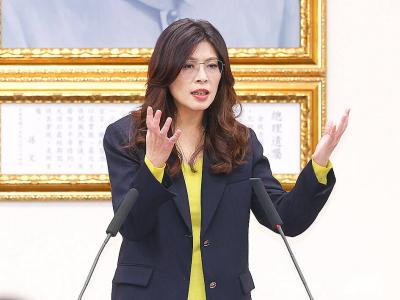
Chinese Nationalist Party (KMT) Chairwoman Cheng Li-wun (鄭麗文) today accepted an invitation from Chinese President Xi Jinping (習近平) to lead a delegation to China next month, saying she hopes to promote the peaceful development of cross-strait relations and bring stability to the Taiwan Strait. “I am grateful and happy to accept this invitation,” Cheng said in a statement from the KMT chairperson’s office. Cheng said she hopes both sides can work together to promote the peaceful development of cross-strait relations, enhance exchange and cooperation, bring stability to the Taiwan Strait and improve people’s livelihoods. At today's news conference, Cheng said any efforts to

MORE POPULAR: Taiwan Pass sales increased by 59 percent during the first quarter compared with the same period last year, the Tourism Administration said The Tourism Administration yesterday said that it has streamlined the Taiwan Pass, with two versions available for purchase beginning today. The tourism agency has made the pass available to international tourists since 2024, allowing them to access the high-speed rail, Taiwan Railway Corp services, four MRT systems and four Taiwan Tourist Shuttles. Previously, five types of Taiwan Pass were available, but some tourists have said that the offerings were too complicated. The agency said only two types of Taiwan Pass would be available, starting from a three-day pass with the high-speed rail and a three-day pass with Taiwan Railway Corp. The former costs NT$2,800

The nation’s fastest supercomputer, Nano 4 (晶創26), is scheduled to be launched in the third quarter, and would be used to train large language models in finance and national defense sectors, the National Center for High-Performance Computing (NCHC) said. The supercomputer, which would operate at about 86.05 petaflops, is being tested at a new cloud computing center in the Southern Taiwan Science Park in Tainan. The exterior of the server cabinet features chip circuitry patterns overlaid with a map of Taiwan, highlighting the nation’s central position in the semiconductor industry. The center also houses Taiwania 2, Taiwania 3, Forerunner 1 and


 RSS
RSS