


Poor communication in the cockpit of Singapore Airlines flight SQ-006 caused the accident in which the plane crashed and burst into a ball of flames last October, killing 83 of the 179 passengers aboard, aviation sources said yesterday.
The flight, which mistakenly headed down a runway closed for repairs, smashed into concrete barriers and heavy construction machinery during take-off, while Typhoon Xangsane lashed the airport with torrential rain and high winds.
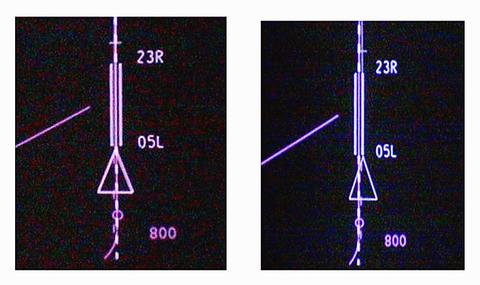
GRAPHIC: TAIPEI TIMES
According to two aviation industry insiders who requested anonymity, communications between the captain and his two-man crew broke down when the captain failed to heed a warning that the plane was not on the correct runway assigned for its takeoff.
Co-pilot interrupted
Lined up on what was believed to be the correct runway on Oct. 31, 2000, first officer Latif Cyrano ran the pre-flight checklist, pausing to tell Captain Foong Chee Kong that something was wrong on the navigation display, but was cut off in mid-sentence.
"The pilot cut off the first officer, assuming he was referring to the poor weather conditions, saying `Oh no problem, in this kind of weather we have everything we need ...'" said an air safety expert.
And with the captain apparently distracted by typhoon winds and rain outside, he discounted crucial information from the first officer.
"Investigation officials listening to the CVR [cockpit voice recorder] asked the first officer what he was trying to say before he was cut off," said the safety expert. "His reply was `I tried to tell him the situation was unstable.' Unstable means you are not on the center line."
The fact that the plane's triangular image appeared offset on the navigation display -- a cockpit screen showing the plane's runway alignment -- clearly shows that they were on the wrong runway.
Off center
If the plane were not on the right runway -- runway 05L -- "The crew would have seen the triangle indicator was off center," that's what the first officer was pointing out, said the expert.
"We were all shocked when we heard [that the cockpit conversation regarding the co-pilot's warning was misunderstood,]" said a senior 747-400 pilot close to the investigation. "The pilot thought he knew what the co-pilot was trying to tell him," when in fact he had misunderstood what was being said.
Still, questions remain as to why the crew's first officer -- or the other co-pilot, the cruising captain -- didn't insist that the captain listen to what he had to say.
"The communication problem resulted when the first officer failed to fulfil his responsibility and pursue the issue with the pilot," said the expert. "The pilot cut off the first officer, assuming he was referring to the poor weather conditions, saying, `Oh, no problem, in this kind of weather we have [checked] everything we need ..."
But flying a plane is a team effort, a basic rule that the crew of SQ-006 failed to follow.
"One should always mind suggestions from others [in the cockpit]. If the captain could have [followed the advice of the first officer,] taken a look at the navigation display and avoided rushing the take-off, the jet wouldn't have crashed," said the senior pilot.
Yet the crew, perhaps intimidated by the leader of their team, simply followed his lead.
"I believe the whole crew was affected by the pilot's arrogant attitude, otherwise they would have insisted proper take-off procedures be run step by step," the expert said.
"The pilot was trying to instill confidence in his crew and give the appearance that everything was all right, despite the storm raging outside."
Prior to the crash, Singapore Airlines had a virtually flawless safety record.
"If they followed standard airline take-off procedure for pilots, the [crash] would not have been possible -- it would have not been possible to take off from the wrong runway," said the expert.
The news came just two days prior to the scheduled release of the crash report tomorrow by the government body spearheading the investigation, the Cabinet-level Aviation Safety Council (ASC,飛安委員會).
Kay Yong (
Singapore Airlines spokeswoman Sharon Wu (
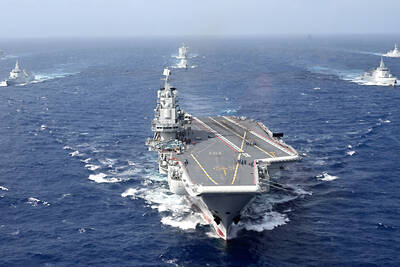
PROVOCATIVE: Chinese Deputy Ambassador to the UN Sun Lei accused Japan of sending military vessels to deliberately provoke tensions in the Taiwan Strait China denounced remarks by Japan and the EU about the South China Sea at a UN Security Council meeting on Monday, and accused Tokyo of provocative behavior in the Taiwan Strait and planning military expansion. Ayano Kunimitsu, a Japanese vice foreign minister, told the Council meeting on maritime security that Tokyo was seriously concerned about the situation in the East China and South China seas, and reiterated Japan’s opposition to any attempt to change the “status quo” by force, and obstruction of freedom of navigation and overflight. Stavros Lambrinidis, head of the EU delegation to the UN, also highlighted South China Sea
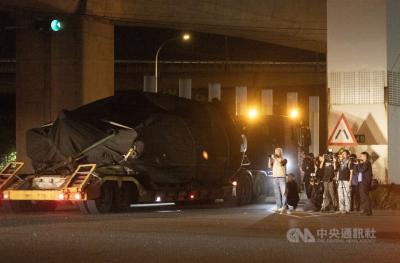
The final batch of 28 M1A2T Abrams tanks purchased from the US arrived at Taipei Port last night and were transported to the Armor Training Command in Hsinchu County’s Hukou Township (湖口), completing the military’s multi-year procurement of 108 of the tanks. Starting at 12:10am today, reporters observed more than a dozen civilian flatbed trailers departing from Taipei Port, each carrying an M1A2T tank covered with black waterproof tarps. Escorted by military vehicles, the convoy traveled via the West Coast Expressway to the Armor Training Command, with police implementing traffic control. The army operates about 1,000 tanks, including CM-11 Brave Tiger
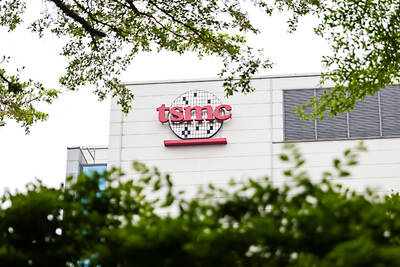
Taiwan Semiconductor Manufacturing Co (TSMC, 台積電), the world’s largest contract chipmaker, said it expects its 2-nanometer (2nm) chip capacity to grow at a compound annual rate of 70 percent from this year to 2028. The projection comes as five fabs begin volume production of 2-nanometer chips this year — two in Hsinchu and three in Kaohsiung — TSMC senior vice president and deputy cochief operating officer Cliff Hou (侯永清) said at the company’s annual technology symposium in Silicon Valley, California, last week. Output in the first year of 2-nanometer production, which began in the fourth quarter of last year, is expected to
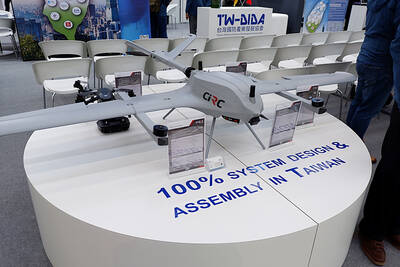
Taiwan’s drone exports surged past US$100 million in the first quarter, exceeding last year’s full-year total, with the Czech Republic emerging as the largest buyer, the Ministry of Economic Affairs said. Exports of complete drones reached US$115.85 million in the period, about 1.2 times the total recorded for all of last year, the ministry said in a report. Exports to the Czech Republic accounted for about US$100 million, far outpacing other markets. Poland, last year’s top destination, recorded about US$11.75 million in the first quarter. Taiwan’s drone exports have expanded rapidly in the past few years, with last year’s total


 RSS
RSS