


A delegation of 26 doctors, nurses and specialists from the Taiwan Root Medical Peace Corp (TRMPC, 台灣路竹會) left for Liberia yesterday to provide medical services for the next two weeks to the African nation as part of its effort to give something back to the international community.
The TRMPC, a civil medical organization that has offered regular medical services to Taiwan's Aboriginal peoples living in remote areas since 1995, also sent a team of 26 staffers to offer medical aid to Kosovar refugees in Macedonia last April.
Liu Ming-chun (劉啟群), president of TRMPC, said the delegation would stay in the southeast part of Liberia from Feb. 7 to Feb. 20.
"The region is what John Cummings, the Liberian Ambassador to Taipei, dubbed as a place only God [referring to Christian missionaries] has visited before," Liu said.
Liu, who had spent two weeks in Liberia last year to evaluate the possibility of offering medical services to the African country, said the region was chosen because of its need for urgent medical assistance as compared to other parts of the country.
"After consulting Liberian officials, we decided to focus on the region where medical resources are most lacking," he said.
The group would offer medical diagnoses for local residents as well as public health education on AIDS prevention and common diseases in the country such as cholera and malaria, Liu said.
As part of its AIDS prevention plan, the delegation would also evaluate the extent to which Liberians accept contraception before purchasing condoms in Taiwan and shipping them to the African country, Liu added.
Among the 31 million people worldwide who have been diagnosed with AIDS or with the HIV virus that causes AIDS, over two-thirds live in Africa, according to UN statistics.
The TRMPC delegation is composed of six doctors, six nurses, three professors in the areas of parasite studies, public health and ethnology, one pharmacist, one medical examiner, as well as voluntary workers and reporters.
The delegation is scheduled to offer medical services to Tibetan refugee camps scattered in northern India from March 25 to April 2.
The visit to India was prompted by an invitation from the India-based Tibetan government in exile to offer medical services to Tibetans living there, Liu said.

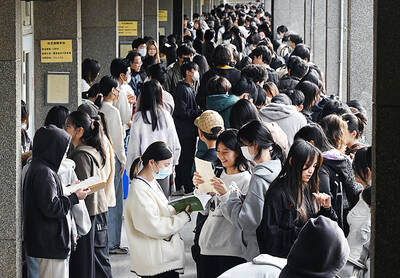
A global survey showed that 60 percent of Taiwanese had attained higher education, second only to Canada, the Ministry of the Interior said. Taiwan easily surpassed the global average of 43 percent and ranked ahead of major economies, including Japan, South Korea and the US, data from the Organisation for Economic Co-operation and Development (OECD) for 2024 showed. Taiwan has a high literacy rate, data released by the ministry showed. As of the end of last year, Taiwan had 20.617 million people aged 15 or older, accounting for 88.5 percent of the total population, with a literacy rate of 99.4 percent, the data

NEW LOW: The council in 2024 based predictions on a pessimistic estimate for the nation’s total fertility rate of 0.84, but last year that rate was 0.69, 17 percent lower An expected National Development Council (NDC) report expects the nation’s population to drop below 12 million by 2065, with the old-age dependency ratio to top 100 percent sooner than 2070, sources said yesterday. The council is slated to release its latest population projections in August, using an ultra-low fertility model, the sources said. The previous report projected that Taiwan’s population would fall to 14.37 million by 2070, but based on a new estimate of the total fertility rate (TFR) — the average number of children born to a woman over her lifetime — the population is expected to reach 12 million by
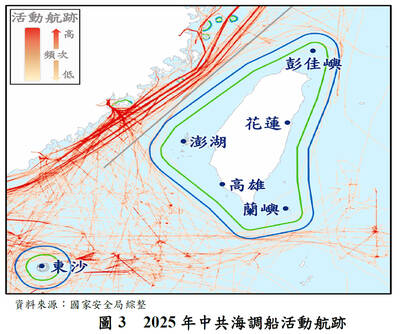
INTENSIFYING THREATS: Beijing’s tactics include massive attacks on the government service network, aircraft and naval vessel incursions and damaging undersea cables China is prepared to interfere in November’s nine-in-one local elections by launching massive attacks on the Taiwanese government’s service network (GSN), a report published by the National Security Bureau showed. The report was submitted to the Legislative Yuan ahead of the bureau’s scheduled briefing at the Foreign Affairs and National Defense Committee tomorrow. The national security team has identified about 13,000 suspicious Internet accounts and 860,000 disputed messages, the bureau said of China’s cognitive warfare against Taiwan. The disputed messages focus on major foreign affairs, national defense and economic issues, which were produced using generative artificial intelligence (AI) and distributed through Chinese

COUNTERING HOSTILITY: The draft bill would require the US to increase diplomatic pressure on China and would impose sanctions on those who sabotage undersea cable networks US lawmakers on Thursday introduced a bipartisan bill to bolster the resilience of Taiwan’s submarine cables to counter China’s hostile activities. The proposal, titled the critical undersea infrastructure resilience initiative act, was cosponsored by Republican representatives Mike Lawler and Greg Stanton, and Democratic Representative Dave Min. US Senators John Curtis and Jacky Rosen also introduced a companion bill in the US Senate, which has passed markup at the chamber’s Committee on Foreign Relations. The House’s version of the bill would prioritize the deployment of sensors to detect disruptions or potential sabotage in real-time and enhance early warning capabilities through global intelligence sharing frameworks,


 RSS
RSS