


Prosecutors have announced a 59-count indictment against computer scientist Lee Wen-ho (
Under suspicion as a spy for China for the past several years, Lee was arrested and charged Friday with unlawfully gathering and retaining defense secrets with the intent "to secure an advantage to a foreign nation."
He was not, however, charged with passing nuclear secrets to China or any other country.
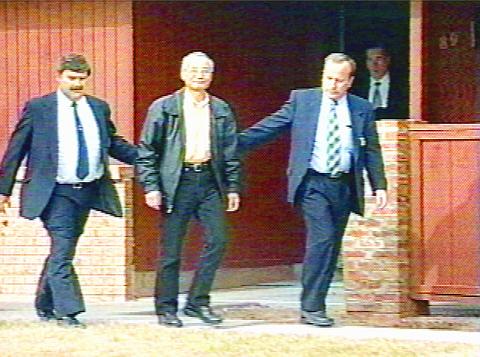
PHOTO: AP
The prosecutors claim that Lee compromised US security by moving nuclear secrets from secure computers to portable computer tapes.
Seven of 10 high-volume tapes Lee allegedly filled full of nuclear computer codes at the Los Alamos National Laboratory are still missing, officials said. Three tapes were recovered.
"The mishandling of classified information alleged in this indictment has, in the government's view, resulted in the serious damage to important national interests," US Attorney John Kelly said.
The indictment charged Lee with violations of the federal Espionage Act, including tampering, altering and concealing classified information, and violations of the Atomic Energy Act, including removing secret weapons files from the Los Alamos computers.
If convicted, Lee, 59, could face up to life in prison and a US$250,000 fine, officials said.
Workers at Los Alamos lab about 145km from Albuquerque were mostly tight-lipped about the indictment and the lab itself declined comment.
But two of Lee's former colleagues jumped to his defense. "It's not like he smuggled plutonium out in his lunch pail," said Mark Tilden, a research scientist in the laboratory's physics division. "This is something that would basically put [author] Tom Clancy to sleep."
Bryan Kashiwa, an engineer who was collaborating with Lee on a project when Lee was fired in March, said it appeared Lee had been singled out as the target of the investigation. "I thoroughly believe that he is an honest guy, that he has acted in what he felt was an appropriate manner," Kashiwa said.
In Beijing, Chinese government offices were closed for the weekend and there was no immediate reaction to Lee's arrest. China has repeatedly denied allegations that it stole US nuclear weapons secrets or other high-tech military technologies, and Lee has denied spying for China.
The indictment said that Lee, working in 1993 and 1994 in a Los Alamos division dealing with "the most sensitive nuclear data and information possessed by the United States," assembled 19 files containing secret data relating to atomic weapon research, design, construction and testing.
He then transferred the information to an unsecure computer and downloaded files to nine portable computer tapes, the indictment said. Lee made a 10th portable computer tape with current nuclear weapons design codes and other information necessary to compare computer-generated, calculated results with actual test data, the court papers said.
Lee has acknowledged the transfers of "legacy codes" that provide a history of nuclear weapons development from a highly secure Los Alamos' computer system to his less-secure personal office computer. But he has maintained that he had put the codes into his office computer as a backup to safeguard against a computer crash.
"Scientists, engineers and employees at Los Alamos National Laboratory are entrusted with some of the most sensitive assets that this country has to offer," said David Kitchen, special agent in charge of the Albuquerque FBI office. "After an extensive investigation, the FBI has extensive information to suggest that Dr Lee has violated that trust."
The Taiwan-born scientist, who is a naturalized US citizen, appeared before a federal magistrate in Albuquerque on Friday and was being held without bond. The magistrate scheduled a hearing tomorrow to consider a motion to detain Lee, who was taken into custody at his home outside Los Alamos.
A senior government official in Washington said the government hoped Lee, facing the severity of the charges could be persuaded to disclose what happened to the missing computer tapes. Investigators have asked Lee's attorney about the tapes but received no response, said one official, speaking on condition of anonymity.
The law firm representing Lee accused the Justice Department of mishandling the case.
Lee's firing fed a growing controversy in Washington over alleged Chinese spying at the Energy Department's nuclear weapons labs, specifically at Los Alamos.

The National Chungshan Institute of Science and Technology yesterday showcased its locally developed variants of the Vision 60 robotic patrol dog, which it plans to deploy on the nation’s outlying territories in the South China Sea. The variants were produced under the Joint Lab project — created by the institute and domestic companies — and assembled with domestically produced motors, lenses and artificial intelligence (AI) systems alongside licensed tech from the US, Missile and Rocket Systems Research Division deputy director Jen Kuo-kang (任國光) told the media event at a military base in Taipei’s Dazhi (大直) area. Taiwan has built up its strengths

RIGHT DIRECTION: Taiwan’s efforts to prevent forced labor include a proposal to ‘fully prohibit’ employers from withholding workers’ documents, an official said Taiwan is to establish a mechanism to restrict imports of goods linked to forced labor, the Executive Yuan said yesterday, after the US proposed imposing additional tariffs on Taiwanese goods over labor concerns. “The Ministry of Labor and the Ministry of Economic Affairs are to establish an interministerial review procedure,” Executive Yuan spokesperson Michelle Lee (李慧芝) said at a news briefing in Taipei. “The government is to use the Foreign Trade Act [貿易法] as the legal basis to restrict imports of goods produced with forced labor” and bring its supply chain governance more in line with international standards on human rights, resilience
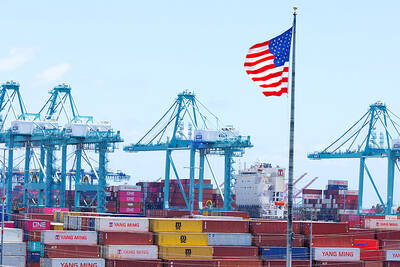
NOT IMMEDIATE: Taiwan has a chance to appeal the proposed 10 percent tariff before it starts, while other countries face a 12.5 percent tariff from the trade office Taiwan is among 60 economies determined by the US to have failed to impose or enforce a ban on the importation of goods produced with forced labor, according to a notice released on Tuesday by the Office of the US Trade Representative (USTR), which proposed imposing an additional 10 percent or more tariff on them. The USTR in a statement said that following an investigation, it had determined under Section 301 of the Trade Act of 1974 that the failure of the 60 economies to impose and effectively enforce a prohibition on the importation of goods produced with forced labor is
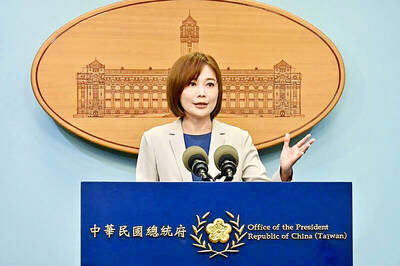
TIT-FOR-TAT: The US allegedly revoked the visa of a Chinese national working at Xinhua News Agency in the US in response to Beijing’s expulsion of Vivian Wang The Presidential Office yesterday condemned China for expelling a New York Times correspondent from Beijing following the newspaper’s interview with President William Lai (賴清德), saying the move highlighted Beijing’s suppression of press freedom and its threat to international news media. Taiwan has noted a series of recent incidents in which Beijing used similar tactics to “threaten and pressure international media outlets and journalists,” Presidential Office spokeswoman Karen Kuo (郭雅慧) said in a statement. “This concerns not only press freedom and freedom of expression, but also the safety of journalists, and Taiwan and relevant partners are paying close attention to the situation,” she


 RSS
RSS