


Taiwan was again listed by the US government as among the world's major drug-producing countries and transshipment points last year, according to a report released on Wednesday.
China and Hong Kong were also among the 26 nations named on the list.
President Bill Clinton signed the list, commonly called "the majors," and sent it to Congress, State Department spokesman James Rubin said, adding that it remained almost the same as the previous year's.
Clinton also mentioned in a written statement that the list does not necessarily reflect the anti-drug efforts made by the governments of those countries. Geographical, commercial and economic factors could encourage drug smuggling activities despite efforts made by the governments, the statement said.
Both Taiwan and Hong Kong were cited by the statement as examples of governments cooperating with US anti-drug authorities.
Officials from Taiwan's Criminal Investigation Bureau yesterday called the listing unfair because the island was cited due to its position on a major drug trafficking route and despite the government's efforts and cooperation with US authorities.
The officials also said information from police, customs, coast guard, and other investigative authorities shows that Taiwan is not a drug-producing country.
Most of the amphetamines seized over the last few years were produced in China and smuggled to Taiwan by Chinese fishermen, the officials said.
The officials also vowed to spare no effort in continuing the government's crackdown on drug smuggling.
The list will be used as a basis for decisions on US anti-drug aid.
Half of Washington's aid to nations on the list is suspended pending a decision by the president.
Taiwan's appearance on the list, however, will cause no direct financial loss for the island since it does not receive US aid for anti-drug operations.
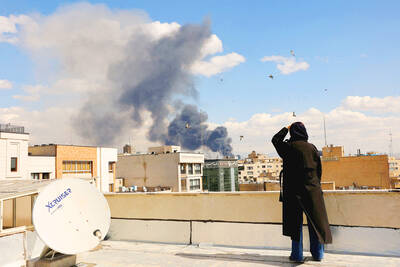
CHAOS: Iranians took to the streets playing celebratory music after reports of Khamenei’s death on Saturday, while mourners also gathered in Tehran yesterday Iranian Supreme Leader Ayatollah Ali Khamenei was killed in a major attack on Iran launched by Israel and the US, throwing the future of the Islamic republic into doubt and raising the risk of regional instability. Iranian state television and the state-run IRNA news agency announced the 86-year-old’s death early yesterday. US President Donald Trump said it gave Iranians their “greatest chance” to “take back” their country. The announcements came after a joint US and Israeli aerial bombardment that targeted Iranian military and governmental sites. Trump said the “heavy and pinpoint bombing” would continue through the week or as long
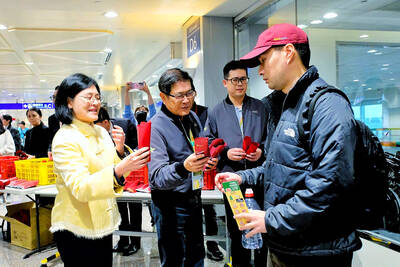
An Emirates flight from Dubai arrived at Taiwan Taoyuan International Airport yesterday afternoon, the first service of the airline since the US and Israel launched strikes against Iran on Saturday. Flight EK366 took off from the United Arab Emirates (UAE) at 3:51am yesterday and landed at 4:02pm before taxiing to the airport’s D6 gate at Terminal 2 at 4:08pm, data from the airport and FlightAware, a global flight tracking site, showed. Of the 501 passengers on the flight, 275 were Taiwanese, including 96 group tour travelers, the data showed. Tourism Administration Deputy Director-General Huang He-ting (黃荷婷) greeted Taiwanese passengers at the airport and
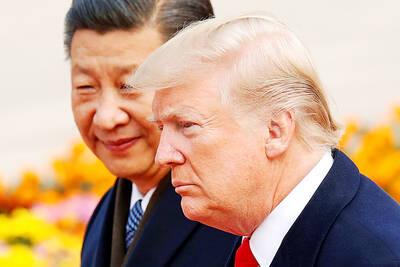
TRUST: The KMT said it respected the US’ timing and considerations, and hoped it would continue to honor its commitments to helping Taiwan bolster its defenses and deterrence US President Donald Trump is delaying a multibillion-dollar arms sale to Taiwan to ensure his visit to Beijing is successful, a New York Times report said. The weapons sales package has stalled in the US Department of State, the report said, citing US officials it did not identify. The White House has told agencies not to push forward ahead of Trump’s meeting with Chinese President Xi Jinping (習近平), it said. The two last month held a phone call to discuss trade and geopolitical flashpoints ahead of the summit. Xi raised the Taiwan issue and urged the US to handle arms sales to
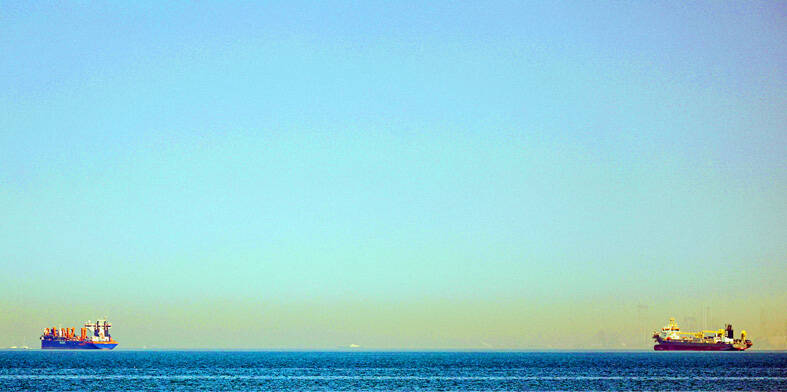
State-run CPC Corp, Taiwan (CPC, 台灣中油) yesterday said that it had confirmed on Saturday night with its liquefied natural gas (LNG) and crude oil suppliers that shipments are proceeding as scheduled and that domestic supplies remain unaffected. The CPC yesterday announced the gasoline and diesel prices will rise by NT$0.2 and NT$0.4 per liter, respectively, starting Monday, citing Middle East tensions and blizzards in the eastern United States. CPC also iterated it has been reducing the proportion of crude oil imports from the Middle East and diversifying its supply sources in the past few years in response to geopolitical risks, expanding


 RSS
RSS