

A poll earlier this week by Taipei Trust in Democracy Association had challenger Puma Shen (沈伯洋) of the Democratic Progressive Party (DPP) ahead by 17 percentage points in the Taipei mayoral race over incumbent Chiang Wan-an (蔣萬安) of the Chinese Nationalist Party (KMT). Yet the upheaval in the political world is overshadowing another important upheaval: workers are increasingly calling for collective action as business sector wealth continues to grow.
WAGE STAGNATION
On Monday hundreds of workers protested in front of the Presidential Office, calling for higher wages, greater profit sharing and better retirement. This was on the heels of strikes finishing up, and other strikes being set in motion.
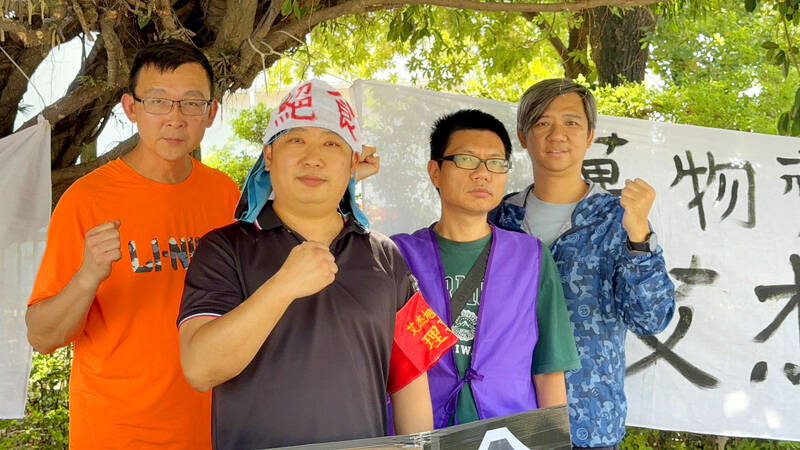
Photo: Lee Wen-der, Taipei Times
The second week of October saw a four-day strike at AGC Display Glass Taiwan Inc (艾杰旭顯示玻璃) in Yunlin County. The strike ended on the 8th, with some minor pushing and shoving along the picket line. Workers received raises and the union and the company agreed to discuss further raises in 2029 and 2030. The union said that it was the first strike approved by vote in Yunlin County’s history.
Earlier that same week the strike at Kuai Kuai Co (乖乖) was ended after the company agreed to provide greater compensation to workers for the relocation of the factory. The agreement contained a “no free rider” clause that said the benefits would apply only to union members. The union also thanked local migrant workers, whom the company had brought into break the strike, but who had refused to cross the picket line.
Workers at Chunghwa Telecom have been discussing a strike since late in the summer. The company has reportedly been doing well, but little of the profits have made their way into worker salaries, according to union officials. Strike votes are underway at several Chunghwa Telecom sites.
Chunghwa Telecom Workers’ Union Chairman Teng Ke-lien (鄧克?) said in August that productivity in Taiwan has been rising but salaries have not kept pace. According to data releeased by the Directorate-General of Budget, Accounting and Statistics (DGBAS) released in August, 70 percent of workers make less than the average wage, with the median wage NT$10,000 per month less than average. The tiny slice of well-paid workers in the tech industry pulls up the average wage. Most workers are just getting by.
Micron Memory Taiwan, which employs 15,000 workers in Taiwan, yesterday avoided a strike that its workers had planned after both sides signed a labor-management agreement. Memory makers have had a banner year thanks to the AI boom, and workers felt that they should see greater profit sharing. Micron had offered a one-time bonus when workers threatened to strike, but the union felt regular profit sharing was better. Details of the agreement will emerge over the next few days.
PENSION REFORM
Of the issues named by workers, the most widely recognized problem is pensions. At the presidential office rally, Taoyuan Confederation of Trade Unions Chairwoman Shih Shu-hua (施淑華) called for a nationwide general strike ahead of the 2028 elections if pension reform remained stalled.
Several issues color calls for reform. Pensions are widely considered too small. Although the workforce is shrinking and the government is encouraging older retirees to re-enter the workforce, some of them cannot re-enter the pension program. Most importantly, the Taiwan Labor Insurance Bureau published an actuarial report showing that the Labor Insurance Fund will reach nearly NT$14.1 trillion in liability and face insolvency by 2031. Studies show that despite worker complaints, payouts will have to be reduced and government contribution increased to maintain pension system solvency. This paper reported in January last year that solvency had been extended from 2028 to 2031 despite eight straight years of payouts exceeding revenues.
And it appears this situation isn’t going to disappear. The deficits are driven by demographics, with the workforce rapidly aging and birthrates collapsing. As with so many other social systems, it seems the labor insurance program is in a state of permanent crisis and “reforms” will be necessary in the coming five years.
A 2024 protest in front of the Executive Yuan by labor activists put its finger on the problem: the activists observed that Ministry of Finance data said the national tax burden was just 14.6 percent, meaning that businesses and the wealthy could pay more in taxes.
POLITICAL IMPLICATIONS
This casts new light on the KMT-controlled legislature’s plan to hand out NT$20,000 to local voters. There is no reason the KMT couldn’t be taking cash from the sudden spike in tax revenues (up 24.4 percent in the first three quarters of this year) and applying it to pensions or the national health insurance system or some other government program urgently in need of cash, if they want to redistribute the wealth. Instead, they are supporting direct payouts (read: bribes) to voters. The solvency of various government payout programs will thus remain threatened.
Given that the DPP is likely to remain in control of the central government, it could be that major government systems will be threatened with collapse under its rule (even if they are not, it may look like they are). One fork of the KMT strategy is thus to make financially insolvent systems more difficult to manage, in a way that will shift the blame to the ruling party. Of course, the KMT-controlled legislature can contribute to that further by freezing budgetary processes and similar shenanigans, at least for another two years.
The political fallout from a general strike prior to a presidential election could be important. Local media were reporting that Taoyuan’s KMT Mayor, Chang San-cheng (張善政), was facing criticisms from local businessmen who said he had turned Taoyuan into a paradise for striking workers. His predecessor, DPP politician Cheng Wen-tsan (鄭文燦), had developed a reputation for resolving strikes. In a general strike the ruling party, which in 2028 will be the DPP, will take a similar hit. Since the major issue will be reform of the pension system, a central government responsibility, all eyes will be on the DPP.
A pension system overhaul is a slow-motion crisis, and the DPP has plenty of time to address it. The party leadership needs to publicly sit down with labor leaders and hammer out widely acceptable reforms to the pension program long before the next election. Otherwise, it could face a general strike over the state of the system during an election even as the KMT-run legislature throws up roadblocks to fixing it.
Local DPP politicians need to learn strike resolution from Cheng Wen-tsan. As the AI boom drives an ever more K-shaped economy, worker restiveness will only grow.
Notes from Central Taiwan is a column written by long-term resident Michael Turton, who provides incisive commentary informed by three decades of living in and writing about his adoptive country. The views expressed here are his own.
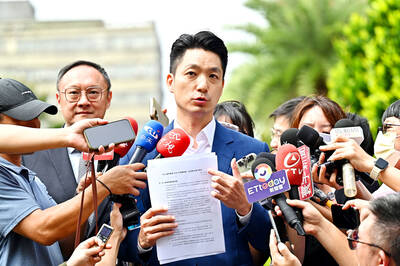
The Han Kuang exercises in August simulated the repelling of attackers from the People’s Republic of China (PRC). One scenario saw the PRC seizing Taipei International Airport (Songshan airport) in a daring helicopter assault. The airport is a key military operations center, and its seizure or destruction in a PRC invasion would be inevitable. Yet that is hardly the only conflict involving Songshan. Taipei Mayor Chiang Wan-an’s (蔣萬安) recent, surprising suggestion that the airport be converted to an AI park is just the latest variation on an old theme. Replacing Songshan airport with some kind of green or park space

Since Russia invaded more than four years ago, Ukraine has become a global leader in military drone innovation, enabling its forces to grind a much larger enemy to a stalemate. But this technological force multiplier has come with an unsettling vulnerability: Ukrainian drone makers are highly dependent on electronics made by China, a key Russian ally. Ukraine’s greatest fear is that the Chinese government could severely restrict its access to these critical parts. It also worries that Russian defense companies that need these same supplies could be given preferential treatment by Chinese factories. Over the past two years, Ukraine has sought to break
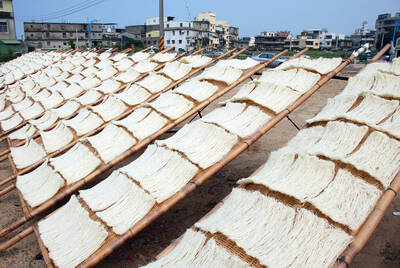
Oct. 19 to Oct 25 For many in Hsinchu, the cold, dry October winds bring uncomfortable weather. But in the past, rice noodle makers waited all year for these winds. Laid out on bamboo racks by the Keya River (客雅溪), freshly made noodles dried in the wind without compromising their quality or texture. The ideal conditions, it was once said, were 70 percent wind and 30 percent sun. Most producers were concentrated in the Nanshih (南勢) area, which became known as Mifenliao (米粉寮, literally “rice noodle shed”). The work in the early days was entirely manual and physically grueling, often starting
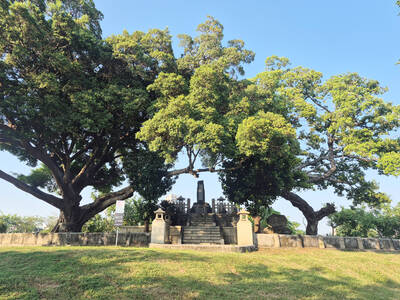
Just 10 years ago, the site of Shuanghu Forest Park (雙湖森林公園) was a blight on the Kaohsiung landscape. Motorists on the nearby freeway were treated to a view of a weedy hill covered in scattered graves, with a few corrugated steel buildings thrown in for good measure. Things got worse before they got better. It was decided to turn this public land into a park, but in order for that to happen, all the human remains had to be moved and the existing mess of weeds and patchy tree growth had to be landscaped. After nearly 30,000 burials were relocated to


 RSS