

Karl Lagerfeld had never set foot inside a supermarket before he had one built on a catwalk in 2014, featuring models browsing aisles with baskets shopping for Chanel-branded fromage. It was classic Lagerfeld: very silly but a stroke of genius. The fashion designer was easy to poke fun at, with his white bouffant-plus-ponytail hairstyle and black leather gloves. But behind the persona was a man who spoke four languages fluently, a workaholic still running Chanel, Fendi and his own label Karl Lagerfeld into his 80s.
This dutiful, uncontroversial documentary is based on William Middleton’s biography Paradise Now: The Extraordinary Life of Karl Lagerfeld. As well as archive footage of Lagerfeld, film-maker Nick Hooker gets access to the designer’s inner circle, but ultimately his documentary fails to chip away at the persona. (This is no criticism: I once interviewed Lagerfeld, a frustrating 30 minutes during which the dark glasses stayed on and he answered questions with bon mot witticisms but gave nothing away.) In a clip at the start of the film, Lagerfeld admits that he has spent so long performing a role that not even those closest to him really know who he is.
Growing up in Germany, his mother was cold and distant, which seems to have left him with a life-long aversion to intimacy. At 19, he left for Paris, and after a long stint at Chloe took over Chanel in 1983, at a time when the legendary fashion house was dusty and on its uppers. He lost the great love of his life, partner Jacques de Bascher, to an Aids-related illness in 1989. Later in life, his smash hit collaboration with H&M gave Lagerfeld celebrity status, which he clearly adored. But glance away and you’ll miss the very quick reference to his controversial fatphobic comments.
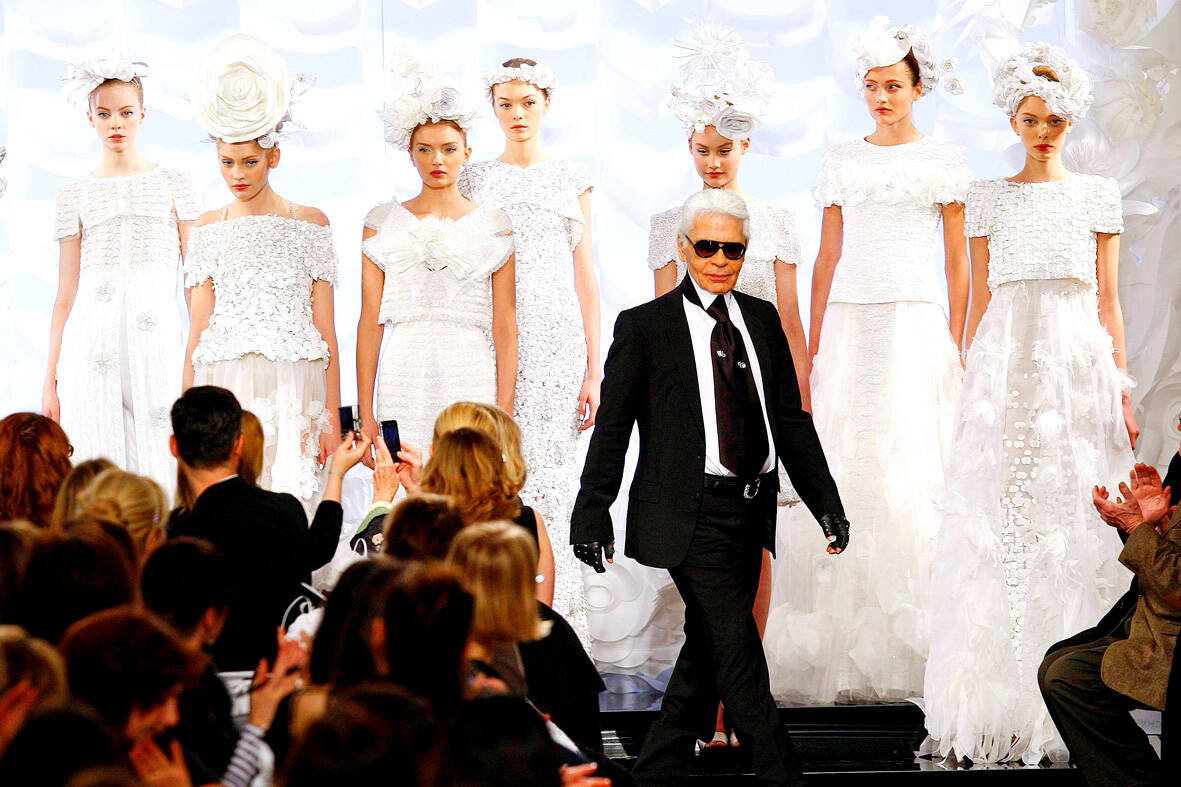
Photo: Reuters
Of the interviews here, Lagerfeld’s famous pals Tilda Swinton and Penelope Cruz are all blather and platitudes, but more insightful are his collaborators, including Amanda Harlech, his right-hand woman at Chanel. I found it telling how well liked Lagerfeld was by his staff; the seamstress who worked for him for 50 years turning his sketches into clothes describes him as “the creme de la creme of men.” His longtime bodyguard says he was like a father. (Though, if Lagerfeld had actually been his dad there were times he’d have told him to “go fuck yourself.”) Overall, this is a diligent, if not definitive, profile.
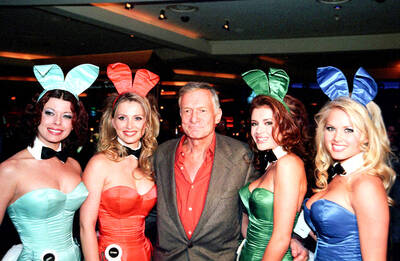
There was a time, a few decades ago, when the men who owned the world’s biggest pornography businesses were happy to be famous. They paraded a lifestyle they hoped looked glamorous, appearing in public dressed in silk pajamas or with a woman in swimwear on each arm. Porn moguls like Hustler’s Larry Flynt or Playboy’s Hugh Hefner were household names. “Say what you want about these old perverts, who once set the tone of our sexual culture, but at least you knew who they were and what they were selling,” Patricia Nilsson writes in her new book, Guilty Pleasure: The Pornification

Speculation started to fly last month that Chinese Nationalist Party (KMT) candidates running in the November elections wanted to keep their distance from party Chair Cheng Li-wun (鄭麗文). That some in the KMT were concerned that Cheng’s firm ideological adherence to the “one China principle” is no secret. There had already been pushback from within the party on issues ranging from the budget to defense, as well as over some of her more hardline comments. The timing made sense, however. The KMT party congress unity love fest wrapped up at the end of July. Through the primaries and up to

In 1904 the Japanese introduced caning to Taiwan. As a punishment, caning was applied by the Japanese to Taiwanese and Chinese subjects, never to the Japanese themselves (it had been outlawed in Japan in 1882). An imperial and colonial act, caning thus functioned to define and display social class boundaries. So it is with the new legislation permitting caning proposed by Chinese Nationalist Party (KMT) legislators last week. According to the KMT proposal, individuals committing major fraud, aggravated sexual assault, driving under the influence of drugs and child abuse may be subject to caning. These are high-profile offenses that generate great
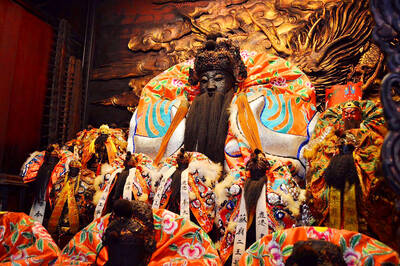
OCT. 5 to OCT. 11 Many worshippers of Taoist deity Lord Su (蘇府王爺) had never witnessed his “north-south grand inspection tour” of central Taiwan. The historic procession last took place in 1969, and before that, in 1893. Lukang’s Fengtian Temple (奉天宮) in Changhua County last Sunday completed Lord Su’s sixth grand inspection tour ever, taking its three main statues to settlements from Miaoli to Yunlin over 10 days. According to news reports, this year’s event also included a boat patrol that set out from Taichung, bringing luck and safety to fishers and offshore wind farm workers. Why did it


 RSS
RSS