

OCT. 5 to OCT. 11
Many worshippers of Taoist deity Lord Su (蘇府王爺) had never witnessed his “north-south grand inspection tour” of central Taiwan. The historic procession last took place in 1969, and before that, in 1893.
Lukang’s Fengtian Temple (奉天宮) in Changhua County last Sunday completed Lord Su’s sixth grand inspection tour ever, taking its three main statues to settlements from Miaoli to Yunlin over 10 days. According to news reports, this year’s event also included a boat patrol that set out from Taichung, bringing luck and safety to fishers and offshore wind farm workers.
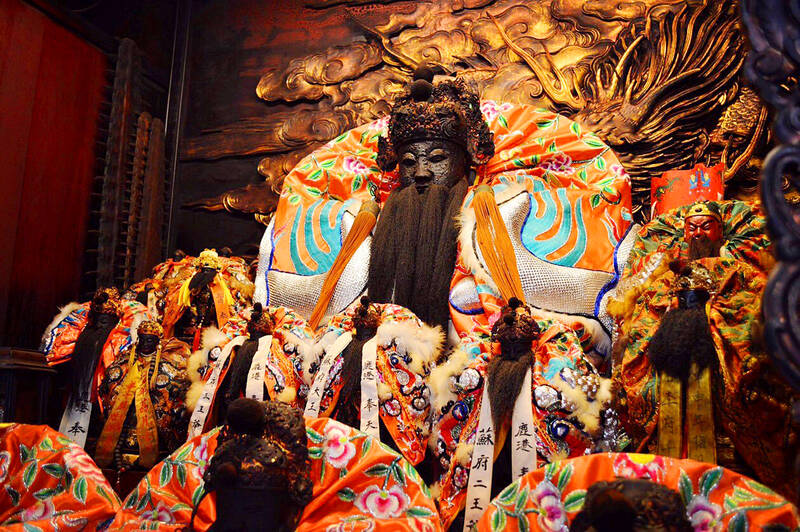
Photo courtesy of Fengtian Temple
Why did it take 57 years for the event to happen again? Temple officials say the procession is held only when a spirit medium receives instructions from Lord Su.
Folklorist Lee Hsiu-e (李秀娥) writes in a study of Fengtian Temple’s grand inspection had typically coincided with misfortune, including floods, earthquakes, disease and local unrest. Earlier processions lasted more than 60 days and mobilized hundreds of people, reflecting the wealth and connections of Lukang’s merchants and the influence of its religious institutions. Lukang was once considered the second-most prosperous town in Taiwan.
Lee found that most of the communities visited had a local shrine for Lord Su. The arrival of the three main statues was seen as a blessing, with residents inviting the procession into their villages and extending its route over time. Lee’s study records local memories of “miracles” attributed to Lord Su during the journeys, including one account in which he was said to have changed the course of a river and stopped its frequent flooding.
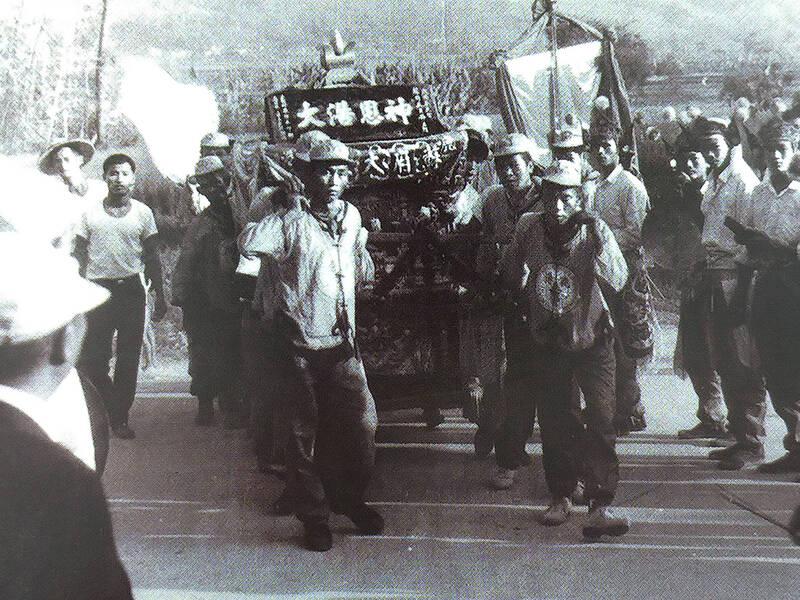
Photo courtesy of Fengtian Temple
TEMPLE ORIGIN
Fengtian Temple’s worship of Lord Su has an origin story typical of many temples across Taiwan. Around 1684, legend has it that three pieces of wood were picked up by a fisherman off the waters of today’s Dongshi Borough (東石). After witnessing the wood glowing, locals received divine instructions to carve each of them into a statue of Lord Su.
This event became one of three main sources of Lord Su worship in central Taiwan. At the time of Lee’s 1996 study, only eight temples in Lukang had Lord Su as their principal deity, with at least five tracing their origins to these three statues. Lee also found that more than 700 temples across Taiwan venerated Lord Su statues that branched off from these three.
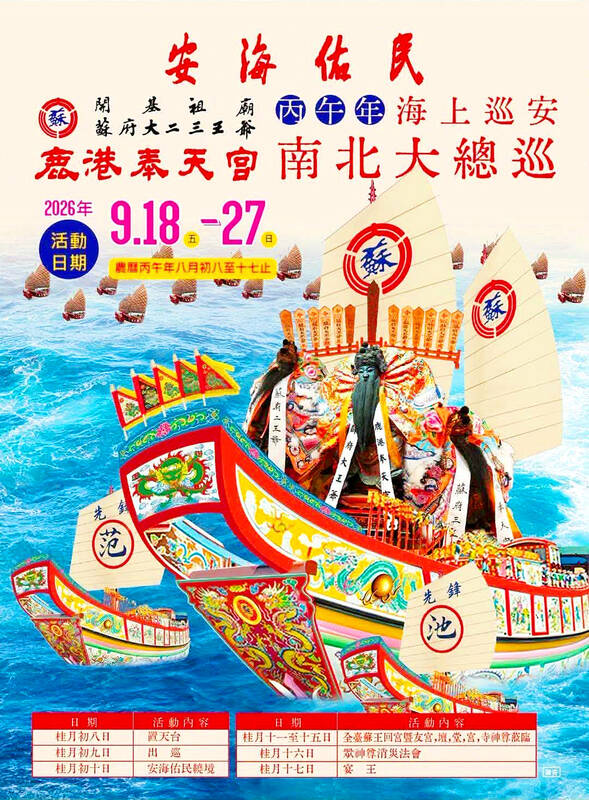
Photo courtesy of Fengtian Temple
The statues were worshipped in the Beitou (北頭) area north of Lukang, with the main statue rotating annually among different incense masters. Each year, the caretaker would build a new structure to house the deity, which they were allowed to use privately after their year of service. The three statues had different birthdays, but all were celebrated on the 12th day of the fourth lunar month.
While permanent temples were eventually established for the second and third statues, the main statue continued to be housed in a different home each year until the 1960s, when Taiwan’s growing population left too little vacant land for new shrines.
Locals in 1962 began building Fengtian Temple on land purchased from the National Taxation Bureau, Lee writes. Completed in 1968, it became the permanent home of all three statues.
EARLY INSPECTIONS
While the temple hosted a number of regular and occasional rituals, the north-south grand inspection was the largest. The “inspection” was modeled on Qing-era naval patrols, with Lord Su accompanied by his own Five Camps soldiers (五營) and divine generals.
Old temple texts describe the tour as a way of patrolling the area on behalf of Heaven, driving out pestilence and protecting the people. It was also intended to bring prosperity and good harvests.
The first procession took place in 1831, when Lord Su reportedly noted the spread of disease. It set out in October, traveling in a loop through Changhua and Nantou over more than 50 days.
Lee examined local annals and found that a drought had struck that summer. In the autumn, floods brought seawater into farmland, ruining crops and causing houses to collapse. Later that winter, an earthquake struck.
The second inspection took place in 1877. By then, Lukang’s port had been suffering from sediment buildup, forcing larger ships to transfer their cargo to smaller boats. Fewer ships were visiting, contributing to the town’s economic decline. This time, the procession visited Taichung and communities around Baguashan (八卦山).
Earthquakes affected the area for two years in a row before the 1882 inspection, which lasted more than 60 days.
UPRISINGS AND TYPHOONS
Times were rough leading up to the fourth inspection. The Jhuoshuei River (濁水溪) repeatedly flooded, while civil unrest also shook the region. A dispute over unfair government land surveys in 1888 escalated into the Shih Chiu-tuan Incident (施九緞事件), in which hundreds of angry locals besieged the walled county seat of Changhua City.
The uprising was eventually quelled with the help of local militia led by the Wufeng Lin Family (霧峰林家). It’s said that Lukang narrowly avoided a government attack for allegedly aiding the rebels.
In 1889, the Jhuoshuei River flooded again, exacerbating the sedimentation in Lukang’s port. Locals had to pool their resources to clear it so bamboo rafts could reach the shore.
A grand inspection was set for 1891, but according to a manuscript preserved by the temple, the organizer failed to obtain a formal letter from Lukang’s Quan Guild (泉郊), which was needed to arrange the procession with villages along the route. Without it, many communities showed little interest, and the event was canceled and rescheduled for 1893. The episode shows how closely the procession was tied to Lukang’s commercial networks.
The Japanese took over Taiwan in 1895, and no further grand inspections were held for seven decades.
A year after the completion of Fengtian Temple, temple leaders were planning to revive the procession when Typhoon Elsie struck the area in September 1969, causing much damage to coastal communities. Around 360 people participated in the event in October, which due to improved transportation only took 21 days.
Taiwan in Time, a column about Taiwan’s history that is published every Sunday, spotlights important or interesting events around the nation that either have anniversaries this week or are tied to current events.
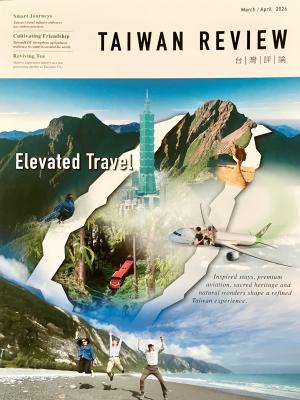
In 1951, the Central Propaganda Department of the Chinese Nationalist Party’s (KMT) Central Reform Committee launched an English-language magazine, which, for the next 75 years, would serve as a mouthpiece for Taiwan’s government. Initially titled the Free China Review, and later rechristened as the Taiwan Review, the magazine published its final issue in March. Former editor Richard Vuylsteke has described the magazine as Taiwan’s “landmark foreign language publication going abroad.” The magazine was not universally respected. Some international scholars, including a few contacted for this article, dismissed it as a “propaganda rag.” But others, including Shelley Rigger, a top US researcher at

Mark Carney built a global profile this year by standing up to US President Donald Trump. If some prediction-market traders and prominent admirers are right, the Canadian prime minister could end the year with the Nobel Peace Prize and Time magazine’s Person of the Year. Carney briefly became the favorite Monday for the 2026 Nobel Peace Prize on Kalshi, a US-based prediction market, when traders on the exchange put his chances at 14 percent. His odds later fell, illustrating the highly speculative nature of the wagering. There is no public evidence Carney is on the Nobel Committee’s secret shortlist for the prize
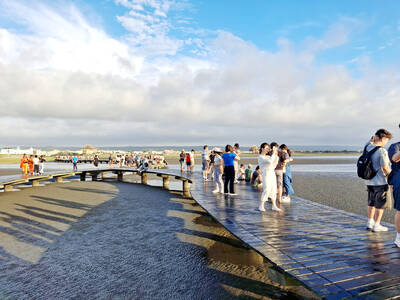
Off the coast of Taichung lies the well known Gaomei Wetlands (高美濕地), a popular nature preserve. On weekends, especially in the evenings, the site’s walkways are crowded with sunset watchers, its mudflats filled with people wading and taking pictures of the local wildlife. Birds, amphibious fish, crabs and other organisms flourish. A few hundred meters to the south Berth number 8 of the Port of Taichung juts inland, surrounded by chemical plants, cement factories, chemical storage sites, warehouses and wind turbines. This infrastructure, critical to the running of a major industrial economy, will be targeted in wartime. Though they do not
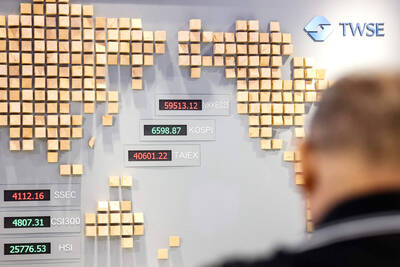
The spectacular rise of the Taiwan Stock Exchange (TWSE) in recent months has fueled great excitement among individual stock traders. Gate News reported that the stock market swelled 59 percent in the first half of this year, with margin trading volume surging nearly 20 percent. Local newspapers tell stories of stock buying “on the margin” by individual investors, often with dire results. The implication is that small investors are teetering on the brink of disaster should there be a market “correction.” How real is this threat? This scenario actually occurred this summer. In July the market fell nearly 4,000 points. “The


 RSS
RSS