

Another doleful set of demographic announcements this month from the National Development Council (NDC), with the number of young people shriveling as the proportion of old people grows.
“Taiwan’s 18-year-olds, the typical age for entering college, will fall below 200,000 for the first time in the 2027 academic year to 195,309, down from 200,406 in 2026,” this paper reported citing NDC sources.
Meanwhile, the administration of President William Lai (賴清德) announced a goal of training at least 500,000 AI professionals by 2040. Although this could include foreign recruits and retraining those already in the workforce, the math is stark: Ministry of the Interior figures show that 181,601 people were born in 2018 to graduate at 22 from university in 2040. For the period from 2010 to 2018, representing people who will be in their 20s and 30s and trainable as AI talents around 2040, the total number of births was just under 1.8 million. Good luck getting under a third of them to train as “AI talents,” whatever that means. How many of them will become farmers?
Photo: Lu Hui-chou, Taipei Times
WHERE ARE THE WORKERS?
Lai’s 500,000 AI talents may be rhetoric, given plummeting birth rates. Yet it is also clear from a glance at the numbers why the government has been so slow in waking up: through 2018, the birth numbers appear to be relatively stable, falling between 160,000 and 200,000 each year, and peaking at over 200,000 in 2012, 2014, 2015 and 2016. There is nothing in those numbers to suggest that a decade after hitting 213,598 births in 2015 the nation would be at half that number. Indeed, 2018 saw more births than 2010 (181,000 vs 166,000). But the government has not explained how much of its 500,000-person target would come from new graduates, retrained workers or overseas recruitment.
The NDC projects that Taiwan will be short 480,000 workers by 2030, a number widely quoted and likely an underestimate given that the demographic figures released this month were downward revisions of earlier estimates (the labor shortage number was 276,000 job vacancies in September last year). Professionals and technical workers — who may have greater opportunities to work abroad — make up a substantial share of these vacancies, as current labor market shortages show.

Photo: Reuters
It’s not just the people who will leave. Firms that cannot find warm bodies may set up elsewhere, in advanced nations still producing children or still entertaining demographic bumps. At home wages and benefits will have to rise as well if firms are to retain personnel, cutting into Taiwan’s major competitive advantage of underpaid, overworked labor. A key consequence of aging is slowing economic growth. Are we living in the golden twilight of Taiwan?
The Political Consequences of Ageing Societies, a 2022 paper on the political consequences of aging, warns: “If age-based resource competition persists and remains unaddressed, it may put policies that rely on intergenerational solidarity, from pension and health care over fiscal policy to combating climate change, potentially at risk.” Or, translated: as the gruel gets thin, the knives get sharp.
Taiwan’s elites, who refuse to permit robust immigration or make urgent changes to the work culture and political economy, appear to have decided upon a policy of national suicide. What kind of politics can we expect from a land of labor shortages, a rising proportion of elderly and a restive population of young professionals, all of whom can see that within a decade or two the nation they know will shrivel and vanish?
Photo: Chen Chih-chu, Taipei Times
The 2024 national election results do not give us many hints of future politics. Comparing the 2016 and 2024 election maps at the township level also shows that the two national elections were broadly similar, with townships flipping where one would expect them to flip. Local elections are local and dependent on unpredictable factors like politicians angry at their own party running independent candidacies or sudden discoveries of corruption. It is hard to look at the numbers and see an impending political re-alignment.
‘GREEDY GEEZERS’
As James Schulz and Robert H. Binstock observed on the US in Aging Nation: The Economics and Politics of Growing Older in America, in the 1970s the discourse on the aged shifted from viewing the elderly as people to be revered and cared for to “greedy geezers.”
By the 1980s and 1990s, the aged were being portrayed as powerful, influential and wealthy. David Broder, the influential Washington Post columnist, in 1973 wrote that “The significant, semi-hidden story in the ... federal budget is that America’s public resources are increasingly being mortgaged for the use of a single group within our country: the elderly.”
Something similar may happen in Taiwan. The gains of the last two decades have largely gone to the over-60 crowd. In a nation with a proper population pyramid there would be a push to claw that back, but the old have far more political clout than the relatively poorer under-40 population. The 2022 paper cited above notes that elderly voters “display more interest in politics, have more political resources, turn out more in elections and have greater access to political power.”
Moreover, they “behave like a ‘single-minded voting block’ that displays strong and uniform preferences for old-age pension spending and health care.”
Because they vote as a block, they are easier and less costly to mobilize.
The current election cycle is at least dropping some hints of this. The Democratic Progressive Party (DPP) candidate for Taitung, Chen Ying (陳瑩), promised that if elected, she would provide fully subsidized dentures, hearing aids and smart bracelets for the elderly. The Lai administration is going to launch its “health tokens” program next month, a month before the November local elections. The program, open to adults above age 18, was announced in the context of Taiwan’s super-aged society, whose “chronic diseases have become a major challenge to public health,” Lai said. Conspicuously absent is pension reform, a major issue during previous administrations.
Does this portend a shift in spending? Traditionally the government has spent more on public infrastructure than on defense, but with both labor pools and user pools shrinking, it will be interesting to see whether massive investments in road construction and water engineering continue throughout the 2030s, given the likely demand for spending on health services and defense. Politicians, habituated to buying private votes with public dollars, will be tailoring their messages to the old and their health concerns. This augurs further convergence between the domestic policies of the two major parties, as both will be appealing to the same pool of aging voters.
Another factor is going to be anthropogenic warming, which will slam rural, coastal and mountain communities filled with the aged. A study in the journal Climate Change last year of coast aquaculture communities in Dongshi Township (東石) in Chiayi County observed that “half of the emigrant households cited perceived climate-related issues as a factor in the decision of household members to migrate.” Climate events will drive more of the aged out of farming as their farms encounter extreme events whose costs are too great for them to bear. Heating will also make things like air conditioning and in-home health warning systems for the old a matter of public policy.
One has to wonder: If you were Beijing, would you want to annex all the problems Taiwan is going to experience in the next two decades?
Notes from Central Taiwan is a column written by long-term resident Michael Turton, who provides incisive commentary informed by three decades of living in and writing about his adoptive country. The views expressed here are his own.

A decade ago, Taiwanese television had an image problem. When representatives of Taiwan’s Public Television Service (PTS) traveled to Singapore to meet Netflix, they brought two dramas: A Touch of Green (一把青, 2015), a sweeping story of war, displacement and military families, and Wake Up (麻醉風暴, 2015), a tightly constructed medical thriller. They were not simply trying to sell programs. They were trying to change an idea of Taiwan. International perceptions of Taiwanese television, PTS executives recalled in interviews conducted for my joint research with Chairman Hu Yuan-hui (胡元輝), were still strongly associated with the idol dramas that had enjoyed enormous regional popularity
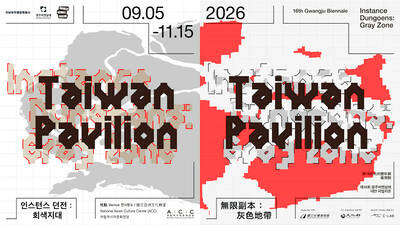
The name “Taiwan” is to appear at South Korea’s Gwangju Biennale when it opens on Saturday, after months of objections from Taiwanese artists and government agencies over an attempted name change. China Pavilion personnel halted installation and left the venue on Friday, after China’s Ambassador to South Korea Dai Bing (戴兵) objected to the restoration of the “Taiwan Pavilion” name. As of Monday, the Chinese side was reportedly preparing to withdraw, although its formal withdrawal had not been completed. The pavilion dispute began on June 10, when the ministry and participating artists said organizers had changed “Taiwan Pavilion” to “NTMoFA Pavilion,” referring

The Chinese Nationalist Party (KMT)-controlled legislature in February 2006 established the National Communications Commission (NCC). One of the purposes of the NCC was to circumvent the control of the Government Information Office (GIO), long the KMT’s tool for overseeing the local media, by the administration of Democratic Progressive Party (DPP) president Chen Shui-bian (陳水扁). The NCC’s commissioners were originally apportioned according to the ratio of party control of the legislature. However, the Council of Grand Justices later ruled that agencies required greater coordination with the Executive Yuan, which then began sending a list of expert nominees for approval by the
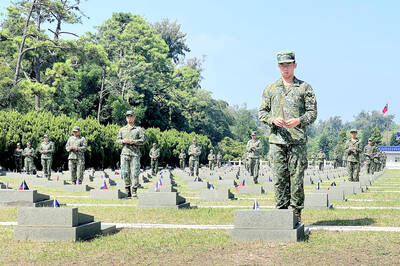
Every year on the anniversary of the 1958 Kinmen 823 Artillery Bombardment — a central episode in what has become known as the Second Taiwan Strait Crisis — carefully crafted speeches reveal the underlying ideological divide over sovereignty between the Taiwan-centric, pan-green Democratic Progressive Party (DPP) and the pan-blue Chinese Nationalist Party (KMT) stance that Taiwan is ultimately a province of China. The pan-blue side has the added complication that some are hardcore Republic of China (ROC) nationalists, while others are more accommodating of and willing to work with the People’s Republic of China (PRC) to varying degrees. Different accounts give


 RSS
RSS