


Chinese Nationalist Party (KMT) Chairwoman Cheng Li-wun’s (鄭麗文) recent trip to the US highlighted her party’s anti-Taiwan defense policies. Disapproval of their policies was strong among those who met with her. Republican Senator Dan Sullivan, said that the KMT was “playing with fire.” Democratic Representative Tom Suozzi reportedly said that Cheng’s party was “weakening deterrence.” Foreign policy maven David Sacks observed in Asia Nikkei that “many Americans struggle to see the logic behind the KMT’s refusal to fund the portion of the special defense budget pertaining to indigenous defense production.”
The logic of the KMT’s decision to purchase only US defense systems and to remove domestic drone production from the supplemental defense budget is quite simple. First, the People’s Republic of China (PRC) fears drones, especially given their performance in Ukraine and in the US-Iran war. Eliminating them benefits not only the PRC in invading Taiwan, but removes a potential competitor in the market for military and civilian drones. Second, as I have noted before, by only purchasing US weapons, the KMT offers the US government a cynical bribe, in effect saying that the US will ignore the problems with the KMT defense budget if it is showered with cash (it was quite reassuring to see this bribe rejected by US leaders).
Finally, by increasing the already large backlog for US weapons, the KMT can add more weight to its domestic propaganda campaign claiming that the US is an unreliable ally that hasn’t even delivered weapons already paid for.

Photo: Tsai Shu-yuan, Taipei Times
Cheng’s “peace” trip also highlighted the way KMT propaganda about peace and stability dovetail with the claims of US-based academics and commentators who push the line that the PRC, like Germany of the film Remains of the Day, “needs peace and desires only peace.” This is typically presented as the PRC yearning for “stability.” Johns Hopkins School of Advanced International Studies Chair Ling Chen argued this week that because the PRC faces many domestic problems, “there’s no incentive for it to take big, huge actions against any country.”
CHINA, THE VICTIM
The packaging of this propaganda juxtaposes two elements, one that emphasizes the PRC’s economic woes, the other that then concludes it needs “stability.” Since the PRC economy really is a mess, like all good propaganda, it mixes truth and lies. Note that if the PRC economy ever improves, this will immediately morph into “the PRC desires stability because the economy is good and so won’t do anything rash.”
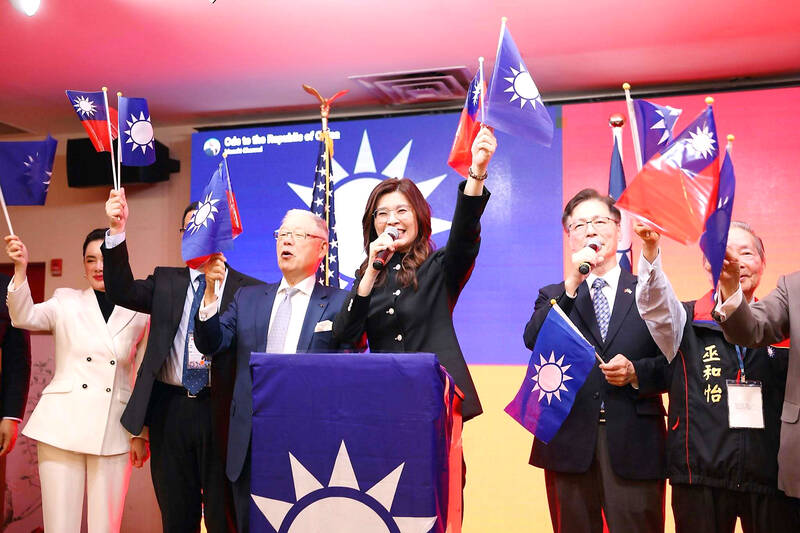
Photo taken from Cheng Li-wun’s Facebook page
How does this call for stability work as propaganda? It has an implied corollary: if the PRC desires only stability, surely anything against it is the source of destabilization. This claim aligns itself with the idea that the disturbances in the stable order are caused by actions of Taiwan and the US, never the PRC, placing the onus squarely on them to preserve stability (no action by the PRC ever threatens stability) by sacrificing their interests. It presents China as the victim desperately struggling for some domestic goal that other nations keep interfering with. Poor China! Forced into expansionist provocations by the nefarious behavior of the US and its friends and allies. Or, as Cheng herself would put it, by the “Cold War mentality” of the US.
It is easy to see how that functions. For example, Responsible Statecraft, infamous for its pro-PRC perspectives, has a long-running series of pieces by different authors attacking Taiwan lobbying in Washington, implying that it is evil and worse, destabilizing.
“Over the past decade, the Taiwan Lobby has helped generate congressional momentum behind a series of increasingly ambitious initiatives that threaten to destabilize an already increasingly tenuous status quo,” says an introduction on X to one of those essays this week.
Note that it attributes Taiwan’s outsize importance to the “Taiwan lobby” and not to the decades-old recognition among US thinkers of Taiwan’s strategic importance, dating back at least to George Kennan’s writings on it in the late 1940s, and perhaps as early as the Perry Expedition of 1854, which recommended that the US establish a presence on Taiwan.
TAIWAN A THREAT TO PRC?
Fallout from the PRC’s need for stability means that Taiwan must make itself appear small and inoffensive to the great stability-seeker across the strait. That is indeed how Katherine Wilhelm, executive director of the US-Asia Law Institute, read KMT Chair Cheng Li-wun’s strategy: “in essence, Cheng says Taiwan must persuade China that it does not need to attack because Taiwan is not a threat.”
The implication of that is that Taiwan’s defense spending is a threat to the PRC, when in reality it is only a threat to the PRC’s desire to annex Taiwan.
But does the PRC really desire stability? Was the economy doing especially well when PRC troops attacked Indian soldiers in the Himal in 2020-2021? Was the PRC economy glorious when it occupied the South China Sea? Do nations desiring stability engage in widespread cyberattacks, salami slicing of territory and gray-zoning against neighboring countries? Does the PRC crave stability so much it has ceased putting up structures on features in other nation’s sea zones? If the PRC craves stability, why are its military and business leaders constantly being purged and urgent economic reforms, recommended even by its own economists, ignored?
Is there any connection at all between the PRC’s actions against its neighbors, and the ever-changing state of the economy at any particular moment? Which nation is really destabilizing Asia with its military build-up, gray-zoning, territorial expansion and threats against its neighbors?
UNITED FRONT OPERATIONS
Cheng’s trip also exposed another KMT-PRC connection: links to United Front Operatives in the US. The Taipei Times reported that Cheng held public engagements with people reportedly under scrutiny by US security agencies over alleged links to China and its surveillance activities. At a meeting in Los Angeles pro-democracy attendees were attacked and dragged out.
Withal, the results of Cheng’s trip were largely a relief for those of us who care about Taiwan. Cheng’s connections with alleged United Front operatives in the US were widely publicized and she permitted herself to be photographed with them. High-level US officials did not meet with her, a meeting with the National Security Council was apparently canceled, President Donald Trump ignored her and she met largely low-level government officials. Moreover, the remarks of the lawmakers and officials who met with her showed that US officialdom has a good understanding of her nonsensical views on cross-strait peace and the KMT’s obstruction of important defense programs in Taiwan.
What are people saying at home? A major poll on cross-strait relations published this week by the National Development Education Foundation shows the epic failure of her trip and herself as a politician. Only 61.6 percent of respondents said they supported cross-strait political negotiations, a decline from 2018’s peak of 78 percent. Who would be the politician most trusted to lead such negotiations? Former president Tsai Ing-wen (蔡英文) was first with 21.8 percent, followed by President William Lai (賴清德, 13.3 percent) and Legislative Speaker Han Kuo-yu (韓國瑜, 11.6 percent). Cheng Li-wun was trusted by only 8.5 percent, a mere notch above the 7.8 percent who said they did not trust anyone.
Nevertheless, she did perform one important function for the KMT: being a magnificent distraction from its continuing campaign of subversion of Taiwan’s finances and governance. The latest iteration of that is a KMT lawmaker’s proposal to reinstate the practice of double dipping under which retired military personnel, civil servants and teachers, long favored constituencies of the KMT, would be able to re-enter public service and receive both their pensions and active government salaries.
The volume of KMT noise rises and falls, but the beat goes on.
Notes from Central Taiwan is a column written by long-term resident Michael Turton, who provides incisive commentary informed by three decades of living in and writing about his adoptive country. The views expressed here are his own.

If a leisurely afternoon of high-end dining and watching the scenery roll by from the comfort of a plush armchair sounds like a good time to you, consider a trip on the Sea Breeze (海風號). This culinary, cultural and scenic experience is the perfect setting for a date, a celebratory outing with a small group of friends or a relaxing solo ride. The price tag is steep, especially if you consider the short distance the train actually covers over the 3.5-hour journey. But what you’re paying for on the Sea Breeze isn’t transportation; it’s the comfort, the service, the exclusivity, the
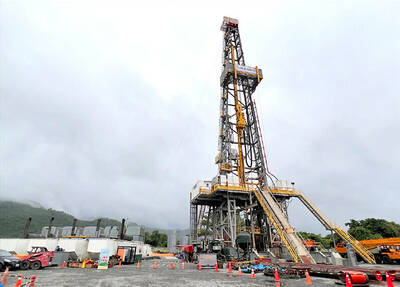
Taiwan’s renewable shortfall is a problem of execution, not resources. Japan’s long-cycle, joined-up energy planning is the model worth studying — but what Taiwan can borrow is the institutional machinery, not the politics. When Nvidia CEO Jensen Huang (黃仁勳) used his visit to Taipei last month to warn that the country needs far more electricity, he was naming a constraint its own planners already know well: Taiwan Power Co (Taipower, 台電) expects demand from the semiconductor and artificial intelligence (AI) sector alone to exceed 5 gigawatts (GW) by 2030. The harder question is not whether to build more capacity but which

June 15 to June 21 According to legend, a giant from Orchid Island (Lanyu, 蘭嶼) named Si Mangangavang once built a large chinurikuran canoe capable of carrying 16 people. He set sail southward to the Batanes in the Philippines, where he traded with the local Ivatan people. One of the goods they coveted was cowhide, which the Tao people of Orchid Island used to make armor. Through continued trade, the Tao and Ivatan forged close ties, and Si Mangangavang became good friends with a Batanes giant named Si Vakag. This story, collected in a 1998 book by ethnologist Yu Guang-hong (余光弘)
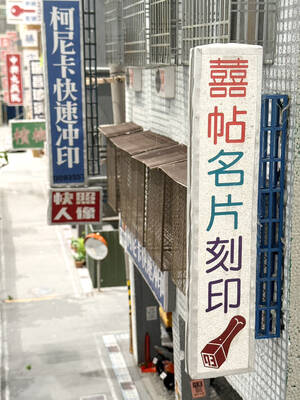
In a projection room, visitors at the Re: Battle City exhibition at Kaohsiung’s Neiwei Arts Center are invited to sit and watch a 20-minute animated movie. Artist Chang Li-ren (張立人) created the movie with dolls he made by molding paper into crude, painted figurines. The dolls interact in a detailed and realistic Taiwanese cityscape. Outside the projection room, visitors can wander around a massive model of the city. A sizeable crowd happily takes pictures of what looks like the best dollhouse in Taiwan: the same props that were used to tell the story of the country’s descent into techno-dictatorship in the movie. The


 RSS
RSS