


“Vitamin C is important for your health in lots of ways,” says Daniel Davis, the head of life sciences at Imperial College London. It is a strong antioxidant, helping protect cells from harmful unstable compounds that arise from toxins and pollution. It helps the body absorb iron, and is also used in the production of collagen. “But the idea that taking high doses of vitamin C will stop you catching a cold, or help you recover faster, is a myth.”
Davis, the author of Self Defence: A Myth-Busting Guide to Immune Health, explains that the popular belief in vitamin C’s cold-fighting powers has persisted for more than 50 years, “pretty much solely because of the evangelical view of one man: Linus Pauling.”
A double Nobel prize winner and one of the most influential chemists of the 20th century, Pauling made a major contribution to our understanding of vitamins. However, he exaggerated vitamin C’s benefits. Pauling’s 1970 book Vitamin C and the Common Cold became a bestseller, explains Davis, sparking such high demand that factories were built to keep up with supplement production.

Photo: AFP
In truth, research shows that people who take vitamin C supplements are just as likely to catch a cold as those who don’t. And while supplementation may slightly reduce symptom duration (by about 8 percent in adults) the effect is modest.
“It’s also difficult to interpret that data,” says Davis, “because people who regularly take high doses of vitamin C are often more health-conscious in general.”
Instead, he recommends focusing on vitamin D if you want to fight off sickness.

Photo: AFP
“It is much more clearly established as important for immune health,” he says.
Vitamin D is available from exposure to sunlight between March and October, but the NHS suggests that during winter people may want to take it as a supplement.

Recently the Chinese Nationalist Party (KMT) and its Mini-Me partner in the legislature, the Taiwan People’s Party (TPP), have been arguing that construction of chip fabs in the US by Taiwan Semiconductor Manufacturing Co (TSMC, 台積電) is little more than stripping Taiwan of its assets. For example, KMT Legislative Caucus First Deputy Secretary-General Lin Pei-hsiang (林沛祥) in January said that “This is not ‘reciprocal cooperation’ ... but a substantial hollowing out of our country.” Similarly, former TPP Chair Ko Wen-je (柯文哲) contended it constitutes “selling Taiwan out to the United States.” The two pro-China parties are proposing a bill that

March 9 to March 15 “This land produced no horses,” Qing Dynasty envoy Yu Yung-ho (郁永河) observed when he visited Taiwan in 1697. He didn’t mean that there were no horses at all; it was just difficult to transport them across the sea and raise them in the hot and humid climate. “Although 10,000 soldiers were stationed here, the camps had fewer than 1,000 horses,” Yu added. Starting from the Dutch in the 1600s, each foreign regime brought horses to Taiwan. But they remained rare animals, typically only owned by the government or

It starts out as a heartwarming clip. A young girl, clearly delighted to be in Tokyo, beams as she makes a peace sign to the camera. Seconds later, she is shoved to the ground from behind by a woman wearing a surgical mask. The assailant doesn’t skip a beat, striding out of shot of the clip filmed by the girl’s mother. This was no accidental clash of shoulders in a crowded place, but one of the most visible examples of a spate of butsukari otoko — “bumping man” — shoving incidents in Japan that experts attribute to a combination of gender
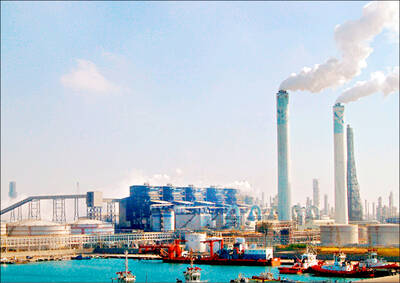
Last month, media outlets including the BBC World Service and Bloomberg reported that China’s greenhouse gas emissions are currently flat or falling, and that the economic giant appears to be on course to comfortably meet Beijing’s stated goal that total emissions will peak no later than 2030. China is by far and away the world’s biggest emitter of greenhouse gases, generating more carbon dioxide than the US and the EU combined. As the BBC pointed out in their Feb. 12 report, “what happens in China literally could change the world’s weather.” Any drop in total emissions is good news, of course. By


 RSS
RSS