


This week, President William Lai (賴清德) and his administration launched a major publicity blitz to drum up support for a proposed NT$1.25 trillion (US$40 billion) special defense budget. This was well-planned and executed, and politically astute, but it is still far from becoming a reality: He needs to convince the opposition-controlled legislature to pass it.
The chance that the Chinese Nationalist Party (KMT) and Taiwan People’s Party (TPP) legislative caucuses vote to approve everything that the administration wants is low, but Lai and his team have gone to great lengths to optimize the chances of getting some, or even most of it, passed.
The president kicked things off with a piece entitled “Taiwan’s president: I will boost defense spending to protect our democracy” in the <
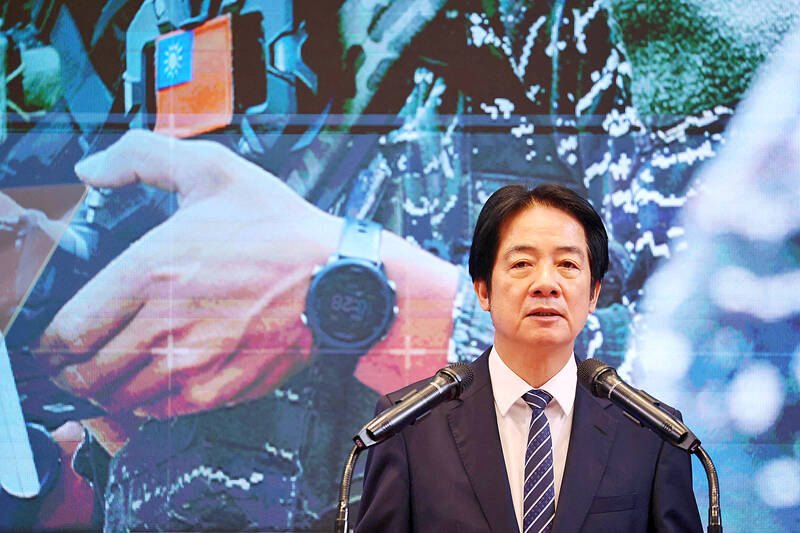
Photo: AFP
He followed this hours later with a major speech entitled “National Security Action Plan to Safeguard Democratic Taiwan.”
AMERICA BACKS LAI
As Taiwan’s primary military backer, Taiwanese pay close attention to what is being said and reported about the nation in Washington, and Lai played to this very effectively. If he had launched this domestically first, it would have been given less coverage locally, and it would have likely only reached the outside world in dribs and drabs.
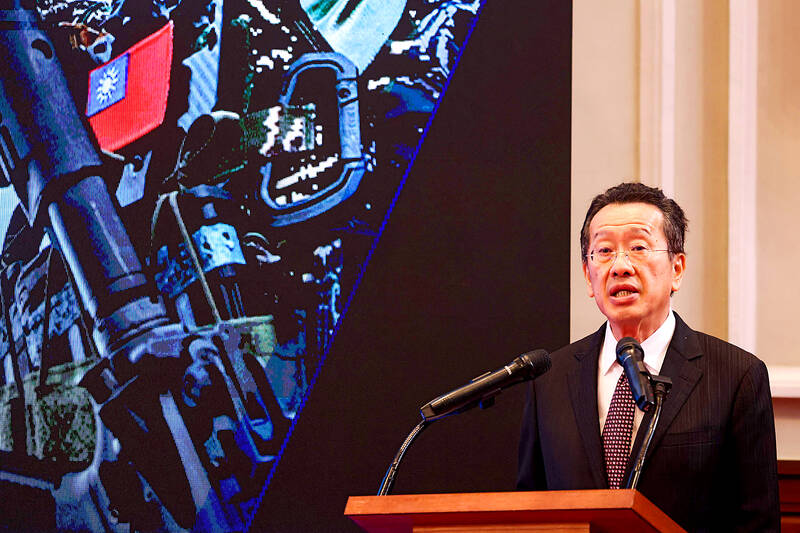
Photo: AFP
Getting American support increases the pressure on the opposition to pass this legislation. The Taiwanese public is broadly pro-American and acutely aware that they are economically and militarily dependent on the superpower
Lai’s piece was well-written to appeal to American officials. As is now customary, it is full of praise for US President Donald Trump’s leadership, and included the line, “The international community is safer today because of the Trump administration’s pursuit of peace through strength.”
Responding to repeated calls from within the Trump administration for Taiwan to boost defense spending, he outlined his proposals and stated: “My message here is clear: Taiwan’s dedication to peace and stability is unwavering. No country will be more determined in safeguarding Taiwan’s future than our own.”
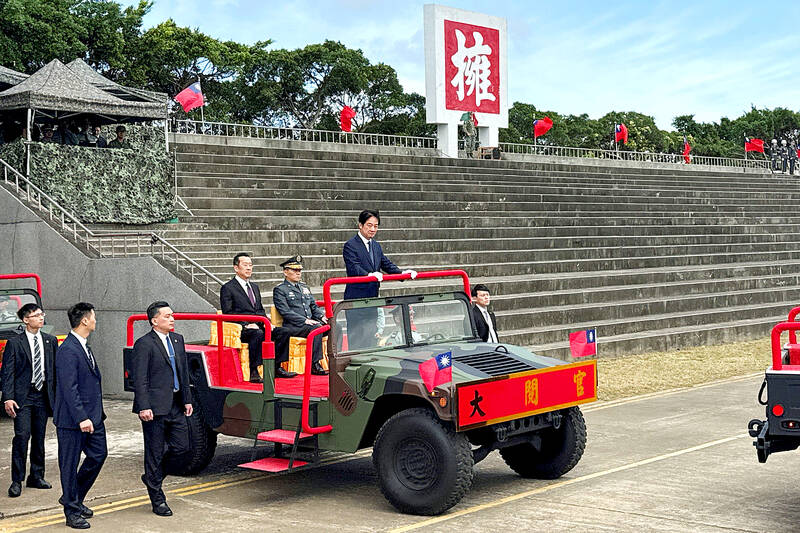
Photo: Reuters
This was swiftly backed up by a strongly supportive social media post by American Institute in Taiwan (AIT) Director Raymond Greene, giving Lai’s proposals a public American stamp of approval.
Though AIT is normally careful about intervening in local politics, Greene openly put his thumb on the scale by saying, “Just as support for Taiwan is a longstanding US bipartisan priority, I expect Taiwan’s political parties will find similar common ground.”
Minister of National Defense Wellington Koo (顧立雄) also weighed in by stating that “preliminary negotiations were complete” on the entire plan and timeline for the budget proposal with the US Department of War. This, plus Greene’s swift response, suggests that the Americans are fully aware and on board with Lai’s plans, and are willing to spend political capital to put pressure on the legislature to pass it.
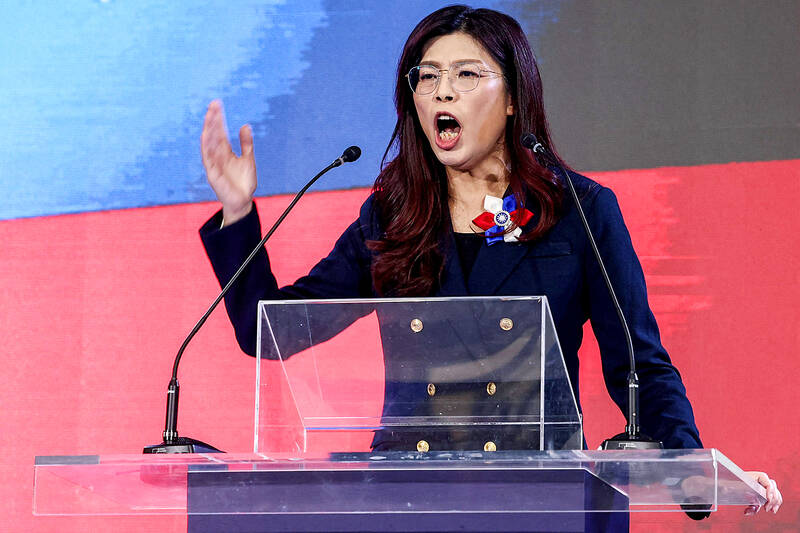
Photo: AFP
SWEETENING THE POT
The full details of the proposal to be sent to the legislature are not yet finalized, but from what is known, it appears that public opinion, constituent buy-in and blunting expected potential KMT criticisms were all carefully considered.
Emphasis has been placed on what is being termed variously as “Taiwan Dome” or “T-Dome.” This concept is partially inspired by Israel’s “Iron Dome” missile defense systems. This plan was previously announced, but more details are coming out.
Lai described it this way: “I am also accelerating the development of ‘T-Dome,’ a multilayered, integrated defense system designed to protect Taiwan from PRC missiles, rockets, drones, and combat aircraft. Together with other AI-driven and unmanned platforms, these capabilities bring us closer to the vision of an unassailable Taiwan, safeguarded by innovation and technology.”
Lai wants to “vastly enhance Taiwan’s asymmetrical capabilities” to make this happen. This is something Washington has been calling for.
This also appears to sidestep one of the biggest criticisms from skeptics in the KMT, that Taiwan is wasting money on flashy, big-ticket items like fighter jets that can play an offensive attack role, which they consider to be “provocative” to Beijing.
A defensive system designed to protect Taiwan from incoming attack, based on a multitude of smaller systems, is an easier sell to the public and the KMT.
Additionally, Lai also emphasized building up the local defense supply chain as part of the project, creating wealth and jobs domestically in the process, not just serving as an “ATM” for the Americans. This could also benefit constituents of opposition lawmakers.
The entire budget is also not as impressive as the headlines suggest, as it is spread out over eight years, and may or may not include already budgeted items for next year. To put the sum in perspective, Taiwan Semiconductor Manufacturing Co.’s (TSMC) projected capital expenditures for next year alone are US$48 to 50 billion, significantly bigger than this entire eight-year special budget.
The president has also emphasized that Taiwan’s defense spending will reach 5 percent of GDP by 2030, but this special budget likely will not get Taiwan there alone. More likely, the plan is to follow the new NATO standards, with 3.5 percent on traditional “hard” defense spending and 1.5 percent on infrastructure that could serve a military purpose in war — potentially opening up more juicy budgets for opposition lawmakers’ districts that can be negotiated over.
Further signalling that they expect negotiations with opposition parties, Defense Minister Koo described the entire budget as the “upper limit” of what they hope to spend.
This has been thought out to maximize public pressure to pass a special budget, while leaving enough negotiating room and potential goodies for opposition lawmakers to make passing at least some of it palatable.
BUT WILL THEY BITE?
This puts the KMT in a tough spot. Earlier this year, former KMT Chairman Eric Chu (朱立倫) called for defense spending to be raised to 3.5 percent of GDP.
Current Chairwoman Cheng Li-wun (鄭麗文) has only been in office since Nov. 1, and she comes from the most pro-China, US-skeptic wing of the party. Her firebrand stances won her the chair race, but with only half of the votes in an election limited to party members and with a very low turnout.
Lai has backed Cheng into a corner; if she fights against this too hard, she risks alienating voters ahead of the 2026 local elections. Her ideology plays well to the base, but average KMT supporters are far more moderate, and to win elections, the party needs to appeal to the even more moderate mainstream independents.
True to form, Cheng has come out guns blazing against the plan, even using a term popular with Chinese state media, saying Lai is “playing with fire.” She also criticized the plan saying, “Taiwan should not be an ammunition dump and weapons factory.”
However, it is too soon to know how much authority she has within the party. KMT legislative caucus convener Fu Kun-chi (傅崐萁) has echoed some of her language, but has not entirely ruled it out.
Perhaps even more importantly, the KMT’s most popular politician and frontrunner to become the party’s presidential candidate in 2028, Taichung Mayor Lu Shiow-yen (盧秀燕) has taken a far more moderate tone.
She emphasized that supporting the military and national defense are necessary, but also stressed legislative oversight to ensure taxpayer money is not wasted and the funds are spent appropriately.
Fu and the KMT legislative caucus so far have leaned more hardline, but nowhere near as far as Cheng. Last year, they orchestrated significant cuts to the administration’s planned increases to the military budget, but in the end, it was still a record-high budget — and ahead of this year’s recall votes, they rolled back most of the sections of the budget that they had frozen.
Fu may be hardline, but he is less of an ideologue and more interested in winning elections and getting his home county of Hualian big budgets. He may be more open to negotiation than Cheng, but it is unclear whether he is willing to buck her as party leader or buck the presumed next party leader, Lu.
This is Cheng’s first big test, and it will likely be revealing as to how much power she really holds in the party.
It will also be a revealing test for TPP Chairman and caucus convener Huang Kuo-chang (黃國昌). In the 2024 presidential election, TPP founder and then-presidential candidate Ko Wen-je (柯文哲) talked strong on defense, sometimes even sounding more hawkish than the Democratic Progressive Party (DPP) and Lai.
It would be a big risk for Huang — who is currently in Japan — to contradict Ko’s stances, which remain unchanged as the party’s official ideology.
However, if the KMT caucus takes a hard line, Huang and the TPP would be taking a big risk in defying senior partners in their coalition, which is currently negotiating which party’s candidates will run unopposed by the other party in next year’s elections.
That could put Huang in a tough spot.
So far, Huang has taken a moderate stance, saying in a video message that the TPP supports a “reasonable” increase in defense spending, but would conduct a “practical and rational” review to ensure taxpayers’ money is well spent.
Donovan’s Deep Dives is a regular column by Courtney Donovan Smith (石東文) who writes in-depth analysis on everything about Taiwan’s political scene and geopolitics. Donovan is also the central Taiwan correspondent at ICRT FM100 Radio News, co-publisher of Compass Magazine, co-founder Taiwan Report (report.tw) and former chair of the Taichung American Chamber of Commerce. Follow him on X: @donovan_smith.
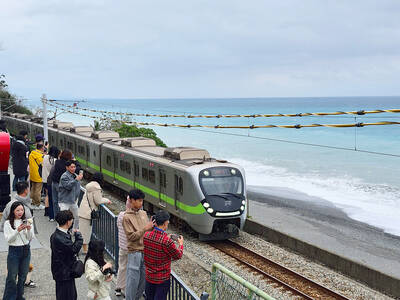
The small platform at Duoliang Train Station in Taitung County’s Taimali Township (太麻里) served villagers from 1992 to 2006, but was eventually shut down due to lack of use. Just 10 years later, the abandoned train station had become widely known as the most beautiful station in Taiwan, and visitors were so frequent that the village had to start restricting traffic. Nowadays, Duoliang Village (多良) is known as a bit of a tourist trap, with a mandatory, albeit modest, admission fee of NT$10 giving access to a crowded lane of vendors with a mediocre view of the ocean and the trains

For many people, Bilingual Nation 2030 begins and ends in the classroom. Since the policy was launched in 2018, the debate has centered on students, teachers and the pressure placed on schools. Yet the policy was never solely about English education. The government’s official plan also calls for bilingualization in Taiwan’s government services, laws and regulations, and living environment. The goal is to make Taiwan more inclusive and accessible to international enterprises and talent and better prepared for global economic and trade conditions. After eight years, that grand vision is due for a pulse check. RULES THAT CAN BE READ For Harper Chen (陳虹宇), an adviser
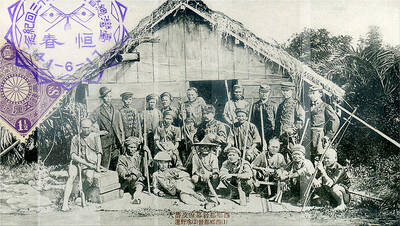
Traditionally, indigenous people in Taiwan’s mountains practice swidden cultivation, or “slash and burn” agriculture, a practice common in human history. According to a 2016 research article in the International Journal of Environmental Sustainability, among the Atayal people, this began with a search for suitable forested slopeland. The trees are burnt for fertilizer and the land cleared of stones. The stones and wood are then piled up to make fences, while both dead and standing trees are retained on the plot. The fences are used to grow climbing crops like squash and beans. The plot itself supports farming for three years.
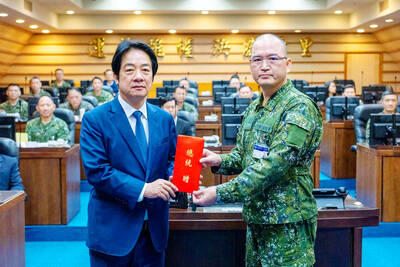
President William Lai (賴清德) on Nov. 25 last year announced in a Washington Post op-ed that “my government will introduce a historic US$40 billion supplementary defense budget, an investment that underscores our commitment to defending Taiwan’s democracy.” Lai promised “significant new arms acquisitions from the United States” and to “invest in cutting-edge technologies and expand Taiwan’s defense industrial base,” to “bolster deterrence by inserting greater costs and uncertainties into Beijing’s decision-making on the use of force.” Announcing it in the Washington Post was a strategic gamble, both geopolitically and domestically, with Taiwan’s international credibility at stake. But Lai’s message was exactly


 RSS
RSS