


Millions in India’s eastern city of Kolkata will draw on millennia-old traditions when they celebrate the Hindu festival of Durga Puja this week with street parties and worshiping idols in elaborate pavilions.
The ancient and divine now increasingly interact with the digital and futuristic as wildly popular artificial intelligence apps help generate new design ideas.
“Artisans are now using artificial intelligence to find new designs, helping them to stay updated,” potter Monti Paul said as he admired his statue of the goddess Durga.
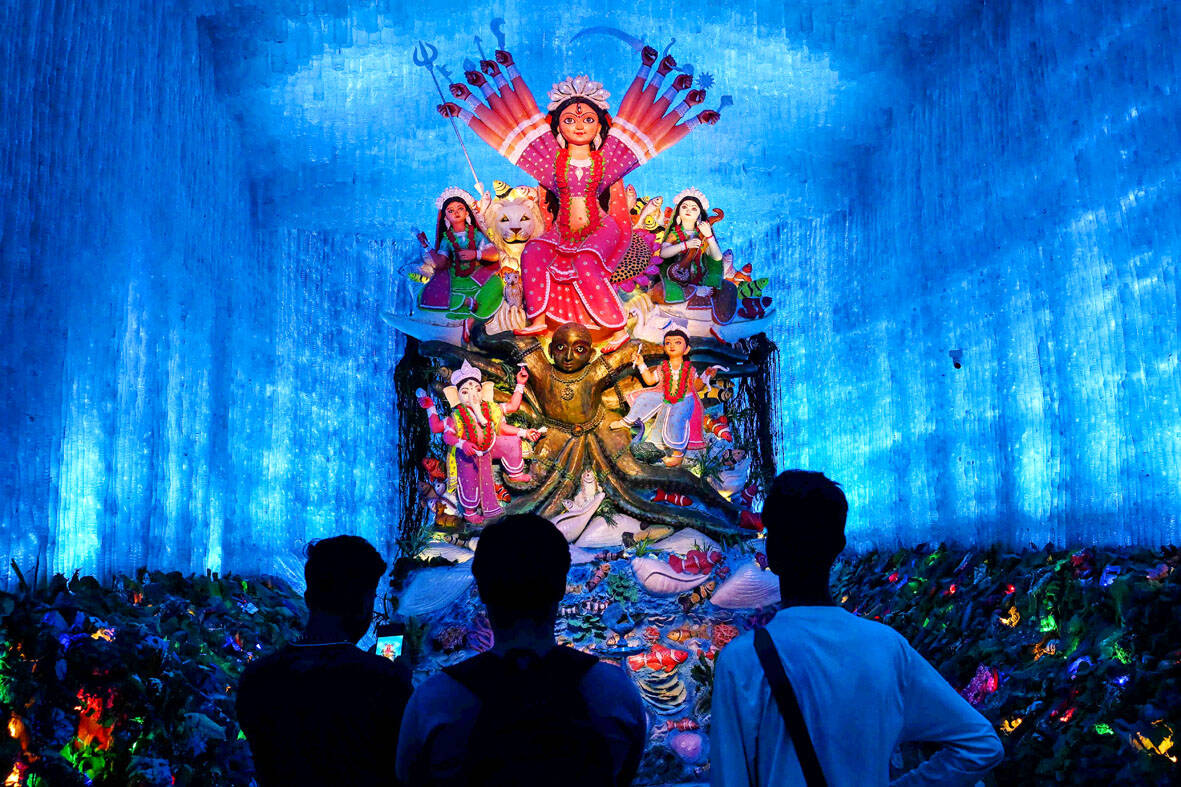
Photo: AFP
The statue, made of clay molded onto a wire-and-straw frame and painted in neon pinks and blues, depicts the 10-armed, three-eyed goddess riding a lion while slaying a demon buffalo in a celebration of the triumph of good over evil.
Paul, 70, learned his craft from his father, like hundreds of other potters in the narrow alleys of Kumartuli, the city’s centuries-old idol-making hub.
Kolkata is home to more than 15 million people and each year it erupts in a 10-day celebration of art, music, and devotion, an event UNESCO has recognized as part of humanity’s “intangible cultural heritage.”
At its heart are the intricately crafted idols and the temporary temples, or pandals, commissioned by thousands of community clubs.
Many reflect contemporary themes, from politics to pop culture.
‘AI DRIVEN IMAGES’
Artisans race each year to create works more striking than before. For decades, designs were either drawn on paper or described verbally by the thousands of committees commissioning them, Paul explained.
But the commissioning communities now also use AI apps, which generate fantastical pictures through text prompts, to translate ideas into images.
“This year, many festival organizers are opting for AI-driven images — they give us pictures of idols from ChatGPT,” he said, noting that they draw on the “thousands of images of Durga idols from ancient times.”
“We then try to create the designs of the idols as the organizers wish.”
India, with 900 million Internet users, according to the Internet and Mobile Association of India, has become one of the world’s largest markets for AI tools.
It is the biggest user base for Google’s Nano Banana image-generation model and the second-largest for ChatGPT.
China has more Internet users, but India is open to US tech companies.
‘BLESSING OR A CURSE’
The fusion of AI with Durga Puja has itself become a theme for some.
Subal Paul, secretary at a century-old community club in north Kolkata, said they chose artificial intelligence as their motif.
“We took the help of ChatGPT and other AI tools to get the idea of the pandal and idol of the goddess Durga,” he said.
“We took the help of chatbots... highlighting how artificial intelligence is shaping our life.”
Their pavilion is decorated with giant computer keyboards and flashing lights, set against a backdrop resembling IT office towers.
Two life-size robots guard the entrance, while another whirls atop the pandal roof before the idol.
“The old order has changed, yielding place to a new one,” 45-year-old Subal Paul said. “We don’t know if it is a blessing or a curse.”
For many, the technology only enhances a festival famed for transcending barriers of class, religion and community.
“There is nothing as spectacular and soulful like this tradition,” said Ajoy Bhattacharya, 80, a scholar of Sanskrit scriptures.
“It’s an amalgamation of tradition, culture and modernity.”
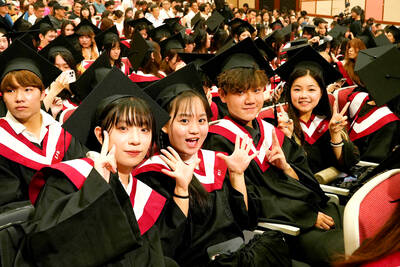
Taiwan’s English education system is being pulled apart by three opposing forces. Bilingual Nation 2030 pulls students toward English and global communication. Artificial Intelligence (AI) readiness pulls them toward digital judgment, verification and AI-mediated work. But Taiwan’s old exam culture pulls them back toward memorization, grammar drills, timed reading and correct answers. If the education system keeps using old exams to define success, it risks producing graduates who are neither genuinely bilingual nor genuinely AI-ready, but trained for tasks machines can already perform. The first force is Bilingual Nation 2030. Launched in 2018, the policy aimed to “help Taiwan’s workforce connect

“Taiwan’s Opposition Leader Comes to US With a Message Straight Out of Beijing” read a May 31 headline in the Wall Street Journal. Top US administration officials and members of Congress almost certainly read the WSJ, and if there was a bullet point takeaway that people in Washington should absorb ahead of Chinese Nationalist Party (KMT) Chair Cheng Li-wun’s (鄭麗文) arrival in DC on June 9, that headline is it. The last few columns have discussed this very topic, and the timing is not coincidental. While those top officials likely do not read the Taipei Times, judging by the number

With weighty, anxiety-inducing geopolitical topics dominating the headlines, checking in on the wild and weird state of local politics can take some of the edge off. This November’s elections will determine who will be in charge of fixing potholes in your neighborhood, not the potholes in Taiwan’s complicated geopolitical space. Recently, after an online interview with a Taipei-based journalist, I commented that Taipei journalists never go further than the MRT can take them. He laughed and agreed. Naturally, the Taipei mayoral race is eating up much of the press attention. TAIPEI CITY Democratic Progressive Party (DPP) candidate Puma Shen (沈伯洋) has
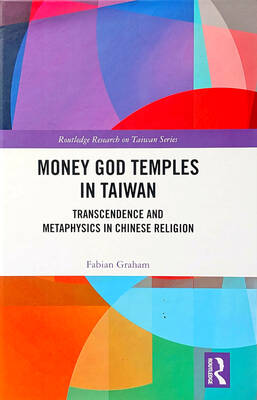
As someone who normally steers clear of books with “transcendence” or “metaphysics” in their subtitles, this reviewer — a casual observer of local belief systems since the 1990s — found Fabian Graham’s Money God Temples in Taiwan a challenging read. Those who’ve only dipped their toes into temple culture will likely need to parse several sections with special care if they’re to keep up with the author, a British ethnographic researcher whose previous books have investigated religious practices among ethnic Chinese in Southeast Asia. This scholarly volume examines a facet of Taiwan’s religious landscape that didn’t exist a century ago, and


 RSS
RSS