


It started with meat — burgers, to be precise. But now the moment for “smashed” food has come for everything from brussels sprouts to cucumbers, tacos and toasties. In restaurants and kitchens across the world, the sound of pounding can be heard as chefs and home cooks take rolling pins to their ingredients.
The smash burger — flatter and more crispy than the non-smashed — has been growing in popularity. Last year, experts declared smashed peas on toast the new avocado on toast. On TikTok, smashed cucumber recipes racked up millions of views this summer.
“It’s the word of the moment,” says Sami Harvey, executive chef at The Laundry in south London, where smashed roast squash is on the menu.
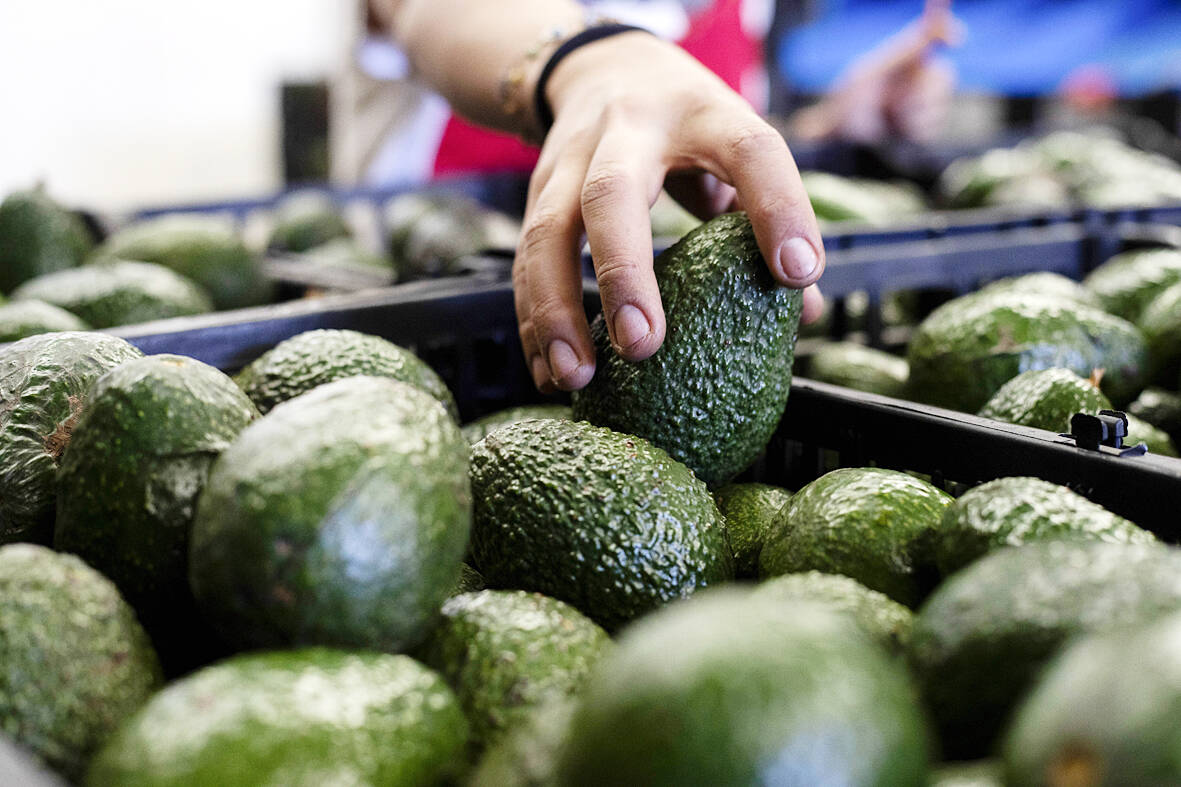
Photo: AP
But smashing is not the same thing to all people. While some chefs and food experts use it interchangeably with “smacked,” others keep things more delineated. According to Lisa Harris, from Harris and Hayes food and drink consultancy, smashed food is “pressed with a potato masher to increase surface area and optimize the Maillard reaction, which gives those delicious crispy bits … You want to compress food without destroying it.”
The Maillard reaction could be seen as the science of smashing. Described unappetizingly as the “nonenzymatic browning reaction,” it is responsible for the flavor of browned food. Harris thinks of “smacked,” which most commonly applies to cucumbers, as “a bit more haphazard — usually bashed with the back of a knife or a rolling pin until they break apart, before marinating them.”
There is a rationale for smashing a perfectly good ingredient. Chef Gizzi Erskine says that, in the case of burgers, “you’re using a high-quality, high-fat product, but [smashing] suddenly reduces its cost, it gets its seasoning better and it’s more of a consistent cook.”
Erskine also likes to smash new potatoes if she’s cooking at home.
“I’ve been doing that for years,” she says. I feel like that’s a Jamie Oliver thing from, like, 20 years ago.”
Surface area is key. Smashing “allows food to absorb marinades and dressings so much better,” says Helen Graham, who spent five years as executive chef at Bubala, a vegetarian Middle Eastern-inspired restaurant in London.
Julie Lin agrees. The Malaysian-Scottish chef has smashed dishes on the menu at her restaurant, Gaga, in Glasgow. She points to ayam penyet, describing it as a fried chicken leg smashed so that strands of meat become exposed.
“And then you smear a really spicy red sambal on it,” she says.
Because of the rocky terrain of a smashed dish, “you are going to get sauce clinging in different areas, and different flavor profiles with each mouthful,” says Ayesha Kalaji, chef patron of Queen of Cups, a restaurant in Glastonbury, which served smashed cucumbers this summer, mixing them with melons marinated in miso and almond, along with chilli oil made from Palestinian chilies and aleppo peppers. She is now adding a smashed jerusalem artichoke dish to her menu.
For her, a lot of the appeal is about the crispy texture that comes from smashing
The aesthetic of a smashed dish also appeals to some chefs. For Lin, “ugly delicious” food is preferable to anything too neat.
It is the “antithesis to fine dining,” says food expert Alice Grier. “We’re all craving comfort food, and this leans into that. And the aesthetics of it all makes it perfect for Instagram — a jumble of texture and color.”
Social media has helped the trend spread, with Instagram and TikTok key to which foods fly. Graham, who is currently into smashing parsnips, says: “Instagram reels and TikTok are incredibly influential on the way that we cook, and in turn what ends up on menus. I think chefs on Instagram are looking for simple, high-impact visual techniques to get people’s attention.” What’s more dramatic, or easier, than whacking some potatoes?
Harvey thinks smashing is a great way to use the kind of vegetable seen as “second-class … helping the farmers and the growers out. Just because they haven’t got something that’s really premium to the eye, it doesn’t mean it shouldn’t be served.”
“At the moment, it’s a very hostile environment for the hospitality industry,” says Kalaji. Food wastage is one of the “most important factors in cutting costs”, and “using the whole vegetable where possible is a massive element of that”.
“I think it’s definitely a way of making an ingredient stretch a lot further,” says Graham.
For some, pounding ingredients has a subtly anarchic appeal. “There’s something gently irreverent and disruptive about smashing up your dinner,” says Harris. “The inherent destruction-creation cycle of smashing things is therapeutic.”
Rukmini Iyer, author of the bestselling Roasting Tin series, agrees. For her cucumber and charred mango salad. she would put the cucumbers in a plastic bag. “And then I’d get a rolling pin out and start smashing. It’s quite cathartic,” she says.
But smashing doesn’t work for all ingredients. “Take a softer vegetable, such as an aubergine: you’ll end up with baba ganoush,” says Graham.
And Iyer has not had a great time of smashing broccoli.
Smashing food is far from new. “It has been part of Chinese cooking for a long time,” says Lin. And Graham cites the Lebanese dish musabaha: “Chickpeas are overcooked and then crushed and tossed with lemon juice, tahini, garlic and cumin.”
Kalaji came across a recipe for smashed spleen in one of the 14th-century cookbooks she read while studying Middle Eastern cuisine. Perhaps that one, though, is less Instagram-friendly.

In the March 9 edition of the Taipei Times a piece by Ninon Godefroy ran with the headine “The quiet, gentle rhythm of Taiwan.” It started with the line “Taiwan is a small, humble place. There is no Eiffel Tower, no pyramids — no singular attraction that draws the world’s attention.” I laughed out loud at that. This was out of no disrespect for the author or the piece, which made some interesting analogies and good points about how both Din Tai Fung’s and Taiwan Semiconductor Manufacturing Co’s (TSMC, 台積電) meticulous attention to detail and quality are not quite up to

April 21 to April 27 Hsieh Er’s (謝娥) political fortunes were rising fast after she got out of jail and joined the Chinese Nationalist Party (KMT) in December 1945. Not only did she hold key positions in various committees, she was elected the only woman on the Taipei City Council and headed to Nanjing in 1946 as the sole Taiwanese female representative to the National Constituent Assembly. With the support of first lady Soong May-ling (宋美齡), she started the Taipei Women’s Association and Taiwan Provincial Women’s Association, where she
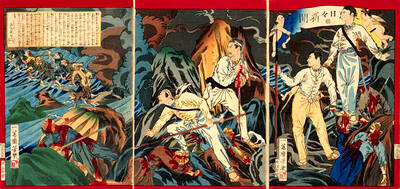
It is one of the more remarkable facts of Taiwan history that it was never occupied or claimed by any of the numerous kingdoms of southern China — Han or otherwise — that lay just across the water from it. None of their brilliant ministers ever discovered that Taiwan was a “core interest” of the state whose annexation was “inevitable.” As Paul Kua notes in an excellent monograph laying out how the Portuguese gave Taiwan the name “Formosa,” the first Europeans to express an interest in occupying Taiwan were the Spanish. Tonio Andrade in his seminal work, How Taiwan Became Chinese,

Mongolian influencer Anudari Daarya looks effortlessly glamorous and carefree in her social media posts — but the classically trained pianist’s road to acceptance as a transgender artist has been anything but easy. She is one of a growing number of Mongolian LGBTQ youth challenging stereotypes and fighting for acceptance through media representation in the socially conservative country. LGBTQ Mongolians often hide their identities from their employers and colleagues for fear of discrimination, with a survey by the non-profit LGBT Centre Mongolia showing that only 20 percent of people felt comfortable coming out at work. Daarya, 25, said she has faced discrimination since she


 RSS
RSS