


As of the end of last year there were roughly 750,000 migrant workers in Taiwan. Ministry of the Interior (MOI) figures as of the end of December showed that 86,000 individuals had illegally run away from their jobs, and were now unaccounted for.
Agriculture, a long-running sore in Taiwan’s economy, was a focus of the candidates’ campaigns leading up to the elections on Saturday. Labor, especially seasonal labor, remains a critical issue for farmers. The demand for agricultural labor is enormous. By 2017, Ministry of Labor figures showed the sector was short 201,000 workers. Ministry of Agriculture (MOA) data released in April of last year showed that just over 5 percent of farms reported seasonal labor shortages. The government has already increased the number of migrant workers permitted on farms, and reduced the Taiwanese worker/migrant worker ratio from the previously mandated 2:1 to 1:1. It was felt that small farms, whose owners often have off-farm work, could not maintain that ratio.
LABOR SHORTAGE
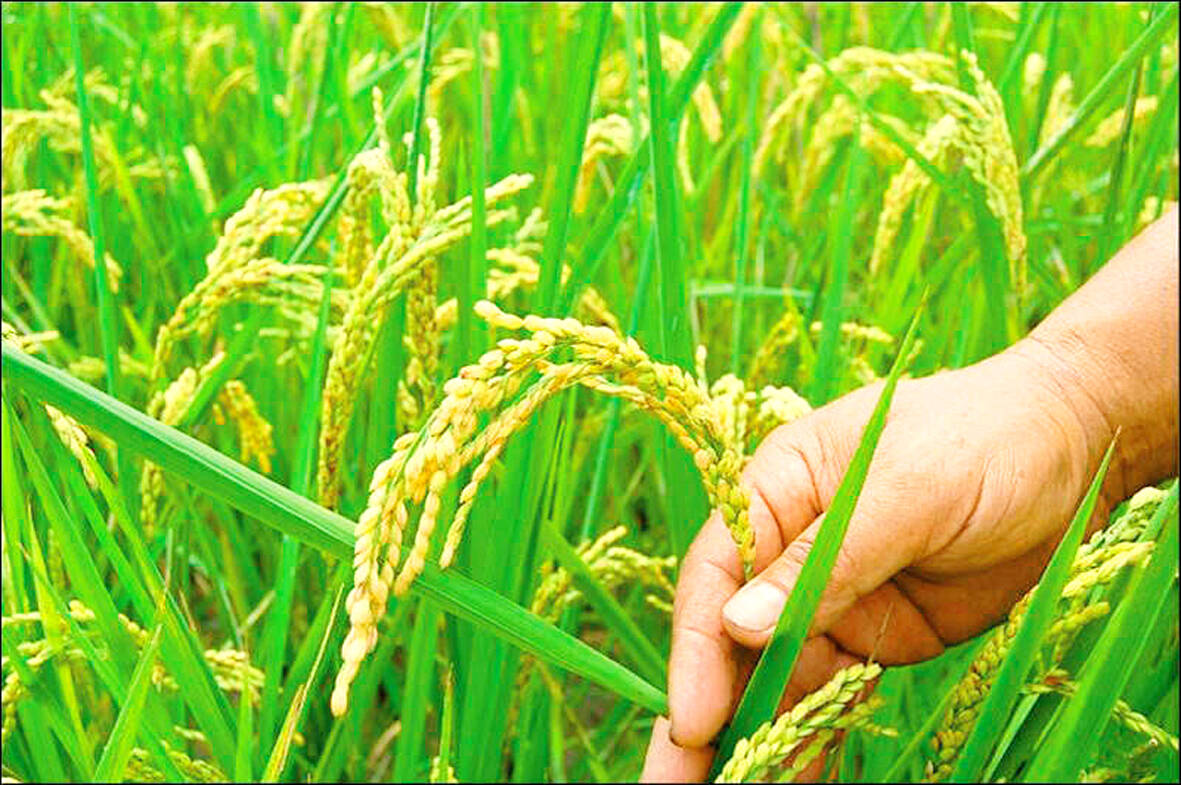
Photo: Taipei Times File
Although the candidates said that they would have more migrant workers imported to help with the shortage of labor, a program for doing that actually began in the pre-pandemic days. The MOA first began lobbying the government for migrant labor in agriculture in 2013. In April of 2019 the first batch of recruits arrived from southeast Asia. Though the program admitted only 2,400 workers, a tiny fraction of demand, still fewer entered it. By August of 2021, thanks to the COVID-19 and other factors, less than 400 migrant farm workers had been recruited.
The enormous demand for labor acts as a magnet. Not only is there anonymity in the rural areas, but such areas often host two industries, agriculture and tourism, that require large seasonal labor pools. All migrant workers know this. They also know that salaries are potentially higher for migrant workers in the mountains and the authorities, recognizing the need for labor, are lax in pursuit. Oddly enough, though it is not widely reported, scholars have found students from Southeast Asian countries working extra hours (over the 20 a week permitted) in agriculture, as noted in a January 2022 report in the Journal of Agrarian Change.
While the population of runaways is generally considered in terms of its labor input, recall that it consists of males and females largely still in their reproductive years. The result is, unsurprisingly, children. According to a study published last year in the International Journal of Environmental Research and Public Health, social work scholars Wang Ming-sheng (王明聖) and Lin Ching-hsuan (林敬軒) noted that from January 2007 to July 2020, 941 children of undocumented migrant workers were reported to the authorities.
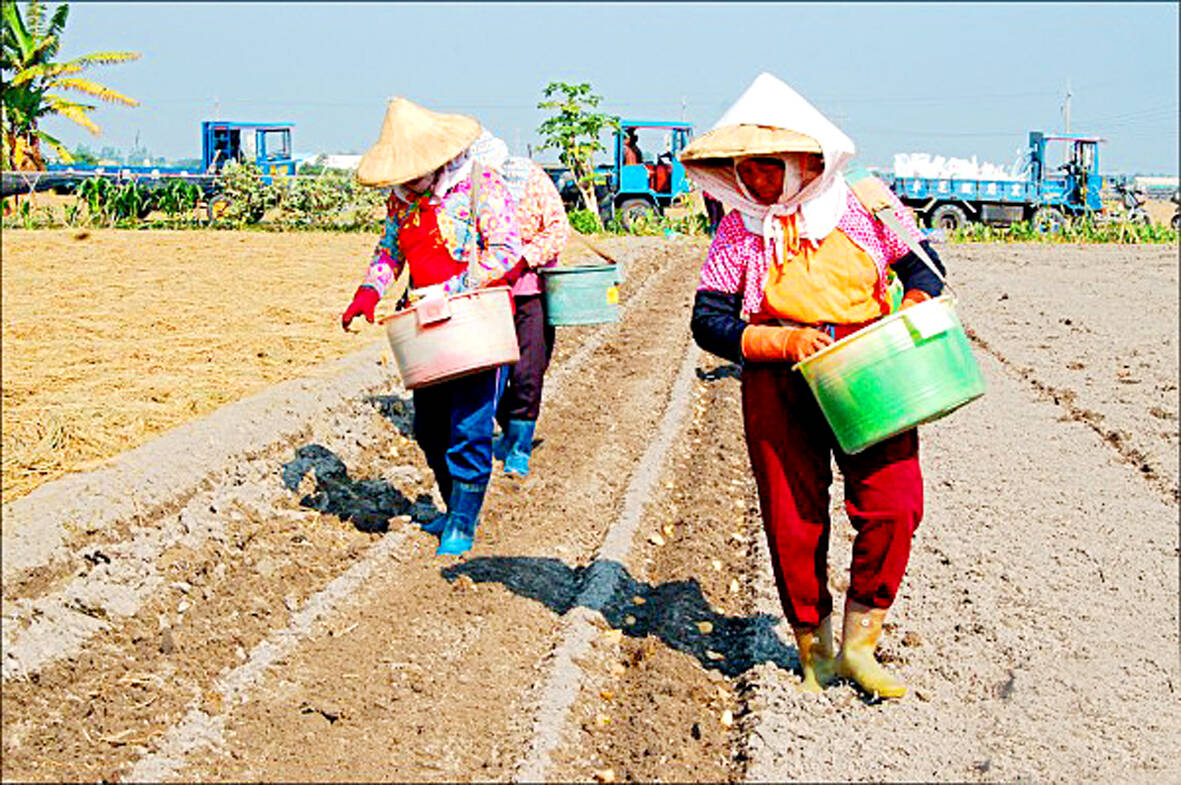
Photo: Taipei Times File
As they wrote, since that total refers only to children brought to medical institutions, the actual number is much higher. Based on an annual estimate of 700 such children each year, the Control Yuan estimates the population of such undocumented children could be as high as 20,000.
To put that in perspective, the MOI reported recently that there were 135,571 births in Taiwan last year, for a crude birth rate of 5.82 births per 1,000 people, down from 5.96 in 2022.
VULNERABLE POPULATION
Runaways are a highly vulnerable population, with little access to public services. This goes double for undocumented children.
Fortunately, as Wang and Lin note, the government has recognized this problem and since 2017, begun to evolve a response to it. That year it issued guidelines for getting such children alien residence certificates after the tragic death of a 9 month old baby because it did not get proper vaccinations, as Sharlene Chen wrote in a paper in 2022 for Humanity Research Consultancy. In 2018 this was expanded to include access to the national health insurance system. Additional problems begin when the children reach school age, according to Wang and Lin. Because they have no household registration, they often cannot enter elementary school.
Another issue arises when runaway mothers give birth in a local hospital. Wang and Lin found in interviewing hospital social workers that even babies born in hospitals can become undocumented. This situation not only complicates health care, but may make it difficult for hospitals to receive local government reimbursement for care. Expenses for some births may be covered by hospital charities, but often the mothers must pay cash.
There is a system for adoption, the Humanity Research Consultancy report “Producing Statelessness” observes, when the mother cannot be found after searching for three months in Taiwan or six months in the home country, and the home government does not recognize the child, or is indifferent. Then the child can be adopted locally and given the full panoply of human rights available to residents, and will be able to become a citizen.
Oddly enough, the worst outcome occurs when the mother has been identified as being in Taiwan but cannot be found. Many mothers leave their babies with NGOs and visit them. Because they are not abandoned they are regarded under the law as unregistered foreign nationals. Such children cannot gain local citizenship without recognition by the home country, which often cannot recognize them.
Note that all this occurs only with the few hundred children that wind up in places like Harmony Home (profiled in a moving Commonwealth Magazine piece in July 2018). There are likely thousands of undocumented children still hiding on farms, in back alleys, in small mountain towns. Surely locals must know where they are.
This year the government will be preparing its report on Taiwan’s compliance with the UN International Convention on the Elimination of All Forms of Racial Discrimination. Though Taiwan is not a UN member, it nevertheless attempts to follow many of its guidelines.
In 2014 the UNHCR, the UN Refugee Agency, launched a campaign to end statelessness in 10 years, that is, by this year. Taiwan should seek to comply with that by promulgating an amnesty and offering residency with a citizenship path for the thousands of undocumented children of runaway migrant workers. That would be an excellent opening move for the candidate elected on Saturday.
That would also be a helpful first step in garnering public support for a simple path to citizenship for those of us who have been in Taiwan many years, having children and working hard, yet cannot obtain citizenship without first giving up our own citizenship, an issue that people born Taiwanese citizens do not suffer from when obtaining another citizenship.
Time to move on immigration, Taiwan.
Notes from Central Taiwan is a column written by long-term resident Michael Turton, who provides incisive commentary informed by three decades of living in and writing about his adoptive country. The views expressed here are his own.

Taiwan’s English education system is being pulled apart by three opposing forces. Bilingual Nation 2030 pulls students toward English and global communication. Artificial Intelligence (AI) readiness pulls them toward digital judgment, verification and AI-mediated work. But Taiwan’s old exam culture pulls them back toward memorization, grammar drills, timed reading and correct answers. If the education system keeps using old exams to define success, it risks producing graduates who are neither genuinely bilingual nor genuinely AI-ready, but trained for tasks machines can already perform. The first force is Bilingual Nation 2030. Launched in 2018, the policy aimed to “help Taiwan’s workforce connect

It seems every few days one bumps into one of those “real man” comments in which Taiwan is urged to “face reality” or similar, and “make a deal,” with the speaker implying that soon it will be too late. “Deal” advocates always present themselves as having a superior grip on reality, and the manly ability to make the “hard choice.” Their testosterone-laden language often echoes that of Taiwan sellout advocates. Note that such commentary always specifies a process (“make a deal, work with, make progress”), never the end state of what occupation by a violent authoritarian colonialist state will entail. In

“Taiwan’s Opposition Leader Comes to US With a Message Straight Out of Beijing” read a May 31 headline in the Wall Street Journal. Top US administration officials and members of Congress almost certainly read the WSJ, and if there was a bullet point takeaway that people in Washington should absorb ahead of Chinese Nationalist Party (KMT) Chair Cheng Li-wun’s (鄭麗文) arrival in DC on June 9, that headline is it. The last few columns have discussed this very topic, and the timing is not coincidental. While those top officials likely do not read the Taipei Times, judging by the number
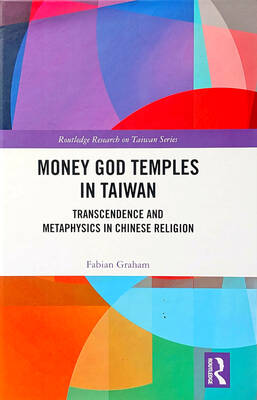
As someone who normally steers clear of books with “transcendence” or “metaphysics” in their subtitles, this reviewer — a casual observer of local belief systems since the 1990s — found Fabian Graham’s Money God Temples in Taiwan a challenging read. Those who’ve only dipped their toes into temple culture will likely need to parse several sections with special care if they’re to keep up with the author, a British ethnographic researcher whose previous books have investigated religious practices among ethnic Chinese in Southeast Asia. This scholarly volume examines a facet of Taiwan’s religious landscape that didn’t exist a century ago, and


 RSS
RSS