


Sandy Wang (王敏馨) always asks the Earth God for permission before she puts on a music festival. It’s in his house after all.
“You can’t just barge into someone’s home, have a party and leave,” her husband Yi Hung-yi (易谹義) says. “People still pray here, and you have to be respectful.”
The Earth God decided that this year’s Temple Music Festival (香爐祭) will fall on Sunday, with seven acts spanning genres such as J-rock, Hakka punk and Bouzouki dub.
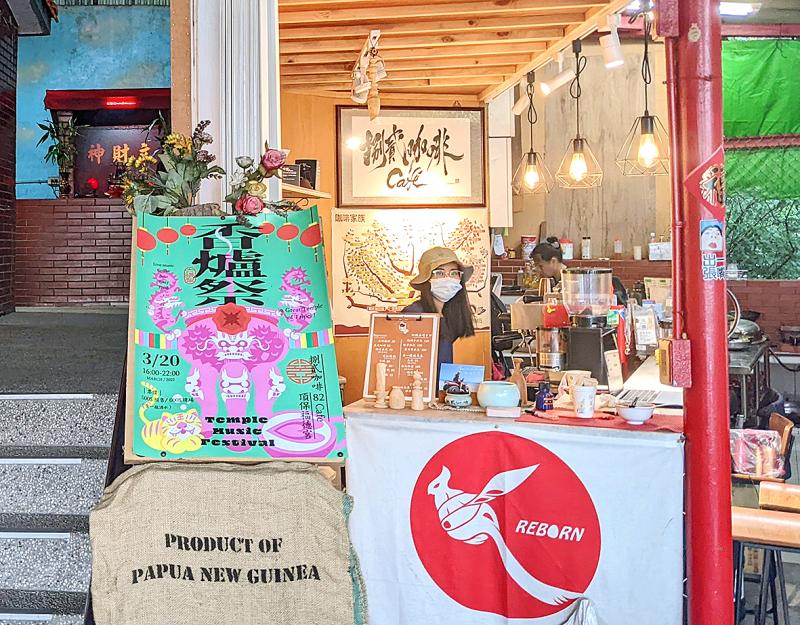
Photo: Han Cheung, staff reporter
The festivities will be held in the main hall, which is already a sort of recreation center for locals with daytime karaoke, a coffee shop and rechao (熱炒, fast stir-fried dishes). Tucked behind an isolated hillside parking lot at the edge of Taipei’s bustling Daan District, Dingbao Fude Temple (頂保福德宮) was once renowned for revealing winning lottery numbers. Today, few venture this way, even though there’s an MRT stop just six to eight minutes walk away.
Wang has run a branch of her 82 Coffee Shop here for about two years now, coming here after finishing up at the main location in nearby Chenggong traditional morning market (成功市場).
Landowner Chang Shih-wen (張世文) doesn’t mind the ruckus — it’s good for the temple, whose fortunes have declined in the past seven or eight years. “Actually I told them they should do more of these, maybe once every two weeks,” he says.
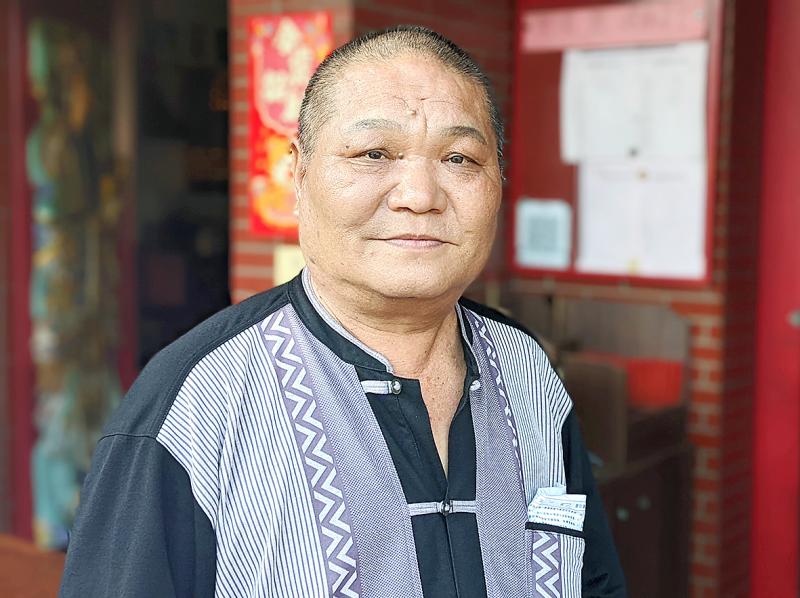
Photo: Han Cheung, staff reporter
Having put on two festivals here already — the first one was held on a tiny platform on the hill behind the shrine — Wang knows that it’s not possible.
“This is just a hobby; I enjoy infusing art into what I do,” she says. “I thought that I’d bring that atmosphere here too. I also hope that traditional culture can be passed down in Taiwan, especially regarding temples — the craftsmanship, the embroidery, it’s all fantastic.”
GOD FROM A FLOOD
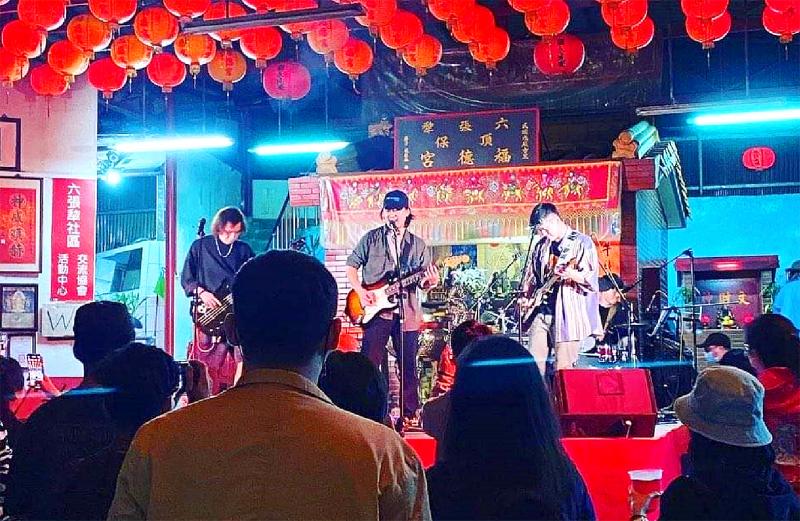
Photo courtesy of Temple Music Festival
The sound of people singing Hoklo (commonly known as Taiwanese) love songs echoes through the main hall of the temple on a Tuesday afternoon. This spot has been a local hangout for decades, and Wu serves coffee to the crooners as well as a group of National Taiwan University students doing field research on nearby military dependent Dawo New Village (大我新村).
Wu started her coffee business at Chenggong Market, where Yi helps run his family’s fish cake stall, but needed more hours since the market closes at 2pm. She expanded to a larger space in Yongho District (永和), where she began hosting various performances and met the scensters who helped organize the music festival.
Wang and Yi knew Chang as patrons of his Zihao Temple (紫昊巖), which is just down the path, closer to the main street. After Wang shuttered the Yongho store, Chang asked if she wanted to start something in the temple. She set up shop here with her mother, who is in charge of the kitchen, and they kept the karaoke running.
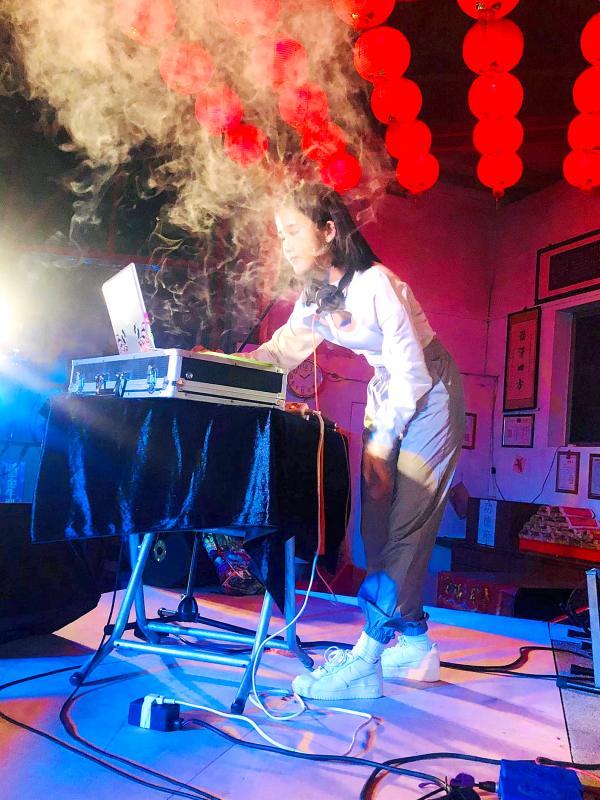
Photo courtesy of Temple Music Festival
Every temple has a miraculous founding story, and Dingbao Fude Temple is no different. The 64-year-old Chang recalls how his seven nephews were caught in a flood decades ago while returning from their aunt’s house in Taipei’s Wanhua District (萬華). Along the way, they found an Earth God statue in the water.
Chang first told them to get rid of it.
“I told them not to mess with discarded deities, but they didn’t listen and brought it to where the temple is now, where people used to drink tea,” he says. The kids built a makeshift structure with rocks and sheet metal to house the deity, and it stayed in the community.
RISE AND FALL
At the height of the Patriotic Lottery craze in the 1980s, Chang says a couple saw a vision of an Earth God, who gave them the numbers to win the jackpot of NT$6 million. The god also revealed his location, and after the couple finally found the makeshift shrine, they donated part of their winnings to help build a proper temple.
Word spread, and the people flocked here in hopes of getting rich.
“This place was crowded like a night market,” Chang says.
The lottery was shut down in 1987 due to widespread illegal betting, but the temple remained popular until about a decade ago, Chang says.
“The Earth God is now waiting for the right person to help it realize its full powers again,” he says. “Now it’s just like this, not prosperous but not struggling terribly either.”
Locals say that the temple is still quite lively during the weekends as a local hangout spot, and Wang says they attend the music festival too. She’s still getting her name out, but due to the popularity of temple culture these days, there have been more curious folks venturing here after seeing it online.
“I can’t say how special our music festival is,” Wang says. “But I can say we have a very special venue.”
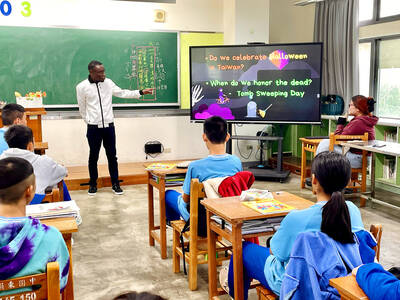
For many people, Bilingual Nation 2030 begins and ends in the classroom. Since the policy was launched in 2018, the debate has centered on students, teachers and the pressure placed on schools. Yet the policy was never solely about English education. The government’s official plan also calls for bilingualization in Taiwan’s government services, laws and regulations, and living environment. The goal is to make Taiwan more inclusive and accessible to international enterprises and talent and better prepared for global economic and trade conditions. After eight years, that grand vision is due for a pulse check. RULES THAT CAN BE READ For Harper Chen (陳虹宇), an adviser
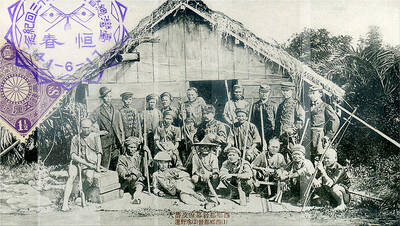
Traditionally, indigenous people in Taiwan’s mountains practice swidden cultivation, or “slash and burn” agriculture, a practice common in human history. According to a 2016 research article in the International Journal of Environmental Sustainability, among the Atayal people, this began with a search for suitable forested slopeland. The trees are burnt for fertilizer and the land cleared of stones. The stones and wood are then piled up to make fences, while both dead and standing trees are retained on the plot. The fences are used to grow climbing crops like squash and beans. The plot itself supports farming for three years.
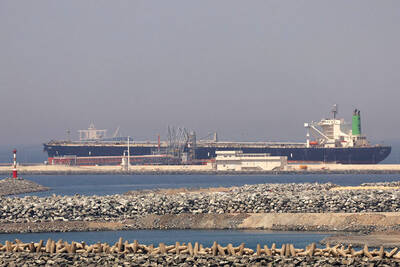
The breakwater stretches out to sea from the sprawling Kaohsiung port in southern Taiwan. Normally, it’s crowded with massive tankers ferrying liquefied natural gas from Qatar to be stored in the bulbous white tanks that dot the shoreline. These are not normal times, though, and not a single shipment from Qatar has docked at the Yongan terminal since early March after the Strait of Hormuz was shuttered. The suspension has provided a realistic preview of a potential Chinese blockade, a move that would throttle an economy anchored by the world’s most advanced and power-hungry semiconductor industry. It is a stark reminder of

May 4 to May 10 It was once said that if you hadn’t performed at the Sapphire Grand Cabaret (藍寶石大歌廳), you couldn’t truly be considered a star. Taking the stage at the legendary Kaohsiung club was more than just a concert. Performers were expected to entertain in every sense, wearing outlandish or revealing costumes and staying quick on their feet as sharp-tongued, over-the-top hosts asked questions and delivered jokes that would be seen as vulgar, even offensive, by today’s standards. Opening in May 1967 during a period of strict political and social control, Sapphire offered a rare outlet for audiences in


 RSS
RSS