


As the head of a cobra emerges from the rocks beside the trail, its hood spread in full display, everyone in our party jumps back. It locks its eyes on the nearest photographer, making a steady hissing sound and slowly shaking its head from side to side. With a violent hiss it strikes out at the hands of the approaching cameraman.
Photo: James Osborne
We are on stage five of the seven-stage, 92km Taipei Grand Trail, a collection of preexisting trails that circumnavigate the Taipei Basin. The 13km Jiantan Branch Trail (劍潭支線) starts at Bishan Temple (碧山巖開漳聖王廟) in Neihu (內湖) and runs along the ridge, then finally ends next to Jiantan MRT station (劍潭站).
Rather than take the bus to the trail head, we walk up from Dahu Park MRT (大湖公園站) via Dagouxi Waterfront Park (大溝溪生態治水園區). We are glad to have made that decision as we stumbled upon our first snake of the night, a Taiwan cobra (Naja atra).
SNAKES, SNAKES, EVERYWHERE
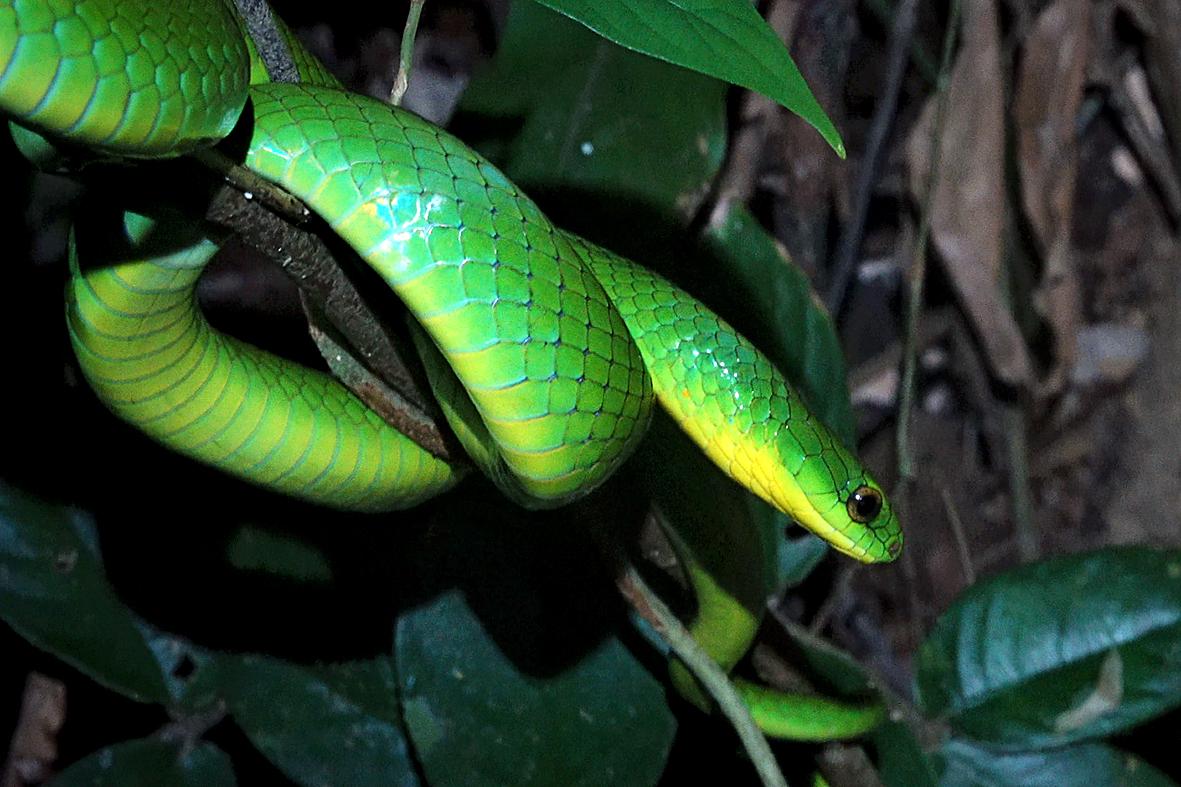
Photo: James Osborne
The front third of its body raised up and its hood spread, the cobra would not back down. With all its hissing and dry-striking at the air before us, we maintain a safe distance. Despite its threatening display and fierce reputation, our group of 12 trekkers are more curious than afraid, thrilled to have such a rare encounter with one of Taiwan’s deadliest snakes.
As we leave, the cobra lowers its hood and slithers away into the trees. A few steps on and we encounter another snake. Illuminated by our flashlights, the shape of a meter long snake slithers across the path right among their legs.
This time it’s just a red-banded snake (Lycodon rufozonatus); a bit confused by the lights. It quickly leaves the trail as everyone is reassured to know it’s non-venomous.
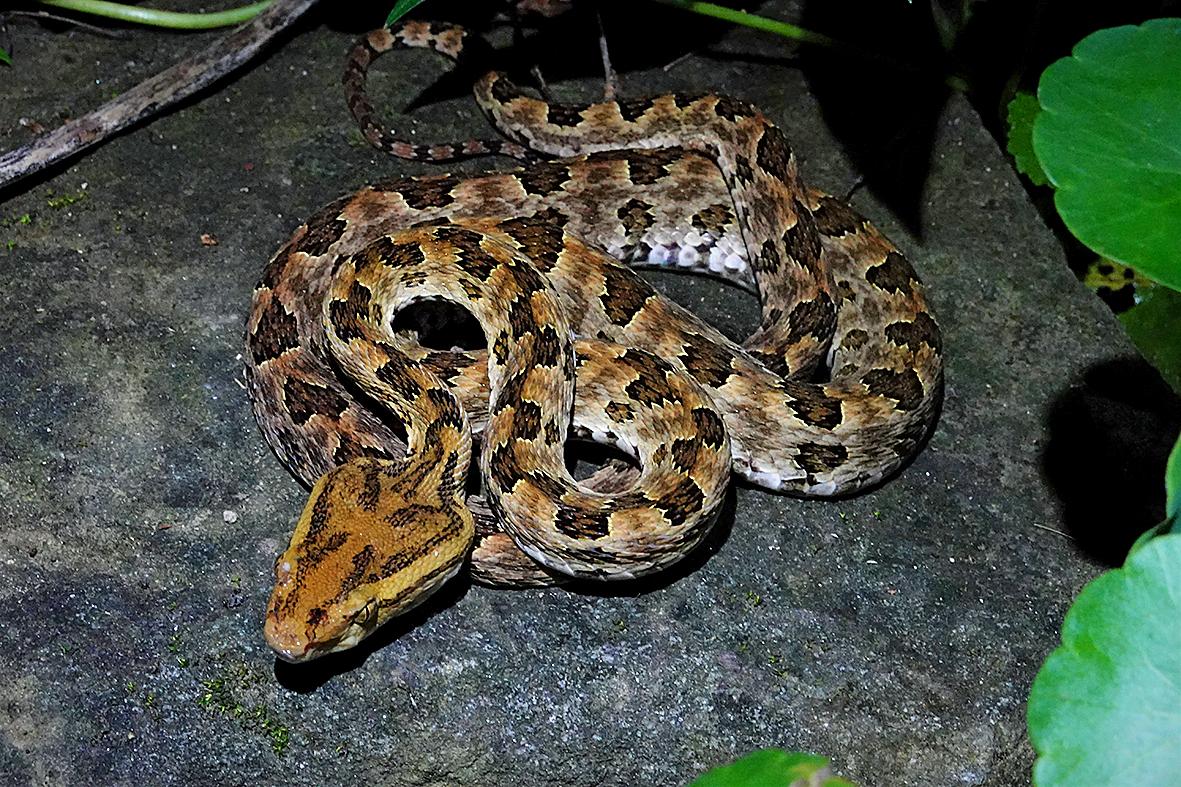
Photo: James Osborne
From Bishan Temple we take in the panoramic views of Taipei as we check our watches and realize it is almost 10pm. This is the official start of the fifth stage, so we begin to worry that we may be in for a really late night.
As we pick up the pace we nearly miss a tiny baby mock viper (Psammodynastes pulverulentus) immobile on a branch next to the path. Further on, we see a non-venomous greater green snake (Ptyas major) sleeping on a shrub. Shortly after, a Taiwanese tree snake (Boiga kraepelini) gracefully glides through the branches of a tree over-head.
In our haste, someone bumps into a green snake on a trail-side branch. Startled, the snake leaps off its perch as we all step back. Not to fear, I explain to the group, unlike green tree vipers (Trimeresurus stejnegeri ), greater green snakes are not venomous.
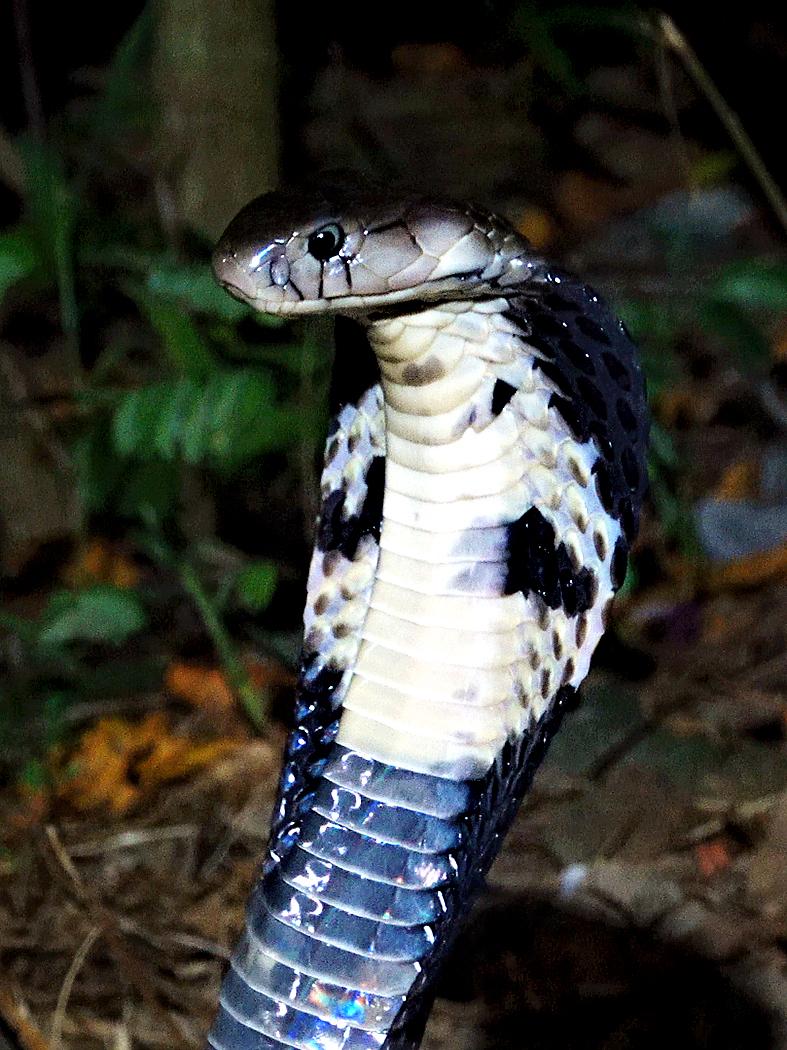
Photo: James Osborne
Soon another deadly snake is in our midst. Moving down the trail toward us, a highly-venomous Taiwanese krait (Bungarus multicinctus).
Everyone breathes a sigh of relief as the snake makes a 90 degree turn and disappears into the undergrowth. Happy with their photos, the group agrees that I should take the lead for fear of what we might encounter next.
Minutes later we emerge atop a small peak with more panoramic views, including the Miramar Ferris Wheel (美麗華百樂園摩天輪) all lit up far below.
Photo: James Osborne
MOTORCYCLE BREAKS SILENCE
Steep steps lead us down as we pass a lonely turtle making its way through the dark forest. The ferns are adorned with sleeping butterflies, and of course more greater green snakes.
All at once the tranquility of the forest is shattered, as out of nowhere the roar of a motorcycle comes hurtling toward us. We are just able to register what’s going on and all scurry to the side of the path right as a dirt-bike comes flying down the trail. It turns out there are greater dangers than snakes on these trails.
Photo: James Osborne
More greater green snakes, a red-banded snake eating a toad and more fantastic views greet us as we continue on toward Jiantan. The trail is easy to walk and our pace is good.
As we descend from Old Place Lookout (老地方觀景平台), a collared scops owl (Otus lettia) swoops over-head and lands in a tree in front of us. Seeing that we were not mice, it turns and flies off back into the dark forest.
We are still full of beans when we arrive at the end of the trail near Jiantan MRT Station, and realize it is only 2am. We had completed the 5th stage in only 4 hours. Only six hours including the slow walk up through Dagouxi Park. We are getting good at this.
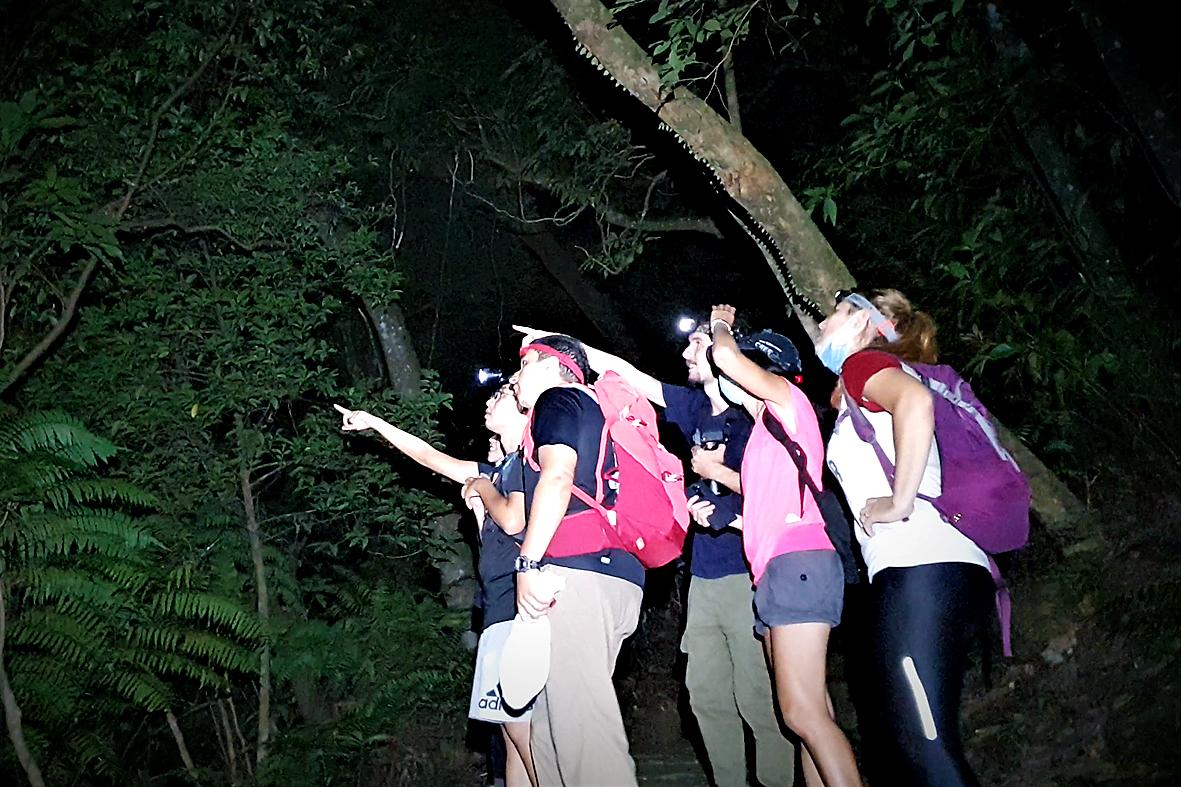
Photo: James Osborne
James Osborne has been living in Taiwan for about two years, where he has been pursuing a passionate hobby of discovering and filming Taiwan’s unique biodiversity. Check out his Youtube channel (James Osborne) for videos on his ecological adventures.
Ajay Verma, a consultant gastroenterologist at Kettering general hospital in Northamptonshire, says our gut is a “complex machine.” “It is constantly providing us with the nutrition we need, initially to grow and develop, and then for us to survive, thrive and repair from injury and illness.” How can we keep it functioning well? Put simply: “Make sure what you put into it is balanced, and that you clear out its waste products adequately,” Verma says. “In a general gastroenterology clinic, the most common conditions we see are irritable bowel syndrome (IBS), gastroesophageal reflux disease, inflammatory bowel disease and constipation,” says Nisha
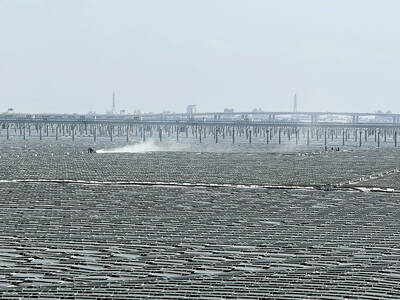
The arithmetic is straightforward and uncomfortable. By the end of 2025, Taiwan had committed itself to a 50-30-20 electricity mix — half natural gas, 30 per cent coal, 20 per cent renewables. The Ministry of Economic Affairs’s (MOEA) own monthly energy reports tell a different story. Natural gas reached 47.8 per cent of generation last year. Coal stood at 35.4 per cent, comfortably above its target ceiling. Renewables came in at 13.1 per cent, well short of the 20 per cent Taipei had pledged a decade earlier. Installed renewable capacity reached roughly half of the 12 gigawatts (GW) the government

Last week US President Donald Trump was asked by a reporter whether he would speak on the phone to the President of Taiwan. “l’ll speak to him. I speak to everybody. We have that situation very well in hand,” Trump said. This marked the second time in a couple of weeks he had said he would talk to the President of Taiwan. In 2016 he famously took a call from then-president Tsai Ing-wen (蔡英文), when he was president-elect. Despite warnings that the apocalypse was nigh because of a phone call, the world quickly forgot about the conversation between two democratically-elected presidents.
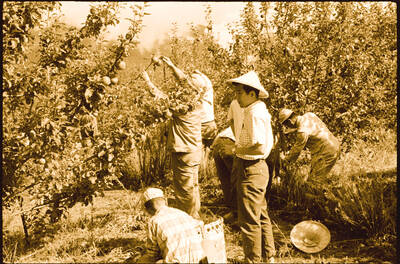
May 25 to May 31 Few believed that apples could be cultivated on a commercial scale in Taiwan’s high mountains. When horticulturalist Cheng Chao-hsiung (程兆熊) first proposed the idea in 1955, both American and Taiwanese colleagues dismissed it as implausible, arguing that temperate fruit could not be reliably grown on a subtropical island, especially on rugged terrain. However, it was this terrain in the Central Mountain Range where many Chinese Civil War veterans were resettled in the late 1950s. With limited job prospects and no family in Taiwan, they were placed on cooperative farms aimed toward self-sufficiency. Some say the conditions


 RSS
RSS