


Life-sized carvings of camels and horses hewn into rock faces in Saudi Arabia could be around 7,000 years old, according to new research that suggests they are significantly older than previously thought.
The 21 reliefs, which were only recently discovered, are heavily eroded and were initially estimated in 2018 to be some 2,000 years old based on similarities with artworks found in Petra in Jordan.
But the new research by Saudi and European institutions used a variety of different methods, including analysing tool marks and erosion patterns as well as x-ray technology, and suggests the reliefs are around 7,000 to 8,000 years old.
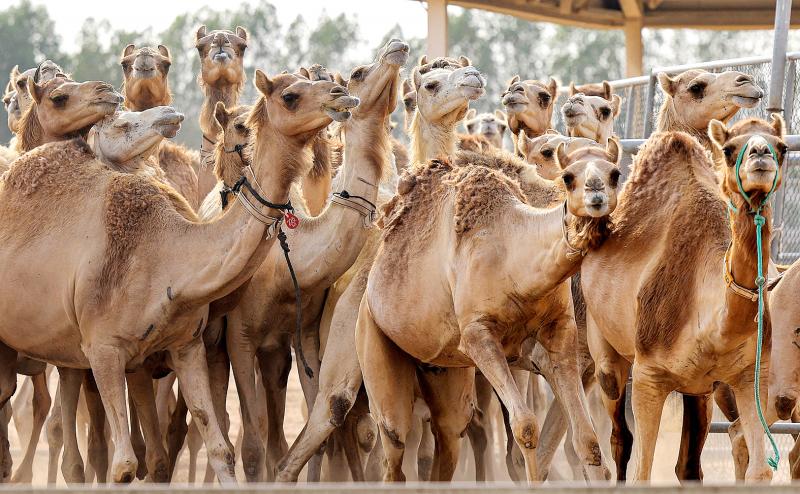
Photo: AFP
This would mean that the area of carvings, known as the Camel Site, “is likely home to the oldest surviving large-scale (naturalistic) animal reliefs in the world,” the study said.
In the era that it was created, the region would have looked very different to the arid landscape of today, with a savannah-like grassland dotted with lakes and trees, where wild camels roamed and were hunted.
“We can now link the Camel Site to a period in prehistory when the pastoral populations of northern Arabia created rock art and built large stone structures called mustatil,” the authors said in a press release issued by the Max Planck Institute for the Science of Human History. “The Camel Site is therefore part of a wider pattern of activity where groups frequently came together to establish and mark symbolic places.”
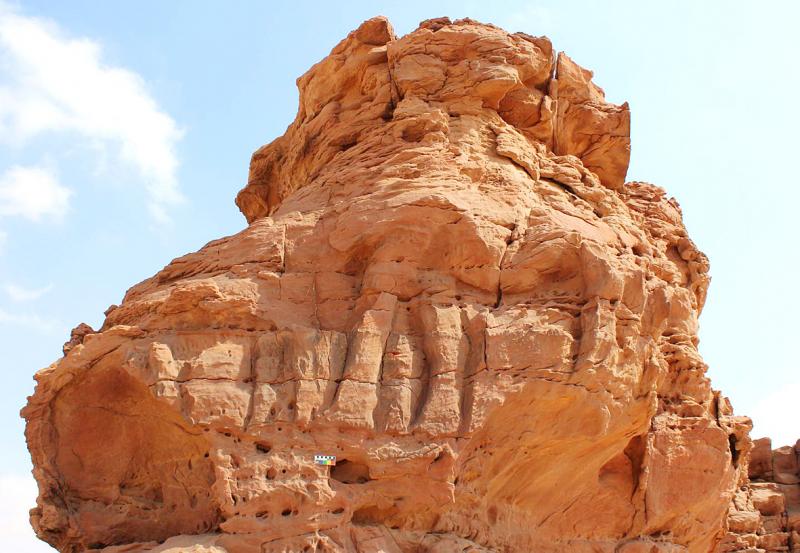
Photo: AFP
‘ANNUAL GATHERING’
The research, published in the Journal of Archaeological Science on Wednesday, was carried out by the Saudi Ministry of Culture, the Max Planck Institute for the Science of Human History, France’s CNRS research institutes and the King Saud University.
The team included a stone mason, who estimated that each relief would have taken up to 15 days of carving to complete.
The authors, who said the reliefs are part of a wider culture of rock art in the region depicting life-sized animals, suggest the works could have been a communal effort that could have been part of an annual gathering of a Neolithic group.
They said references to the mating season in the sculptures could mean they were symbolically linked to the annual cycles of wet and dry seasons.
Given the extensive erosion of the carvings, the researchers said efforts to secure the site were urgent.
“Time is running out on the preservation of the Camel Site and on the potential identification of other relief sites as damage will increase and more reliefs will be lost to erosion with each passing year,” said lead author Maria Guagnin, of the Max Planck Institute.
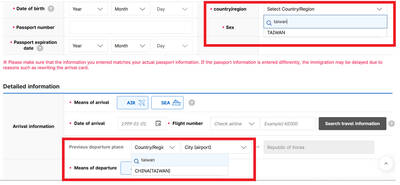
Jason Han says that the e-arrival card spat between South Korea and Taiwan shows that Seoul is signaling adherence to its “one-China” policy, while Taiwan’s response reflects a reciprocal approach. “Attempts to alter the diplomatic status quo often lead to tit-for-tat responses,” the analyst on international affairs tells the Taipei Times, adding that Taiwan may become more cautious in its dealings with South Korea going forward. Taipei has called on Seoul to correct its electronic entry system, which currently lists Taiwan as “China (Taiwan),” warning that reciprocal measures may follow if the wording is not changed before March 31. As of yesterday,

The Portuguese never established a presence on Taiwan, but they must have traded with the indigenous people because later traders reported that the locals referred to parts of deer using Portuguese words. What goods might the Portuguese have offered their indigenous trade partners? Among them must have been slaves, for the Portuguese dealt slaves across Asia. Though we often speak of “Portuguese” ships, imagining them as picturesque vessels manned by pointy-bearded Iberians, in Asia Portuguese shipping between local destinations was crewed by Asian seamen, with a handful of white or Eurasian officers. “Even the great carracks of 1,000-2,000 tons which plied
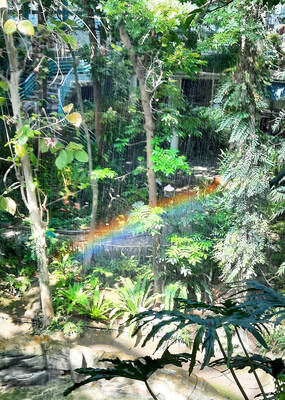
It’s only half the size of its more famous counterpart in Taipei, but the Botanical Garden of the National Museum of Nature Science (NMNS, 國立自然科學博物館植物園) is surely one of urban Taiwan’s most inviting green spaces. Covering 4.5 hectares immediately northeast of the government-run museum in Taichung’s North District (北區), the garden features more than 700 plant species, many of which are labeled in Chinese but not in English. Since its establishment in 1999, the site’s managers have done their best to replicate a number of native ecosystems, dividing the site into eight areas. The name of the Coral Atoll Zone might
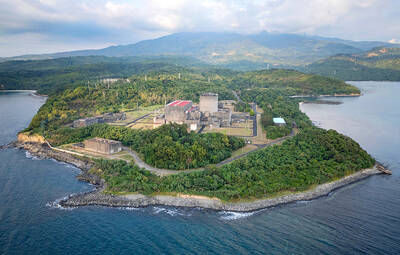
Nuclear power is getting a second look in Southeast Asia as countries prepare to meet surging energy demand as they vie for artificial intelligence-focused data centers. Several Southeast Asian nations are reviving mothballed nuclear plans and setting ambitious targets and nearly half of the region could, if they pursue those goals, have nuclear energy in the 2030s. Even countries without current plans have signaled their interest. Southeast Asia has never produced a single watt of nuclear energy, despite long-held atomic ambitions. But that may soon change as pressure mounts to reduce emissions that contribute to climate change, while meeting growing power needs. The


 RSS
RSS