


David Eagleman, 50, is an American neuroscientist, bestselling author and presenter of the BBC series The Brain, as well as co-founder and chief executive officer of Neosensory, which develops devices for sensory substitution. His area of specialty is brain plasticity, and that is the subject of his new book, Livewired, which examines how experience refashions the brain, and shows that it is a much more adaptable organ than previously thought.
Andrew Anthony: For the past half-century or more the brain has been spoken of in terms of a computer. What are the biggest flaws with that particular model?

Photo: AFP
David Eagleman: It’s a very seductive comparison. But in fact, what we’re looking at is three pounds of material in our skulls that is essentially a very alien kind of material to us. It doesn’t write down memories, the way we think of a computer doing it. And it is capable of figuring out its own culture and identity and making leaps into the unknown. I’m here in Silicon Valley. Everything we talk about is hardware and software. But what’s happening in the brain is what I call livewire, where you have 86 billion neurons, each with 10,000 connections, and they are constantly reconfiguring every second of your life. Even by the time you get to the end of this paragraph, you’ll be a slightly different person than you were at the beginning.
AA: In what way does the working of the brain resemble drug dealers in Albuquerque?
DE: It’s that the brain can accomplish remarkable things without any top-down control. If a child has half their brain removed in surgery, the functions of the brain will rewire themselves on to the remaining real estate. And so I use this example of drug dealers to point out that if suddenly in Albuquerque, where I happened to grow up, there was a terrific earthquake, and half the territory was lost, the drug dealers would rearrange themselves to control the remaining territory. It’s because each one has competition with his neighbours and they fight over whatever territory exists, as opposed to a top-down council meeting where the territory is distributed. And that’s really the way to understand the brain. It’s made up of billions of neurons, each of which is competing for its own territory.
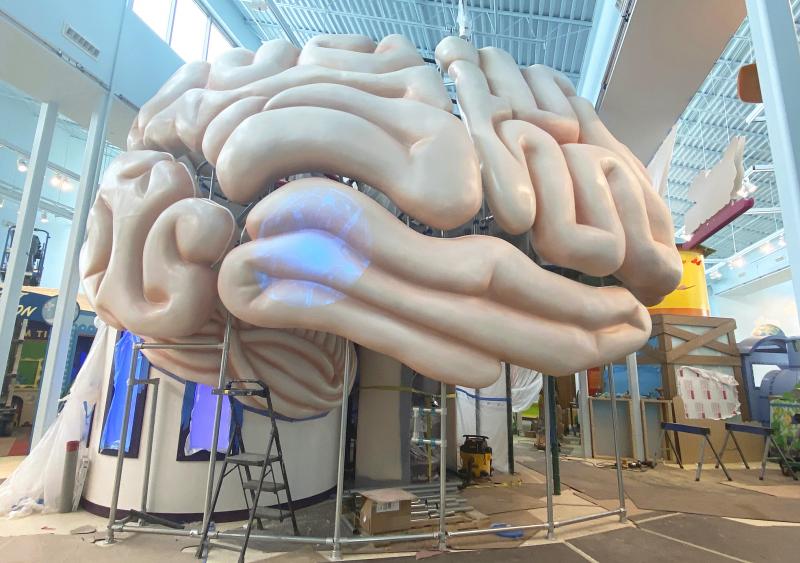
Photo: AP
AA: You use this colonial image a lot in the book, a sense of the processes and struggles of evolution being fought out within the brain itself.
DE: That’s exactly right. And I think this is a point of view that’s not common in neuroscience. Usually, when we look in a neuroscience textbook, we say here are the areas of the brain and everything looks like it’s getting along just fine. It belongs exactly where it is. But the argument I make in the book is, the only reason it looks that way is because the springs are all wound tight. And the competition for each neuron — each cell in the brain to stay alive against its neighbors — is a constantly waged war. This is why when something changes in the brain, for example, if a person goes blind, or loses an arm or something, you see these massive rearrangements that happen very rapidly in the brain. It’s just as the French lost their territory in North America because the British were sending more people over.
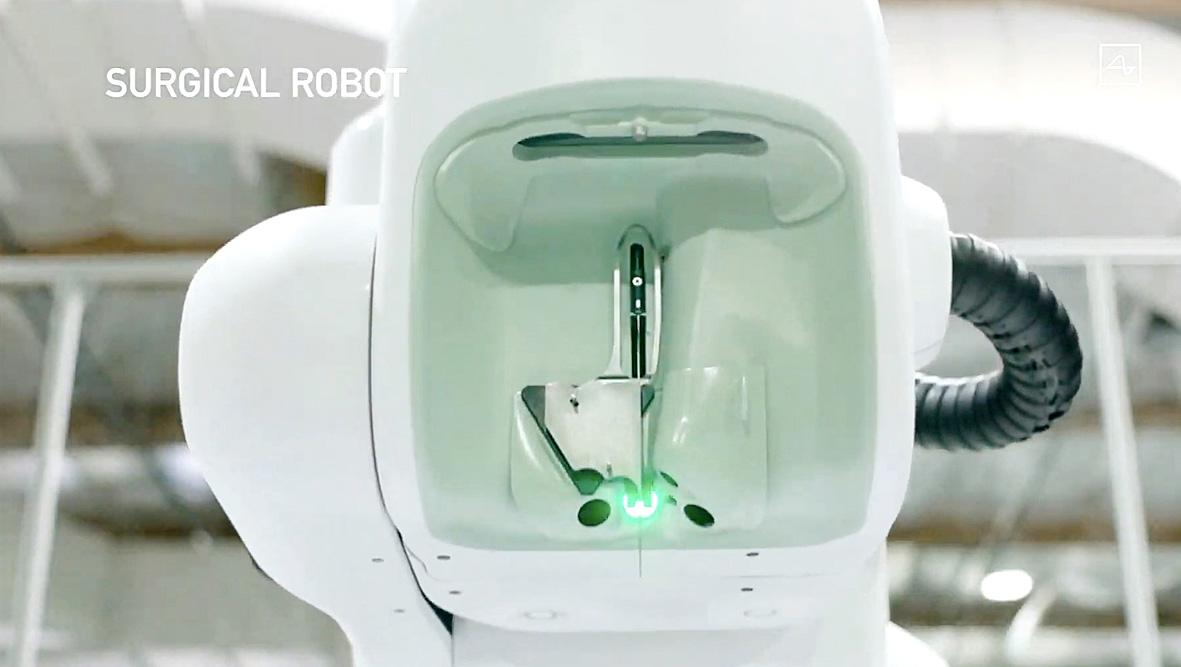
Photo: AFP
AA: One of the great mysteries of the brain is the purpose of dreams. And you propose a kind of defensive theory about how the brain responds to darkness.
DE: One of the big surprises of neuroscience was to understand how rapidly these takeovers can happen. If you blindfold somebody for an hour, you can start to see changes where touch and hearing will start taking over the visual parts of the brain. So what I realized is, because the planet rotates into darkness, the visual system alone is at a disadvantage, which is to say, you can still smell and hear and touch and taste in the dark, but you can’t see any more. I realized this puts the visual system in danger of getting taken over every night. And dreams are the brain’s way of defending that territory. About every 90 minutes a great deal of random activity is smashed into the visual system. And because that’s our visual system, we experience it as a dream, we experience it visually. Evolutionarily, this is our way of defending ourselves against visual system takeover when the planet moves into darkness.
AA: Another mystery is consciousness. Do you think we are close to understanding what consciousness is and how it’s created?
DE: There’s a great deal of debate about how to define consciousness, but we are essentially talking about the thing that flickers to life when you wake up in the morning. But as far as understanding why it happens, I don’t know that we’re much closer than we’ve ever been. It’s different from other scientific conundrums in that what we’re asking is, how do you take physical pieces and parts and translate that into private, subjective experience, like the redness of red, or the pain of pain or the smell of cinnamon. And so not only do we not have a theory, but we don’t really know what such a theory would look like that would explain our experience in physical or mathematical terms.
AA: You predict that in the future we’ll be able to glean the details of a person’s life from their brains. What would that mean in terms of personal privacy and liberty?
DE: Oh, yeah, it’s going to be a brave new world. Maybe in 100 years, maybe 500, but it’ll certainly happen. Because what we’re looking at is a physical system that gets changed and adjusted based on your experiences. What’s going on with the brain is the most complex system we’ve ever come across in our universe but fundamentally it’s physical pieces and parts and, as our computational capacities are becoming so extraordinary now, it’s just a countdown until we get there. Do we get to keep our inner thoughts private? Almost certainly we will. You can’t stick somebody in a scanner and try to ask them particular kinds of questions. But again, this will happen after our lifetime, so it’s something for the next generations to struggle with.
AA: Do you think in the future that we’ll be able to communicate just by thinking?
DE: Communication is a multi-step process. And so in answering your questions, I have many, many thoughts. And I’m getting it down to something that I can say that will communicate clearly what I intend. But if you were to just read my thoughts and say, “OK, give me the answer,” it would be a jumble of half-sentences and words and some random thought, like, Oh, my coffee is spilling. It’s like you wouldn’t want to read somebody’s book that hasn’t been polished by them over many iterations, but instead is burped out of their brain.
AA: What are your views on Elon Musk’s Neuralink enterprise, which is developing implantable brain-machine interfaces?
DE: There’s nothing new about it insofar as neuroscientists have been putting electrodes in people’s brains for at least 60 years now. The advance is in his technology, which is making the electrodes denser and also wireless, although even that part’s not new. I think it will be very useful in certain disease states, for example, epilepsy and depression, to be able to put electrodes directly in there and monitor and put activity in. But the mythology of Neuralink is that this is something we can all use to interface faster with our cellphones. I’d certainly like to text 50 percent faster, but am I going to get an open-head surgery? No, because there’s an expression in neurosurgery: when the air hits your brain, it’s never the same.
AA: You didn’t start out academically in neuroscience. What led you there?
DE: I majored in British and American literature. And that was my first love. But I got hooked on neuroscience because I took a number of philosophy courses. I found that we’d constantly get stuck in some philosophical conundrum. We’d spin ourselves into a quagmire and not be able to get out. And I thought, Wow, if we could understand the perceptual machinery by which we view the world, maybe we’d have a shot at answering some of these questions and actually making progress. When I finally discovered neuroscience, I read every book in the college library on the brain — there weren’t that many at the time — and I just never looked back.
AA: How can we maximize our brain power, and what do you do to switch off?
DE: There’s this myth that we only use 10 percent of our brain that, of course, is not true. We’re using 100 percent of our brain all the time. But the way information can be digested and fed to the brain can be very different. I think the next generation is going to be much smarter than we are. I have two small kids, and any time they want to know something, they ask Alexa or Google Home, and they get the answer right in the context of their curiosity. This is a big deal, because the brain is most flexible when it is curious about something and gets the answer. Regarding switching off, I never take any downtime and I don’t want to. I have a very clear sense of time pressure to do the next things. I hope I don’t die young, but I certainly act as though that is a possibility. One always has to be prepared to say goodbye, so I’m just trying to get everything done before that time.

Michael slides a sequin glove over the pop star’s tarnished legacy, shrouding Michael Jackson’s complications with a conventional biopic that, if you cover your ears, sounds great. Antoine Fuqua’s movie is sanctioned by Jackson’s estate and its producers include the estate’s executors. So it is, by its nature, a narrow, authorized perspective on Jackson. The film ends before the flood of allegations of sexual abuse of children, or Jackson’s own acknowledgment of sleeping alongside kids. Jackson and his estate have long maintained his innocence. In his only criminal trial, in 2005, Jackson was acquitted. Michael doesn’t even subtly nod to these facts.

The March/April volume of Foreign Affairs, long a purveyor of pro-China pablum, offered up another irksome Beijing-speak on the issues and solutions for the problems vexing the People’s Republic of China (PRC) and the US: “America and China at the Edge of Ruin: A Last Chance to Step Back From the Brink” rang the provocative title, by David M. Lampton and Wang Jisi (王緝思). If one ever wants to describe what went wrong with US-PRC relations, the career of Wang Jisi is a good place to start. Wang has extensive experience in the US and the West. He was a visiting

The January 2028 presidential election is already stirring to life. In seven or eight months, the primary season will kick into high gear following this November’s local elections. By this point next year, we will likely know the Democratic Progressive Party (DPP) candidate and whether the Taiwan People’s Party (TPP) will be fielding a candidate. Also around this time, the Chinese Nationalist Party (KMT) will either have already completed their primary, or it will be heading into the final stretch. By next summer, the presidential race will be in high gear. The big question is who will be the KMT’s

One of the challenges with the sheer availability of food in today’s world is that lots of us end up spending many of our waking hours eating. Whether it’s full meals, snacks or desserts, scientists have found that it’s not uncommon for us to be mindlessly grazing at some point during all of our 16 or so waking hours. The problem? As soon as this food hits the bloodstream in the form of glucose, it initiates the release of the hormone insulin. This in turn activates a switch present in every one of our cells, which is responsible for driving cell


 RSS
RSS