


The media reported this week on another government stimulus program to make the birth rate rise. Premier Su Tseng-chang (蘇貞昌) said that the budget for the government’s programs would reach NT$85 billion (US$3.05 billion) by 2023, and said that the government’s monthly subsidy for child support would rise from NT$3,500 to NT$5,000.
These measures are a well-meaning attempt to address Taiwan’s globally low fertility and birth rates, but they are rather like poking a heart attack victim with a stick in the hope of reviving him.
The problems driving the low birth rates are well known: the lack and cost of childcare, the lack of time off for new parents, long working hours that send parents home late in the evening too exhausted for additional labor, low wages for most workers, skyrocketing housing costs, an inhuman educational system and a terrible physical and social environment for raising children. Nowhere in the government plan is there much will to meaningfully address any of these issues.

Photo: Yang Chin-cheng, Taipei Times
Taiwan is hardly alone: the same problems are endemic across the East Asian developmentalist states. Low birth rates are also an issue in South Korea and Japan. This week analysts and the media revealed that China’s census is also showing a remarkable drop in birth rates, and that China is apparently overstating the size of its population.
The East Asian economies were all built on the same model of a modern export sector directed outward, and a domestic economy driven by a construction-industrial state that sprays concrete across the national landscape. It’s hardly surprising that they are facing the same social and demographic issues.
One thing they also share is brutal cultures of work overseen by patriarchal, authoritarian bosses. However you turn the prism to see Taiwan’s problems from a new angle, Boss Island, as Shieh Gwo-shyong’s (謝國雄) excellent 1993 book called it, remains the heart of the issue.
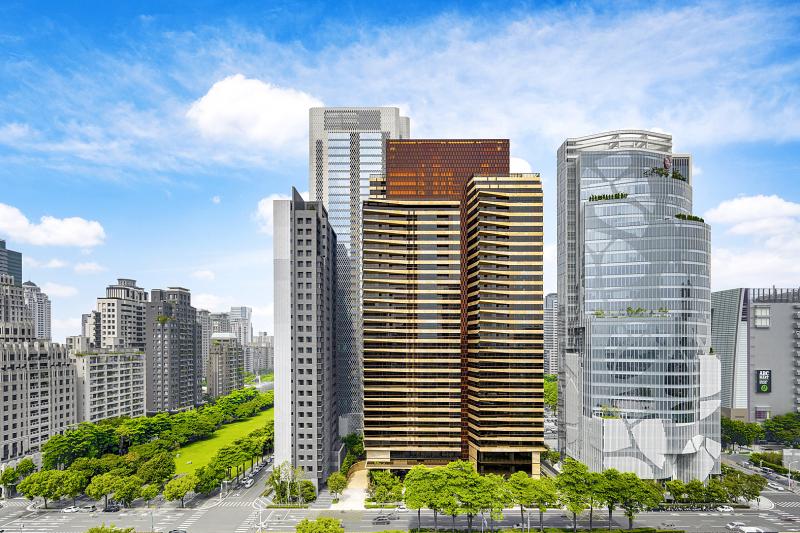
Photo: Hsu Yi-ping, Taipei Times
In the 1990s bosses moved their firms to China, burning down their factories to collect the insurance to use as seed money to start new firms there. They did this to take advantage of the cheap labor and the perks offered by the government there. They also did it to preserve their firms at a level of technology and organization which they could handle, because upgrading to keep pace with the changes in the economic order and remain in Taiwan would have meant learning new skills and perhaps, delegating to modern managers. In other words, preservation of patriarchal control lay at the heart of the movement of firms to China.
This move was very bad for Taiwan’s economy and security. Hollowed out firms led to hollowed out families in a hollowed out economy. Since scholars and the media typically interview successful businessmen in China, such business people have become representative of the flow of firms and people to China. The failures, eking out a living in China and sending no money home, have never shown up on anyone’s radar, yet their families suffer in working class poverty and their children often have to grapple with Dad’s other family in China. Meanwhile expatriated Taiwanese businessmen have become lost to the nation, building China instead.
In the last two decades, as a recent insightful piece in Commonwealth Magazine, “Young people can’t afford own apartment, zombie companies on the rise — It’s the low interest rates, stupid!” noted, low interest rates have impoverished the nation by distorting its investment climate. Driven by near-zero interest rates, the article observes that “between 2000 and 2018, the share of investment in machines and equipment dropped from 45.4 percent in 2002 to 32.23 percent, while the amount spent remained about the same.”
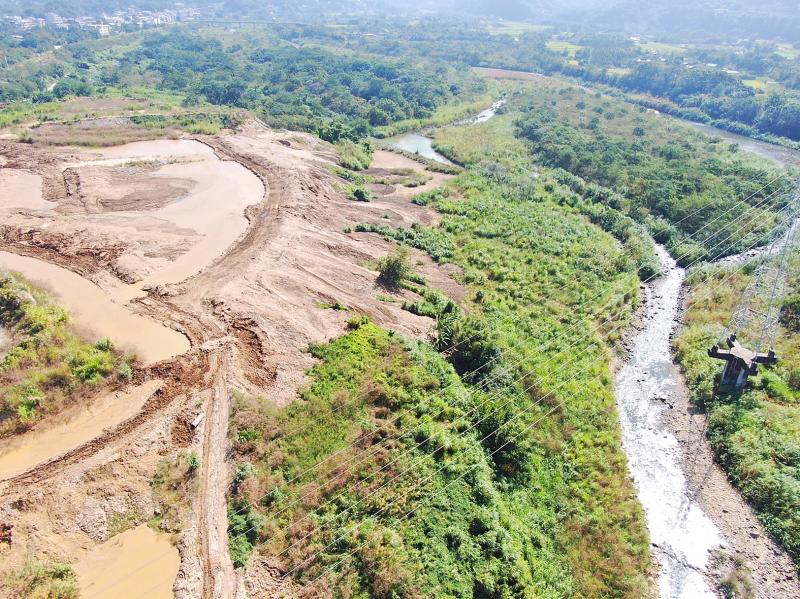
Photo: Tsai Chang-sheng, Taipei Times
Equipment upgrading drives economic growth, worker productivity and higher living standards.
Where did the money go? Bosses directed it into real estate, driving the housing bubble while doing little for the economy or the common people. Taiwan’s bosses made investment decisions that were very good for them while doing little for the economy at large, since construction keeps the wheels turning without needing upgrades to worker skills and new capital equipment investments that would push up living standards. The gravel-fueled construction-industrial state that drives Taiwan’s domestic economy received a huge boost, like an addict discovering an enormous stash of heroin. No government dare take away the heroin and send the addict into recovery, because thousands of voters would lose their jobs as the local economy slumped.
Further, Taiwanese bosses foster a work culture defined by the ideal of suffering, shaping Taiwan culture in entirely negative ways. In Taiwan, work is suffering. Workers constantly have to display that they are suffering in order to show that they are working (much “work” thus becomes displays of suffering to fend off added work).
This social programming begins in school with students displaying how much their massive homework loads are making them suffer. Homework thus functions as a form of authoritarian control of time, leaving students little time for their own lives — that might lead to their participation in politics, god forbid — and as a tool for acculturating Taiwanese children to their adult lives of suffering at work under authoritarian bosses.
That is why Taiwanese frequently accuse white foreigners of being lazy, since many of us are from cultures in which it is considered a loss of control, especially for males, to make displays of how difficult work is, of how much we are suffering. We foreigners are not sending out the right cultural signals. You need to suffer more loudly, big noses!
Meanwhile Taiwan’s bosses fight to keep wages low, to keep unions weak, to keep working hours long, in order to hoard profits for sterile investments in real estate to take advantage of Taiwan’s low taxes on property, all the while evading taxes. The result is a low tax take that starves the government, especially local governments, resulting in lower living standards and fewer services for all, including funding for the military.
Nor do any of the rising profits reach the workers. Wages remain stagnant despite low unemployment, especially in manufacturing, where profits per worker have risen steadily since the 1990s, as Singaporean blogger and advocate Roy Ngerng (鄞義林) pointed out in a piece on Taiwan’s bosses in 2018. During the Ma Ying-jeou (馬英九) years the gap between worker productivity and worker pay in manufacturing in Taiwan became one of the worst in the developed world. Things have ameliorated slightly since, but nothing fundamentally has changed.
It is no wonder that the young put off children or refuse to have them at all, and shuffle like the war-wounded from one job to the next, searching, always searching, for that one good job. On one hand, bosses shift funds to real estate and drive up housing prices to unaffordable levels, reducing reinvestment in local businesses, while on the other hand, bosses overwork them and then refuse to pay them what they are worth.
This explains why so many workers want to own their own businesses: the only exit from the wheel of suffering is to reach the nirvana of bosshood, to become a boss oneself. As Shieh explained in Boss Island, the possibility of escape via becoming a boss acts as a safety valve that helps prevent workers from pressuring for higher salary or changes in the way workplaces function.
If Taiwan wants more grandchildren, this nation of grandparents has to change the way they run their businesses. Until the culture of Taiwan’s bosses changes, nothing will change.
Notes from Central Taiwan is a column written by long-term resident Michael Turton, who provides incisive commentary informed by three decades of living in and writing about his adoptive country.
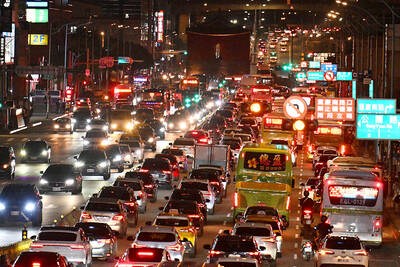
By global standards, the traffic congestion that afflicts Taiwan’s urban areas isn’t horrific. But nor is it something the country can be proud of. According to TomTom, a Dutch developer of location and navigation technologies, last year Taiwan was the sixth most congested country in Asia. Of the 492 towns and cities included in its rankings last year, Taipei was the 74th most congested. Taoyuan ranked 105th, while Hsinchu County (121st), Taichung (142nd), Tainan (173rd), New Taipei City (227th), Kaohsiung (241st) and Keelung (302nd) also featured on the list. Four Japanese cities have slower traffic than Taipei. (Seoul, which has some

Michael slides a sequin glove over the pop star’s tarnished legacy, shrouding Michael Jackson’s complications with a conventional biopic that, if you cover your ears, sounds great. Antoine Fuqua’s movie is sanctioned by Jackson’s estate and its producers include the estate’s executors. So it is, by its nature, a narrow, authorized perspective on Jackson. The film ends before the flood of allegations of sexual abuse of children, or Jackson’s own acknowledgment of sleeping alongside kids. Jackson and his estate have long maintained his innocence. In his only criminal trial, in 2005, Jackson was acquitted. Michael doesn’t even subtly nod to these facts.
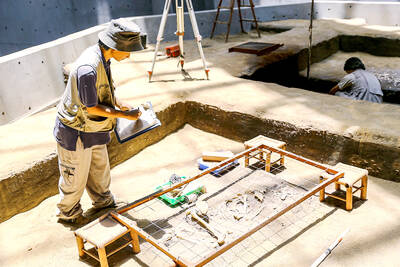
Writing of the finds at the ancient iron-working site of Shihsanhang (十 三行) in New Taipei City’s Bali District (八里), archaeologist Tsang Cheng-hwa (臧振華) of the Academia Sinica’s Institute of History and Philology observes: “One bronze bowl gilded with gold, together with copper coins and fragments of Tang and Song ceramics, were also found. These provide evidence for early contact between Taiwan aborigines and Chinese.” The Shihsanhang Web site from the Ministry of Culture says of the finds: “They were evidence that the residents of the area had a close trading relation with Chinese civilians, as the coins can be
During her 2015 trip to Taiwan, Sophia J. Chang (張詠慧) got fewer answers than she’d hoped for, but more revelations than she could have imagined. “That was the year I last saw my grandmother. She was in hospice care in Tainan, and it was painful to see her in bed, barely able to open her eyes,” says Los Angeles-born Chang. “The grandma I’d known, a fantastic cook and incredibly kind, was already gone.” After their visit, Chang and her grandfather went back to his apartment. There she asked him how he’d met her grandmother. “He hesitated, then started talking a bit.


 RSS
RSS